

About the IGE Program
Inclusive Green Economy (IGE) is an extensive program for capacity development in Eastern Africa. It strengthens the national capacity to achieve an inclusive green economy, which is one of the prerequisites for achieving the Sustainable Development Goals. The program focuses on economic policy instruments while considering the social aspects of policy implementation.
Objectives
The objectives of the program are to increase knowledge and skills on IGE and economic policy instruments in governmental organizations and to increase their capacity to apply these instruments in practice. By building a stronger Community of Practice on Inclusive Green Economy (IGE) to improve the collaboration between governmental organizations, sector stakeholders, and academia in the countries and the region, our objective is to promote the implementation of evidence-based policies for poverty reduction, environmental and resource management, and climate change in the Global South.
Major areas of contribution
The IGE program includes several activities as presented below and aims to contribute to impacts at the system-, organizational-, and individual levels, respectively, such as:
- High-level dialogues to match policy knowledge needs with scientific evidence
- Professional in-service training on IGE and economic policy instruments
- Training of Trainers; participants learn tools to train their colleagues on IGE
- Co-create solutions to IGE Transformation Initiatives
- Cross-country learning workshops
- Initiate and promote the development of an IGE community of practice
- Develop and maintain a digital learning platform
Affiliation
The IGE program is coordinated by the University of Gothenburg, Sweden, in close collaboration with universities in Ethiopia, Kenya, Rwanda, Tanzania, and Uganda.
The participants are senior civil servants from Ethiopia, Kenya, Uganda, Rwanda, and Tanzania, who work in ministries and national government agencies that have been identified as key organizations for an Inclusive Green Economy (IGE).
Connects with SDGs
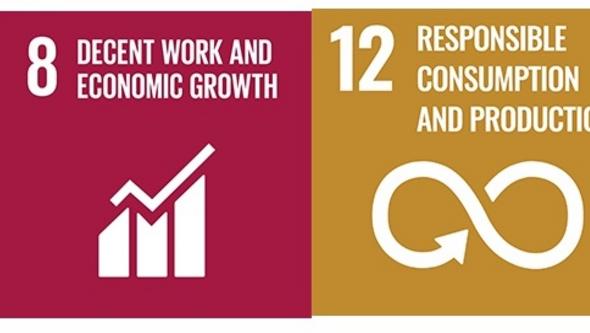
The program mainly connects with the implementation of SDG 8 – sustainable and inclusive economic growth – but also with SDG 1: No poverty, SDG 7: Affordable and clean energy for all, SDG 12: Sustainable production and consumption, SDG 13: Climate Action, and SDG 15: Sustainable land ecosystem and land use.
Implemented by local teams
The EfD centers in each of the participating countries have set up teams including an IGE lead, a full-time policy engagement specialist, and senior researcher fellows. These teams are the main implementers of the program and give active technical support to the participants - IGE Fellows - throughout the program.
Focus on inclusion and peer-learning
This program, financed by Sida, started with an inception phase in 2020- 2022 and is extended for five more years, until 2027. It is a more comprehensive program than previous ones that EfD has been involved in, and it includes new features. For instance, with more emphasis on inclusion, the program highlights the importance of stakeholder involvement and accountability, which ensures that green economy policies can get broad acceptance. Methods for peer learning have also been developed to help participants benefit from networking and the sharing of knowledge and experiences across borders.
The program consists of five work packages:
- Matching IGE policy needs with scientific evidence
- IGE In-service Trainings
- Transformation Initiatives – Peer-learning for IGE in Practice
- Social inclusion, Acceptance, and Accountability of Green Economy Reforms
- Building IGE Professional Network for Local and Regional Community of Practice
The African universities in the participating countries are partners in this program. Researchers and practitioners at the University of Gothenburg, the Swedish Tax Agency, the Swedish Environmental Protection Agency, and the World Resources Institute also provide expertise.
Comments on the program
“In East Africa, we don’t lack policies or strategies for IGE, but we lack the capacity to put them into practice. For this, we need to connect policy-makers, technicians, and academia. The IGE program is doing exactly that.”
Fred Sabiti, UNDP’s Technical Advisor, Ministry of Finance and Economic Planning in Rwanda
“We may have thought that green growth is not for us in early development countries, but it is! It needs to be country-specific, and there has to be a political will for implementation. That’s why this program is so important.”
Dr Claudine Uwera, Minister of State in Charge of Economic Planning in the Ministry of Finance and Economic Planning in Rwanda.
“This was the most practical program I have ever attended. We need more capacity on IGE, so I hope a lot more people will be allowed to attend this program.”
Ann Mwangi, Chief Economist at Kenya’s State Department for Planning
"It’s a very good program! The best part is that it provides a platform for us to share experiences on a regional level. It’s also very valuable to have experts explain the principles of an inclusive green economy and to learn about specific policy instruments."
June Nyakahuma, Economist in the Macroeconomic Policy Department at the Ministry of Finance, Planning and Economic Development in Uganda
What is Inclusive Green Economy?
An inclusive green economy (IGE) is an economic development that improves human well-being and social equity, while significantly reducing environmental risks and ecological scarcities.
UNEP 2015