Networks, partners and collaborations
Together with societal actors at the local, regional, national, and international level, the University of Gothenburg aims to pursue strategic and systematic collaboration and innovation efforts.
Collaboration in Gothenburg and the region
The University of Gothenburg works closely with the City of Gothenburg and the Västra Götaland Region. Through collaboration in education, research, and innovation, the University contributes to societal development across both the city and the wider region.
The University of Gothenburg is both a city university and a university with activities across large parts of the region, including Mariestad, Tjärnö, and Steneby. This represents not only a physical presence, but also close collaboration with local and regional actors throughout Gothenburg and Västra Götaland.
In teacher education and pedagogy, the University engages in a wide range of partnerships with municipalities and school authorities across the region. In the healthcare sector, the City of Gothenburg has also become an increasingly important partner.
At the regional level, one of the most prominent collaborations is the long-standing partnership between the Sahlgrenska Academy and the Västra Götaland Region. The region’s unique strength in the life sciences is built on long-term collaboration between academia, the regional healthcare system, and the pharmaceutical and biotech industries.
In addition to extensive collaboration at departmental and faculty level, the University has signed a general memorandum of understanding with the City of Gothenburg and Chalmers University of Technology. This tripartite collaboration is strategic in nature and currently focuses on issues related to Gothenburg as a student city.
Beyond the larger and more formalised partnerships, the University maintains close collaboration with a wide range of public, private, and civil society organisations in the Gothenburg area. These partnerships are a core part of the University’s education and research activities. Gothenburg is also home to several science parks and incubators, which play an important role in the innovation ecosystem surrounding the University.
Examples of local and regional collaboration
Below are examples of organisations the University of Gothenburg collaborates with in Gothenburg and the surrounding region. The forms of collaboration vary and are not always based on formal or overarching agreements:
- Business Region Göteborg
- Frihamnsdagarna
- GoCo
- Gothenburg Botanical Garden
- City of Gothenburg
- The Gothenburg Region (GR)
- NÄST
- Volvo Cars
- Volvo Group
- West Sweden Chamber of Commerce
- West Pride
Collaboration in Sweden
In addition to partnerships with the business sector at many levels of the organisation, the University of Gothenburg maintains close collaboration with a wide range of national actors. These partnerships are often developed through research and educational environments at the University’s departments. The University also works closely with national government agencies and authorities, the welfare sector, the cultural and museum sectors, and civil society organisations.
Examples of national collaboration
Below are examples of organisations the University of Gothenburg collaborates with in Sweden. The forms of collaboration vary and are not always based on formal or overarching agreements.
- Gothenburg Book Fair
- Drivhuset
- Swedish National Agency for Education
- International Science Festival Gothenburg
- Museum of World Culture
International collaboration
The University of Gothenburg's vision is to be a university for the world – an international higher education and research institution that takes responsibility for the development of society while helping to build a sustainable world. We do this in many ways, including through collaborations with universities around the world in international networks and projects.
The University of Gothenburg has institutional-level networks and projects that are university-wide, which means that they are sanctioned by the university leadership and in most cases have a trans-disciplinary focus. There are also a few networks that are discipline specific and therefore handled at departmental level.
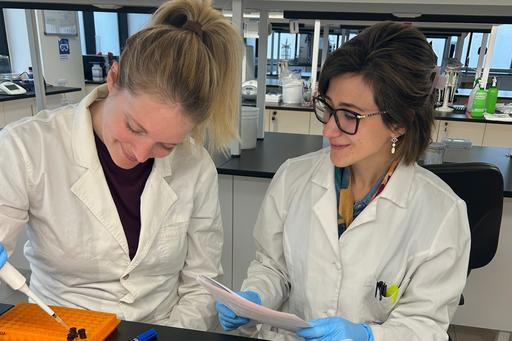
I’m still early in my career, and it has been valuable for my development to see how we can work together to address challenges. It has been interesting to see that we face similar research challenges in different parts of the world and to realise that you are part of a global research community.
Collaborations in Chile and Japan broaden Marica’s aquaculture research
Collaborations in Europe
Collaborations in Africa
Collaborations in Asia
Collaborations in Latin America
Collaborations involving several continents
Our definition of collaboration
Collaboration is an integral and mutually quality-driving part of the work towards a better world. At the University of Gothenburg, collaboration means working with, sharing knowledge with, and exchanging experience and expertise with wider society.
- Collaboration includes, for example, commissioned research and education, joint projects in research, development, and teaching, work-integrated learning, collaboration with schools, and citizen science.
- Utilisation refers to promoting, in a broad sense, scientifically informed decision-making in society, and more specifically to contributing innovations and new ideas, policy-influencing activities, products, or services.
- Knowledge sharing means exchange between academia and the wider public, for example through participation in and organisation of public activities such as festivals, fairs, performances, and exhibitions, or through the publication of popular science articles and books.
- Exchange involves enabling mutual mobility and making use of knowledge and experience from wider society. This includes, for example, appointing adjunct teachers and researchers, inviting guest lecturers, organising study visits, providing access to infrastructure, or building and maintaining relationships with alumni.