Greenhouse gas emissions from aquatic environments – Let's take a closer look
This is a suggestion for a Degree Project for Bachelor's and Master's levels at the Department of Marine Sciences. Degree projects at the Department of Marine Sciences are done independently and must be written and assessed individually.
Subject: Marine Chemistry
Level: MSc (30, 45 or 60hp)
Contact: Assist. Prof. Stefano Bonaglia
Project background
Nitrous oxide (N2O) and methane (CH4) are major greenhouse gases (GHG) and their atmospheric concentrations have increased by ~22 and ~160%, respectively, compared to pre-industrial times.
Yet, it remains challenging to quantify their emissions from the sea, leading to large uncertainties in global budgets. It is also unclear how widespread coastal eutrophication and de-oxygenation enhance marine N2O and CH4 emissions.
Project description
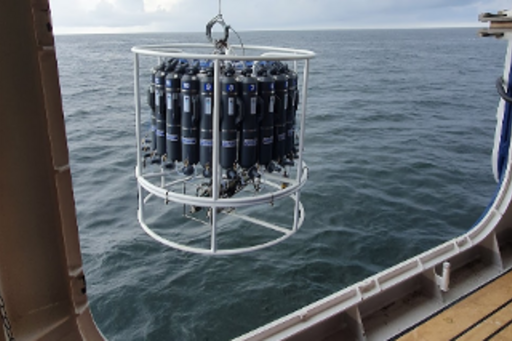
This project will quantify overlooked fluxes of N2O and CH4 from sensitive aquatic ecosystems. The targeted environments may include coastal lagoons, fjords, and other pristine or anthropogenically impacted aquatic ecosystems in Europe.
Depending on the thesis’ credits (30, 45 or 60hp), the Master student will either work on previously collected samples or join ongoing research cruises to be carried out at monitoring sites in Sweden (By Fjord, Gullmars Fjord, etc.), in Lithuania (Curonian Lagoon), in Poland (Vistula Lagoon), in Germany (Szczecin Lagoon), and elsewhere.
The project may involve collaboration with colleagues at the department, and at external universities.
Student tasks
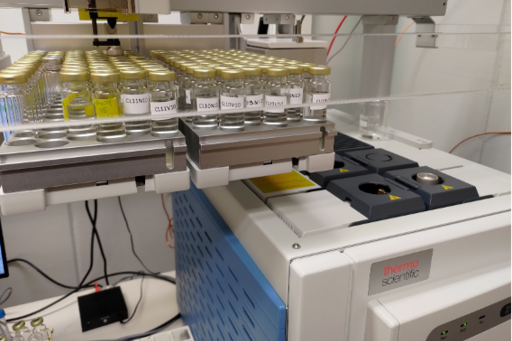
The Master student will learn how to perform N2O and CH4 analyses on a newly acquired, high-precision gas chromatographer located in our GU laboratories.
The student will also perform data analyses and interpretation.
Project outcomes
This project is expected to expand scientific knowledge on coastal ocean greenhouse gas fluxes, and reveal if eutrophication acts as positive feedback reinforcing climate change.
Contact
Assist. Prof. Stefano Bonaglia
Email: stefano.bonaglia@gu.se