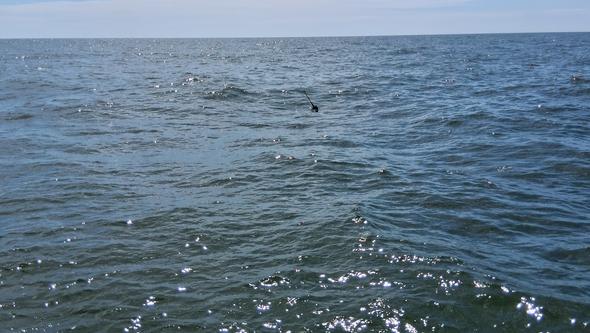
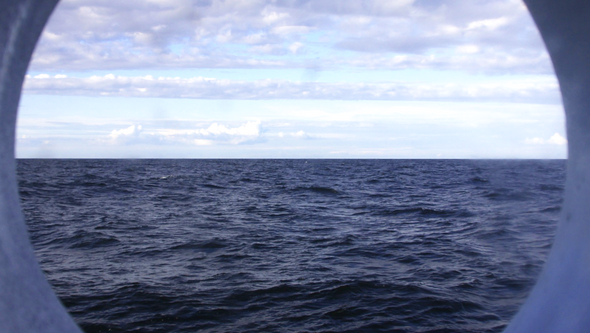
Join the researchers on board R/V Skagerak as they travel to the Gotland Deep from 28 June to 19 July. Here, the researchers share their own experiences and glimpses of life and work on board – from underwater instruments and sampling to everyday life on a high-tech research vessel.
What happens on board?
RECLESS: Baltic 2026 is an expedition investigating how oxygen deficiency affects the nitrogen cycle in the ocean – and what this may mean for the Baltic Sea ecosystem and the ocean’s role in the climate system. During the expedition, the researchers collect water samples and carry out advanced measurements of oxygen, nitrogen and microbial processes in the oxygen-deficient water masses of the Gotland Deep. The blog follows the work behind the science: instruments being lowered into the depths, samples being processed in the laboratories on board, analyses that begin while still at sea – and everyday life for researchers and crew during three intensive weeks on R/V Skagerak.
Facts about the expedition
Expedition: RECLESS: Baltic 2026 Location: Gotland Deep, Baltic Sea Period: 28 June–19 July 2026 Vessel: R/V Skagerak Research focus: Oxygen deficiency, the nitrogen cycle, microorganisms and climate connections
Thirteen researchers from the international team contribute texts to the blog.
The expedition is led by Laura Bristow, a marine biogeochemist at the Department of Marine Sciences, University of Gothenburg.
The RECLESS project is funded by the European Union. The views and opinions expressed in the blog are those of the authors only and do not necessarily reflect those of the European Union or the European Research Council. Neither the European Union nor the granting authority can be held responsible for them.
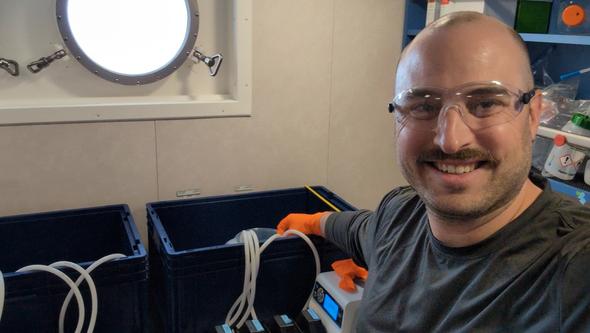
Photo: Laura Bristow
Day 21: Three weeks at sea: The end of our Baltic expedition
19 July 2026 – By Laura Bristow
"Three weeks ago, we left Oskarshamn aboard R/V Skagerak and headed towards the Gotland Deep. Our laboratories were freshly unpacked, our instruments were ready for deployment, and weeks of scientific work lay ahead of us.
Since then, our team has worked around the clock. We have deployed novel in situ instruments, carried out experiments at sea, collected and filtered water from across the Gotland Deep, preserved thousands of samples, and worked through changing weather, technical challenges, and constantly evolving plans.
Researchers, students, technicians, and the crew of R/V Skagerak have worked side by side around the clock.
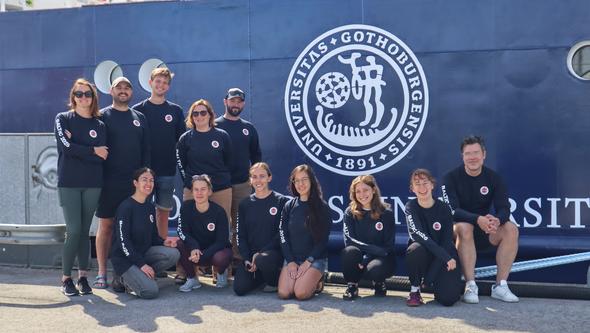
Forskarteamet vid R/V Skagerak.
Photo: University of Gothenburg
Over the past three weeks, we have:
deployed our in situ incubation systems 7 times, spending more than 210 hours beneath the surface
filtered more than 1206 liters of seawater
preserved more than 5164 sample vials
eaten 42 loaves of freshly baked bread (thanks Erik!!)
Behind every number are hours of preparation, coordination, and teamwork—and a huge collection of samples and data that will keep us busy for months and years to come. Seeing everything come together at sea has been an exciting milestone for RECLESS.
This is our first major field expedition and the first time many of the technologies, experiments, and scientific approaches developed across the project have been brought together at sea.
Behind every number are hours of preparation, coordination, and teamwork
The view from R/V Skagerak.
Photo: Laura Bristow
But none of this would have been possible without the people behind the science. Researchers, students, technicians, and the crew of R/V Skagerak have worked side by side around the clock.
Thank you for the long hours, early mornings, late-night deployments, flexibility, laughter, and willingness to help whenever it was needed.
A special thank you to the captain and crew of R/V Skagerak for your expertise, patience, and constant support, and to everyone on shore who helped prepare for the expedition, supported our work from afar, and followed our journey.
Tomorrow, we return to Gothenburg with freezers full of samples, hard drives full of data, and many new questions to answer. The expedition may be ending, but the science is only just beginning. See you back in the laboratory!
Day 19: Life at sea: Ship Crew and Science Team
17 July 2026 – By Kira Lange
"‘You look like you’re working in a spaceship’, my friend said. And sometimes, that’s exactly what it feels like: lots of technical equipment and raw industrial interior design on the inside; the vast, seemingly endless, mesmerizing blue on the outside.
Research cruises mean working and living on a ship 24/7, sometimes even in the most remote places on Earth, in the middle of the ocean. Although we are only a few hours from the Swedish coast, when we look out the window we see nothing but the sea and the sky.
Onboard a research ship, there are two different lifestyles. While the Ship Crew permanently works onboard this vessel, scientists come and go only for a couple of days, weeks or sometimes even months.
Onboard a research ship, there are two different lifestyles.
RV Skagerak Ship Crew (Left to right: Richard (captain), Christoffer (chief mate), Törner (able seaman), Erik (cook), Nils (second mate), Robert (Shipboard Scientific Services Group Technician), Johan (second engineer); front: Axel (chief engineer))
Photo: Kira Lange
R/V Skagerak’s crew includes officers on the bridge, deck crew, engineers and the ship’s cook. They safely navigate and maintain the vessel, ensure everyones safety and support every science operation – from deploying instruments to recovering moorings.
While the number of crew members is fixed, the crew onboard is continuously changing. Most of the R/V Skagerak Ship Crew alternate periods at sea with time ashore, with most of them then living close to family and friends or using their time off for vacation.
One exception is Törner, the Able Seaman, who lives aboard R/V Skagerak during all the expeditions which adds up to about seven months in total. Since he is spending most of his time at sea, he is the only one who has his own cabin enabling him to give it a personal touch – creating a proper home at sea.
Between the shifts, the crew members exercise on their ergometers, listen to the radio, watch TV or play video games together. While for some crew members the R/V Skagerak feels like home, others only consider it as their workplace.
One exception is Törner, the Able Seaman, who lives aboard R/V Skagerak during all the expeditions
For the Science Team, our stay onboard is limited to three weeks. During this time, we temporarily move into cabins which are shared between two to three people. To create a feeling of hygge, we bring pictures of our loved ones and, of course, make room for our stuffed animal crew. Unlike the Ship Crew, our days are driven by experiments rather than shifts.
After sampling water with the CTD or deploying the in-situ incubators and microbial samplers, we continue our work in the lab or the cold 4 °C room. Before going to bed or starting our experimental night shift, we usually take a few minutes to watch the sunset together or play a game of Carcasonne with some of the Ship Crew.
For both the Ship Crew and the Science Team, it feels very natural to share the ship as a home and workplace for a few weeks. It is a lovely opportunity to explore the oceans together with a group of curious, like-minded, and international people and to share each other’s cultures.
The highlights of the cruise for both are the incredibly delicious food prepared by Erik (serving us even watermelon sushi!), the calming effect of the vast blue sea, wildlife encounters, as well as the beautiful sunrises and sunsets.
Image
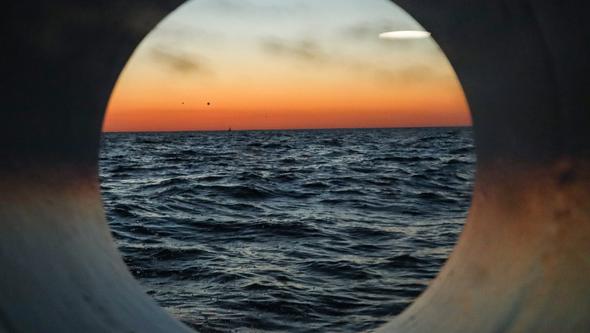
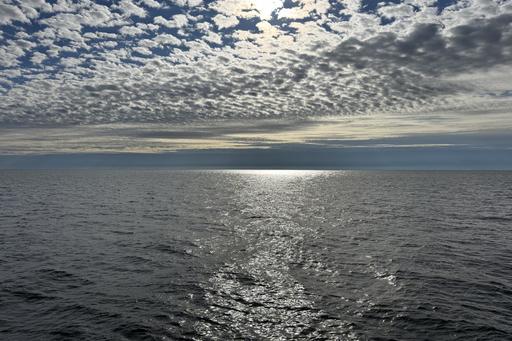
Evening light over the Baltic horizon.
Photo: Laura Bristow
Day 16: What chemical conditions shape microbial life in the Gotland Deep?
14 July – By Alisa Wüst och Wilma Gustavsson
"When we stand aboard R/V Skagerak, the Baltic Sea stretches to the horizon. Hidden beneath the surface is a water column where chemistry can change dramatically with depth. But how do we know where to find these changes, and what do they look like?
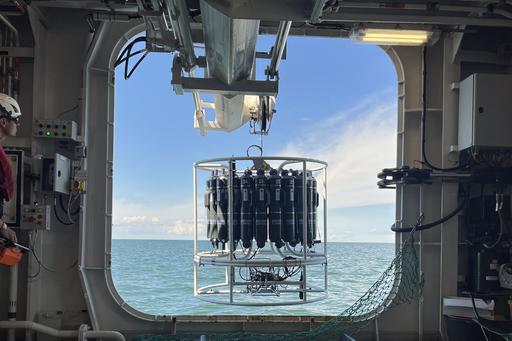
Our first step is taking a CTD cast. The CTD rosette is a frame that holds sampling bottles and sensors. As we lower it into the ocean, the sensors measure properties of the water such as pressure, salinity, and oxygen.
The resulting profiles show us where conditions change and guide us in choosing which depths to sample. We are especially interested in waters containing little to no oxygen.
The CTD rosette is being launched into the water to collect the samples!
Photo: Oskar Wangdell
While the CTD is profiling, we are watching the cast closely and deciding on which water depths to sample (Sina Schorn, Laura Bristow, Robert Aridun)
Photo: Oskar Wangdell
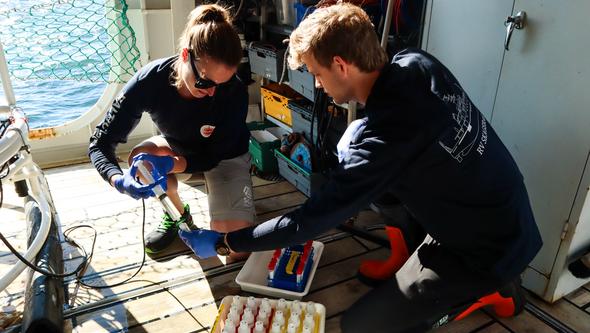
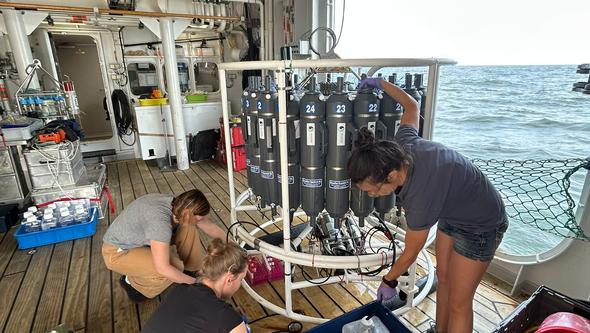
With little or no oxygen present, the chemistry of the water changes. To capture these changes, we collect water to measure a range of parameters including nutrients, organic matter, and dissolved gases. Water is collected directly from the sampling bottles as soon as the CTD is back in deck, requiring efficiency, organization, and teamwork!
With little or no oxygen present, the chemistry of the water changes.
Elizabeth Robetson and Oskar Wangdell collecting nutrient samples
Photo: Maria Pachiadaki
Image
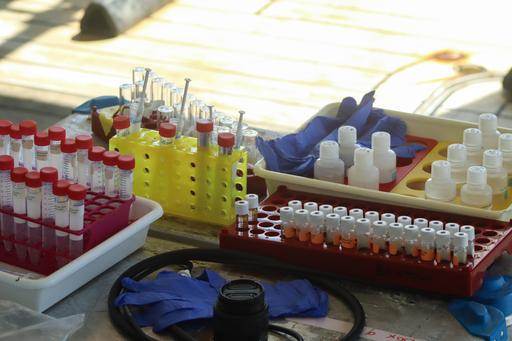
Collecting samples for many different measurements at the same time requires careful coordination. For every parameter we measure, we have established sampling and processing protocols to ensure that the water is collected and preserved correctly.
Photo: Oskar Wangdell
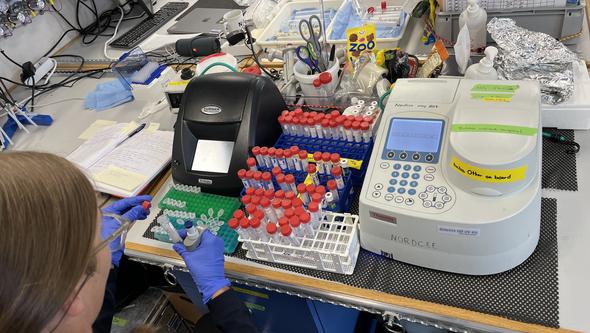
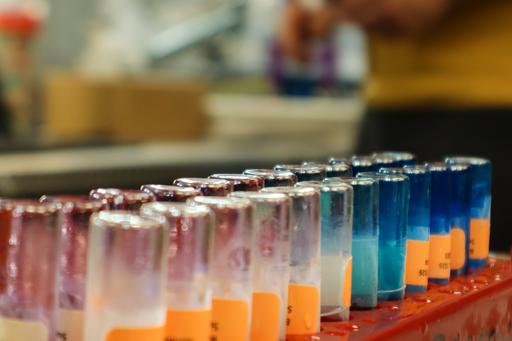
Some of the collected water is analyzed directly aboard R/V Skagerak, including measurements of nitrate, nitrite, ammonium, and sulfide.
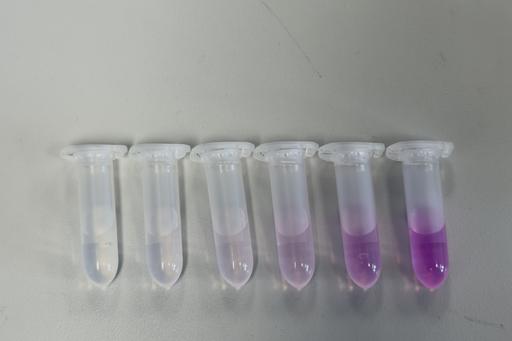
To measure the concentration of nutrients, we add chemicals that change the colour of our samples. The more intense the colour, the higher the concentration in the sample.
Together, these measurements reveal the chemical environment experienced by microbes in the Gotland Deep. By combining them with our experiments and biological analyses, we can begin to understand how changing chemical conditions shape microbial communities."
Wilma Gustavsson analyses nitrate and nitrite to provide important background information for the system.
Photo: Alisa Wüst
Image
Photo: Wilma Gustavsson
Image
Samples for the sulfide analysis.
Photo: Oskar Wangdell
Day 14: Gliders - Beneath the surface
12 July 2026 – By Mathilde Girardot
"Meanwhile, beneath the surface and hidden by the waves, a silent fleet is at work...
One of the main goals of our expedition in the Baltic Sea is to understand how microorganisms function in waters with very little oxygen and which chemical processes they perform.
But how low are oxygen concentrations in this area? How do they change over time and across our study area?
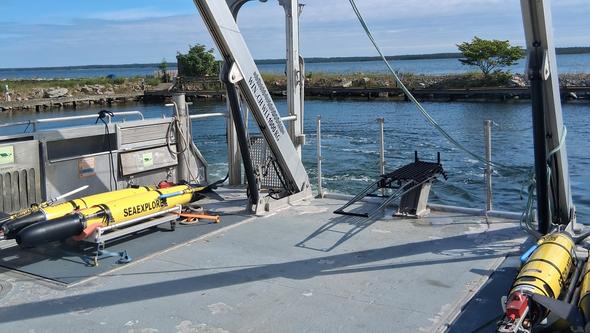
To help us answer these questions, our silent fleet of underwater gliders is continuously surveying the waters around us. Gliders are human-sized autonomous underwater vehicles that move between the surface and the seabed in about 20 minutes.
Gliders prepared for deployment and secured on the deck of Ocean Scout (MidOcean).
Photo: Mathilde Girardot
The gliders carry a range of sensors that measure oxygen, temperature, salinity, ocean currents, nitrate concentrations, and the intensity of mixing. For this expedition, highly sensitive oxygen sensors allow us to detect very low oxygen concentrations and small intrusions of oxygen, helping us understand how even subtle changes in oxygen conditions may influence microbial activity.
Together, these measurements give us a detailed picture of the environment in which the microbes we are studying live. For the past two weeks, four gliders have been continuously surveying our study area as part of a two-month mission in collaboration with the Voice of the Ocean Foundation (VOTO), which has been monitoring the Baltic Sea waters for the past five years.
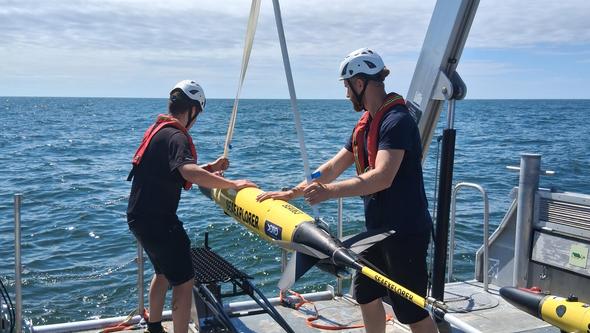
Deployment of a glider from the boat stern. Marcus Melin(VOTO), Mauro Alonso Pinto Juica (GU).
Photo: Mathilde Girardot
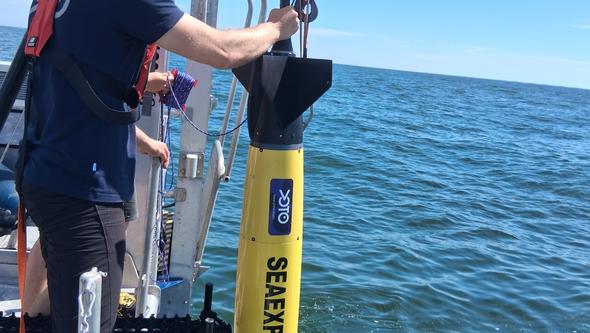
Lowering the glider over the stern of Ocean Scout. Marcus Melin(VOTO), Mauro Alonso Pinto Juica (GU).
Photo: Mathilde Girardot
On June 23rd, we left Gotland with the gliders fully charged, carefully sealed and secured on the deck of Ocean Scout. Together with the crew, we sailed as close as possible to the study area where R/V Skagerak would soon begin its scientific work. Calm seas and beautiful weather provided ideal conditions for deployment.
One by one, the gliders were carefully launched from the stern of the vessel. Their antennas float proudly at the surface, allowing them to communicate with the pilots on land via satellite. After the final checks, the pilots send the "GO" command - and off they go, beginning several weeks of autonomous exploration beneath the surface. Most excitingly, satellite communication allows us to follow the gliders’ measurements in near real time. While we collect samples and carry out experiments aboard R/V Skagerak, the gliders continue surveying the waters around us, providing important environmental context for the microbial processes we are studying. The first data already look very promising!
Their antennas float proudly at the surface, allowing them to communicate with the pilots on land via satellite.
Glider antenna surfacing before the first glider dive.
Photo: Mathilde Girardot
Day 12: Tracing microbial activity
10 July - By Oskar Wangdell, Elizabeth Robertson och Sina Schorn
About two weeks ago, we set out aboard the research vessel R/V Skagerak to investigate the activity of microbes living in the oxygen-free waters of the Baltic Sea. One of the main goals of our expedition is to understand how these microbes function without oxygen and how they respond to changing environmental conditions.
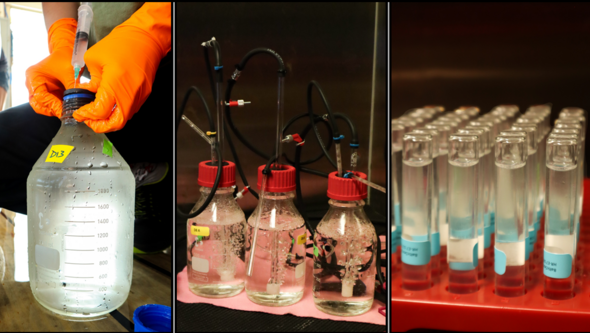
Från provtagning till experimentuppställningar. Det dagliga arbetet ombord innebär att vi samlar in vatten från syrefria djup i glasflaskor (vänster), avlägsnar syre med hjälp av helium i laboratoriet (mitten) och tillsätter substrat och syre i små inkubat
Photo: Oskar Wangdell
To answer these questions, we conduct shipboard experiments aboard R/V Skagerak that complement and expand on the measurements made by our in situ instruments. We collect water from oxygen-free depths and incubate it under carefully controlled conditions, varying the amount of oxygen or nutrients to see how microbial communities respond.
...these experiments help us reveal the ecological roles of different microorganisms and how their activity changes as oxygen-free waters expand in a changing climate.
To keep the microbes at conditions as close as possible to their natural environment, we remove any oxygen introduced during sampling during the experimental set up by flushing the water with helium gas. Temperature also differs in the deep waters of the Baltic Sea, remaining around7°C at depths where we sample. To mimic this we work in a specialized temperature-controlled container on the back deck of the ship.
Knowing what is happening is only half the story - we also want to know who is doing it. A single milliliter of seawater can contain one million bacterial cells, making it challenging to identify which microorganisms carry out specific processes. Back in our home laboratory, we use a specialized instrument called NanoSIMS (nanoscale secondary ion mass spectrometer) allowing activity measurements at the level of individual cells.
Together, these experiments help us reveal the ecological roles of different microorganisms and how their activity changes as oxygen-free waters expand in a changing climate.
Day 9: Who is hiding in the Baltic Sea?
7 July – Andrea Kosier
Most people, when looking out over the sea from the pier or from the deck of the ship, instinctively do the same thing. They stare into the water, hoping to spot the “big hits” of the marine world: fish, crabs, sea urchins, and, if they are lucky, even a whale.
Being aboard RV Skagerak gives us plenty of time to look out over the blue water.
Watching the sea through the kitchen window.
Photo: Andrea Kosier
However, for us, the real “big hits” are invisible to the naked eye. Instead, we are searching for microbial “big hits”, and for us, those are the microbes that drive the nitrogen cycle and control how nitrogen is recycled or lost in oxygen-depleted waters.
A single drop of Baltic seawater contains thousands of microbes.
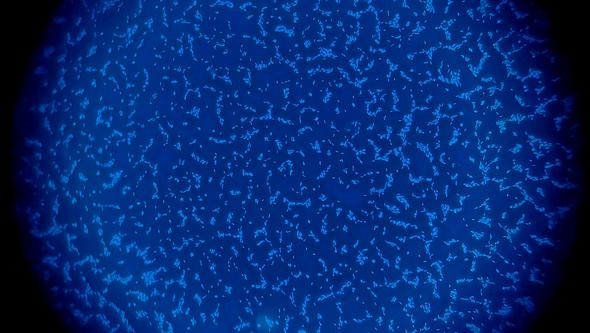
A glimpse into the microbial world through the microscope.
Photo: Andrea Kosier
A single drop of Baltic seawater contains thousands of microbes. To see them under a microscope, we first need to collect them. We filter seawater through a membrane with pores just 0.22 µm big, which traps the microbes on its surface. You can think of the filter as a fishing net for microscopic life. Once we have caught them, we search for our “big hits” using a method called fluorescence in situ hybridization (FISH).
Capturing the sea; Oskar Wangdell (UGOT).
Photo: Kira Lange
We design fluorescent probes that bind to the specific microbes we want to target. Back in our home laboratories, we can view the samples under the microscope, where our target groups light up and become visible. On board RV Skagerak, we are currently “fishing” microbes onto filters.
Back in the laboratory, we will discover which microbes live at different depths, how they are distributed, what they look like and how abundant they are. This information will help us connect the abundance and distribution of these microbes to the nitrogen cycling processes we are studying in the Baltic Sea.
Photo: Kira Lange
Day 8: A race against time when microbes reach the deck
6 juli 2026 - By Britt Abrahamson
"The in situ instruments we have deployed from R/V Skagerak do an incredible job of capturing snapshots of microbial communities where they live in the Gotland Deep. However, they can only target a limited number of depths.
To understand how microbial communities change across the transition from oxygen-rich surface waters to the deep anoxic basin, we also collect water from many closely spaced depths for immediate processing on board.
Image
The CTD rosette is deployed from R/V Skagerak to collect water from different depths across the Baltic Sea's oxygen gradient. Henrik Nicander (RV Skagerak).
Photo: Laura Bristow
One of our goals is to understand which microbes are present and how their activity shapes the transition between oxygen-rich and oxygen-free waters. To do this, we collect both DNA and RNA by filtering water from specific depths. DNA tells us which microbes are present and what they are capable of, while RNA reveals which genes are active.
Together, these measurements allow us to build high-resolution profiles of microbial communities and their activity across the Baltic Sea.
As soon as the CTD is back on deck, water is collected (Maria Pachiadaki (WHOI) Sina Schorn and Laura Bristow (UGOT).
Photo: Elizabeth Robertson
The moment the sampling bottles are hauled onto the deck of R/V Skagerak, a race against the clock begins. Once aboard, microbes experience sudden changes in temperature, pressure and oxygen. Their environment begins to change immediately, so we must process the samples as quickly as possible.
The race against the clock begins. Seawater is rapidly filtered to preserve microbial communities before their environment begins to change. Dr. Britt Abrahamson is ready to get started.
Photo: Britt Abrahamson
The moment the sampling bottles are hauled onto the deck of R/V Skagerak, a race against the clock begins.
A filter used to capture microbial cells.
Photo: Britt Abrahamson
We rapidly pump seawater through two filters. The first captures microbes attached to sinking organic particles, while the second collects free-living microbes. Immediately afterwards, the filters are flash-frozen, preserving the DNA and RNA until they can be analysed back in our home laboratories.
These genetic profiles are only one piece of the puzzle. By combining DNA and RNA measurements with our in situ incubations and shipboard process measurements, we will begin linking microbial communities to the chemical transformations they drive in the Gotland Deep."
Day 7: Catching microbes
5 July 2026 – By Maria Pachiadaki
"The Baltic Sea can look calm from the deck. Today the sea shifted between grey and silver, with clouds stretching across the horizon. But beneath R/V Skagerak, the water column is anything but simple. Oxygen, chemical compounds, and microbes change dramatically with depth.
Image
View from R/V Skagerak,
Photo: Maria Pachiadaki
The Gotland Deep has layers of water with very little oxygen. The microbes living there are adapted to this environment. If we bring water all the way back to the ship before preserving it, their world changes quickly. Temperature, pressure and oxygen can all shift during recovery.
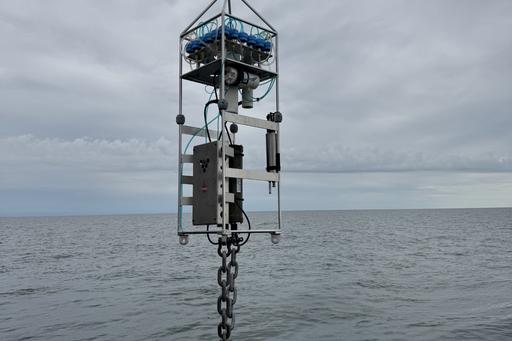
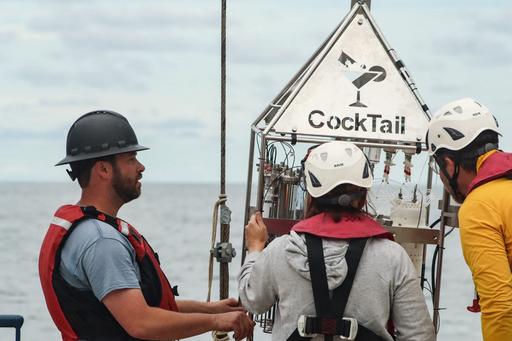
The Microbial Sampler helps us avoid this problem. At first glance, it looks like a metal frame with small containers, tubes and cables. But for us, it is another key instrument on board.
Image
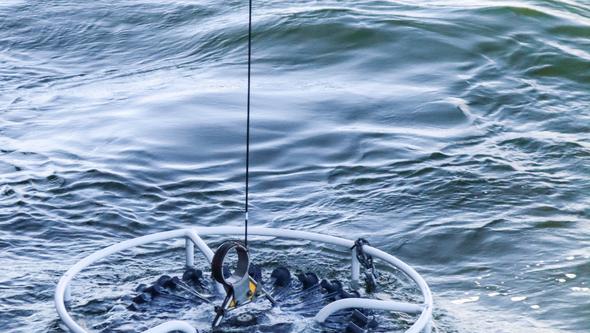
The Microbial Sampler is deployed from R/V Skagerak
Photo: Maria Pachiadaki
We lower it from R/V Skagerak to the depth we want to sample. Once there, it pumps seawater through small filters that trap microbial cells. The samples are then preserved close to where the microbes were living, capturing them before their environment has a chance to change.
Chris Basque (WHOI) and Peter Barthelsson (R/V Skagerak, at the winch, not shown in the photo) deploy the Microbial Sampler. It will spend several hours at depth collecting and preserving microbes.
Photo: Maria Pachiadaki
Image
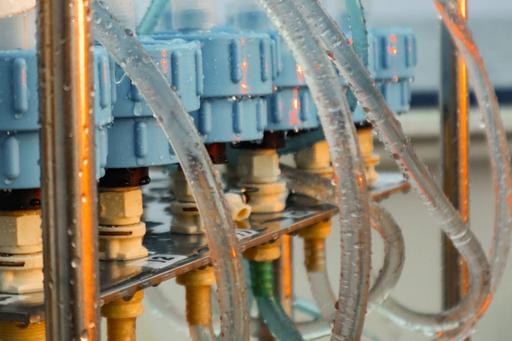
Close-up of the Microbial Sampler after recovery. The blue containers contain the filters that have captured the microbes from the Baltic Sea.
Photo: Oskar Wangdell
Each filter may contain thousands or even millions of cells from a single layer of the Baltic Sea. These samples will later help us identify which microbes are present, which genes they carry, and which processes they are actively using in low-oxygen water.
Image
Once the Microbial Sampler is back aboard R/V Skagerak, the filters (inside the blue containers) are transferred to small tubes and frozen until processing back in the home laboratory.
Photo: Maria Pachiadaki
Each filter may contain thousands or even millions of cells from a single layer of the Baltic Sea.
While other instruments measure the chemistry or carry out incubations, this Microbial Sampler captures the biological story. Together, the measurements and samples collected aboard R/V Skagerak will help us connect the changing conditions in the Baltic Sea to the microbes that live there and the processes they perform."
Sunset over the Baltic Sea from R/V Skagerak.
Photo: Maria Pachiadaki
Day 3: An underwater laboratory
1 July 2026 – By Morten Larsen
"Today we deployed one of the most exciting pieces of equipment on board R/V Skagerak.
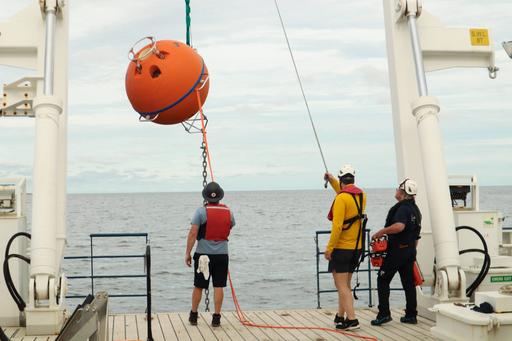
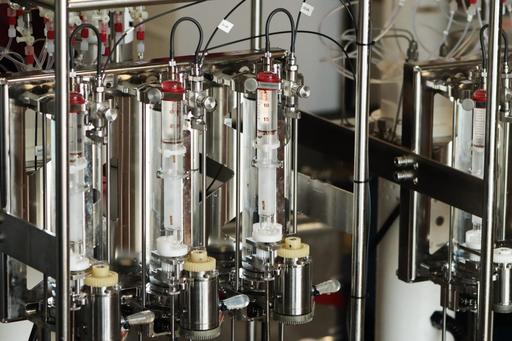
Once lowered beneath the surface, our two incubators become small autonomous laboratories, carrying out experiments under the natural environmental conditions experienced by the microbes.
Image
Lowering the main flotation sphere, that keeps the incubators floating in the waters beneath the R/V Skagerak. Chris Basque (WHOI), Morten Larsen (SDU), Törner Hansson (R/V Skagerak)
Photo: Oskar Wandgell
Many studies of microbial activity begin by bringing water from depth back to the ship. But for microbes living in the Baltic Sea’s low-oxygen waters, this journey can change their environment. As the water is brought to the surface, pressure decreases, temperature increases and oxygen can enter the sample, potentially changing microbial activity before measurements even begin.
Our solution is to carry out the experiments where the microbes are.
The instruments, called in situ incubators, collect seawater directly at depth and keep it under its natural temperature, pressure and oxygen conditions. They then add stable-isotope tracers – harmless labels that allow us to measure how microbes process carbon and nitrogen.
Image
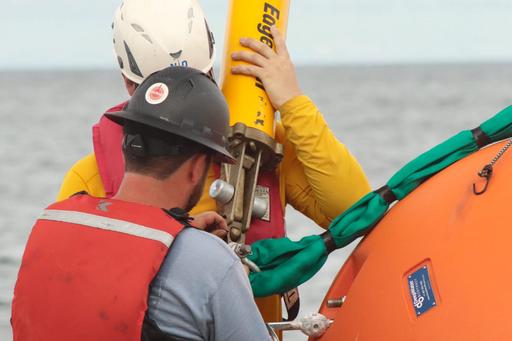
Installing the acoustic releaser on the main flotation sphere. Chris Basque (WHOI), Morten Larsen (SDU).
Photo: Oskar Wangdell
Our solution is to carry out the experiments where the microbes are.
Over the next 32 hours, the incubators will automatically collect and preserve a series of samples, creating a timeline of microbial activity without ever exposing the water to oxygen.
Image
Final inspection of the incubators before they go into the water. Chris Basque (WHOI), Morten Larsen (SDU), Laura Bristow (GU).
Photo: Oskar Wangdell
While we continue working in the laboratories on board R/V Skagerak, our underwater laboratories are quietly carrying out their own experiments many metres below us.
We are looking forward to recovering the incubators and discovering what the microbes have been doing beneath the surface."
Image
Incubators are ready and prepared for deployment.
Photo: Oskar Wangell
Lowering the incubators over the side of R/V Skagerak. Chris Basque (WHOI), Morten Larsen (SDU), Tørner Hansson (R/V Skagerak)
Photo: Oskar Wangdell
Day 1: A floating laboratory takes shape
29 June 2026 – By Laura Bristow
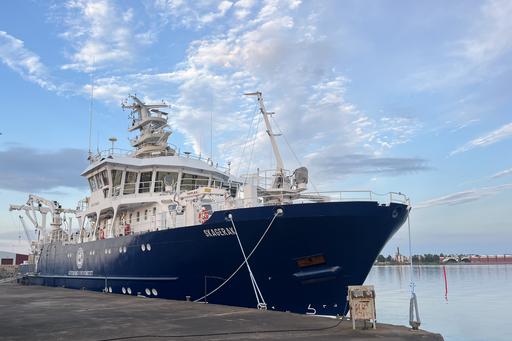
"After months of planning and preparation, yesterday we joined R/V Skagerak in Oskarshamn for the first RECLESS expedition of the year.
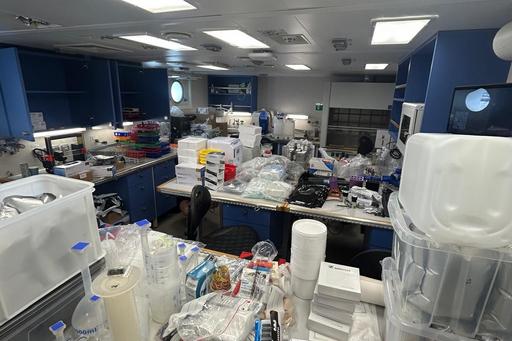
Scientific equipment, gas cylinders and boxes of sampling gear were loaded onboard as we began transforming the ship into a floating laboratory. There was plenty of excitement as researchers, students and technicians from partner institutions in Europe and the United States came together and prepared for the weeks ahead.
Image
R/V Skagerak in Oskarshamn, ready for departure.
Photo: Laura Bristow
Today we left port and began our transit towards the Gotland Deep in the central Baltic Sea. This low-oxygen environment provides a natural laboratory for understanding how microbial communities respond to changing oxygen conditions and how they influence the cycling of carbon and nitrogen.
Over the coming weeks we will collect water samples, deploy a range of oceanographic instruments — including a novel in situ incubation system — and make measurements that will help us better understand how these ecosystems function and how they may respond to future environmental change.
Image
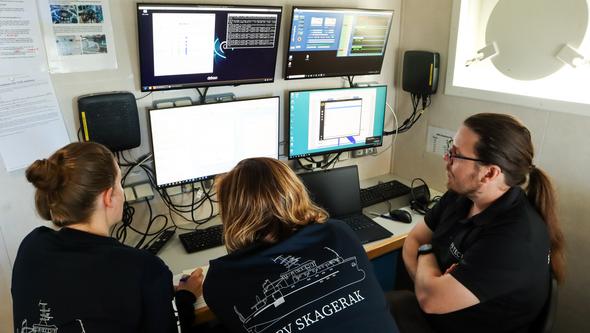
A lot of action in the main laboratory on board R/V Skagerak.
Photo: Laura Bristow
...we began transforming the ship into a floating laboratory
The calm weather has given us a perfect start. As R/V Skagerak heads east, we are unpacking the last boxes, setting up the laboratories and making the final preparations before sampling begins. Tomorrow we arrive at our first station, where the scientific work begins. Stay tuned as we share life aboard R/V Skagerak and take you behind the scenes of the RECLESS expedition."
Towards the horizon!
Photo: Laura Bristow
On board R/V Skagerak.
Photo: Laura Bristow
Laura Bristow, a marine biogeochemist at the University of Gothenburg, leads the expedition on board R/V Skagerak.