University of Gothenburg Pollen Laboratory
The University of Gothenburg Pollen Laboratory is a national hub for monitoring airborne pollen and fungal spores in southern Sweden, with a particular focus on allergenic trees, herbs, and fungi. Since 1975, the laboratory has contributed data and knowledge that supports public health, environmental monitoring, and research. Today, the work is carried out in collaboration with the Palynological Laboratory at the Swedish Museum of Natural History and the Environmental Archaeology Laboratory at Umeå University, and forms part of the national pollen monitoring network. Pollen measurements are conducted at 23 locations across the country and help make everyday life easier for people with pollen allergies. In addition to daily measurements and forecasts, we also conduct research related to pollen and fungal spores.
Pollen Measurements and Pollen Forecasts
Approximately one in five people in Sweden has a pollen allergy, and current trends indicate that allergies are becoming increasingly common. It is therefore important that allergy sufferers have access to relevant information about current pollen conditions so that they can plan their daily lives and better manage their symptoms.
Our pollen forecasts are based on current pollen measurements. Measurements are carried out using Hirst-type traps, which draw in air at a rate corresponding to the breathing of an adult human. Airborne particles, such as pollen and fungal spores, are captured on a sticky tape inside the trap and are then analyzed under a microscope. Based on these measurements, pollen forecasts are created by combining the results with meteorological data, phenology, and modelling. The University of Gothenburg Pollen Laboratory is responsible for the monitoring stations and pollen forecasts in Gothenburg, Malmö, Kristianstad, Hässleholm, Bräkne-Hoby, Skövde, and Östersund. Our pollen forecasts are published three to five times per week on pollenrapporten.se.
If you would like to learn more about how pollen is collected and how forecasts are produced, see: How We Produce the Forecasts.
Automatic Pollen Traps
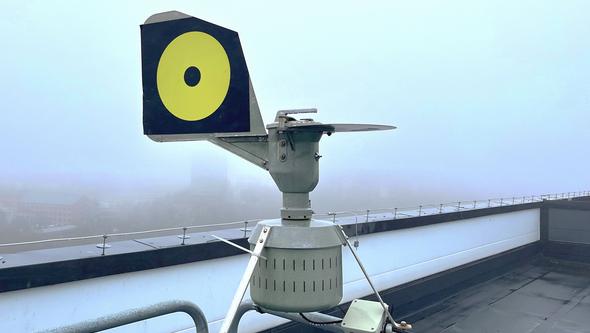
In addition to our Hirst-type traps, we also measure pollen concentrations using automatic pollen traps that identify pollen almost in real time with the help of AI. The technology is still under development and currently serves as a complement to traditional Hirst traps, but it will likely play an increasingly important role for pollen monitoring in the future.
Allergenic Pollen and Spores
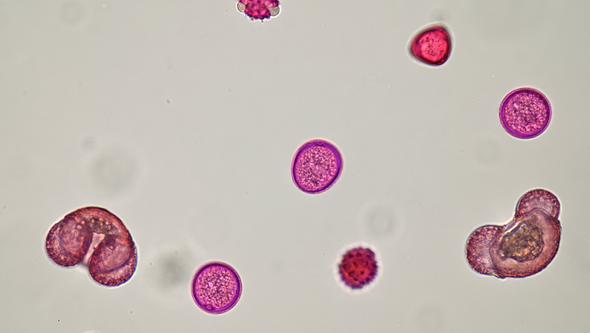
All pollen types present in the samples are identified and recorded. The focus is on around forty species, genera, and families, of which the following are considered allergenic and common in Sweden: alder (Alnus), elm (Ulmus), birch (Betula), beech (Fagus), oak (Quercus), plantain (Plantago), mugwort (Artemisia), grasses (Poaceae), hazel (Corylus), ragweed (Ambrosia), docks and sorrels (Rumex), willows (Salix), as well as the fungal spores Alternaria and Epicoccum.
The pollen season begins early in spring with the flowering of hazel and alder. During April, birch and several other trees begin to flower, while summer allergy symptoms are often dominated by pollen from grasses and mugwort. Other pollen types are identified in order to monitor trends in flowering and distribution among both native and invasive species.
More information about allergenic pollen can be found here: Allergenic Pollen.
Phenology and Citizen Science
Phenological information — that is, knowledge about seasonal changes in nature, such as when flowering begins — is an important support in our forecasting work. Since we cannot be present everywhere at the same time, contributions from citizen scientists are highly valuable. Observations can be reported through Nature’s Calendar.
The Pollen Diary
The Pollen Diary is a web-based service and research project where people with pollen allergies can record their symptoms and compare them with measured pollen concentrations. This can provide users with a better understanding of what they react to, while also giving researchers valuable information that may help improve pollen forecasts. For example, the Pollen Diary can increase knowledge about how much pollen of a certain type is required to trigger symptoms. Users remain completely anonymous, and only an email address is required. You can read more here: Pollen Diary.