SANT Conference 2026: Interventions
On 22-24 April 2026, the Swedish Anthropological Association (SANT) held its annual conference at the School of Global Studies. This year’s theme was: Interventions.
Theme: Interventions
In the world around us, interventions take place in all spheres of life and at every imaginable scale. They may be grand or modest, deliberate or accidental, transformative or destructive. A government policy, a medical treatment, a social movement, an artistic act, a conversation, or the presence of an anthropologist in the field or the lecture room: all may be understood as interventions. They share a common desire to make change, to redirect the flow of life and meaning. Yet the outcomes of interventions are never fully predictable. They may generate care, curiosity, and connection, or provoke resistance, refusal, and rupture. Interventions always act in the space in-between people, institutions, ideas, and possible futures.
Anthropology studies interventions, their rationale, effects and responses. Often, anthropology positions itself in critique, resisting or exposing the consequences of intervention, or exploring what it might mean to hold back, to refrain, to not act. Moreover, anthropology has always been bound up with intervention. Doing anthropology is never neutral: the presence of an anthropologist alters the relations, stories, and meanings that come into view. Through writing, teaching, and collaboration, anthropologists participate in how others think and act. Sometimes this is deliberate, a choice to use knowledge as engagement, at other times, intervention occurs unexpectedly, through relationships that pull us into new responsibilities. Increasingly, anthropology is urged to intervene. Climate crisis, injustice, and displacement call for more than being observers, but risks replicating the power dynamics we critique. What might responsible, yet critical, anthropological interventions, in research, teaching, and public engagement, look like?
Registration
Conference fees:
Registration closed on 1 April 2026.
Co-organizers of the conference


Venue
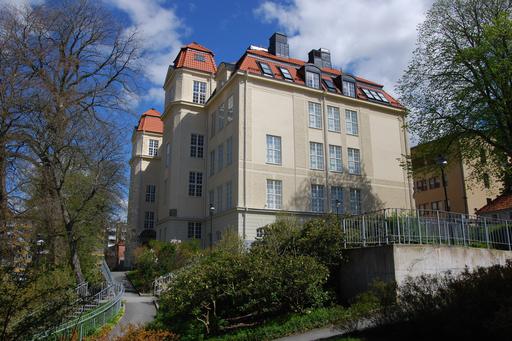
The conference was be 22-24 April 2026 at Annedalseminariet (Seminariegatan 1A) and Linnésalen (Seminariegatan 1B), which are located at Campus Linné in Gothenburg.
See building 1A and 1B in the picture below:

Conference dinner
The conference dinner was held at Restaurant Simba at 19:30, Thursday 23 April.
List of suggested lunch restaurants nearby:
Schedule and program
Conference program
Please see the link below for an updated list of panels and paper abstracts:
Schedule
Please note:
AH: Assembly Hall, 5th floor, Annedalseminariet
LS: Linnésalen, ground floor JMG-building, across the yard
Day 1 - Wednesday
| Wednesday 22 April | Plenary | Room 420 | Room 402 | Room 407 | Room 406 |
|---|---|---|---|---|---|
| 12.00-13.00 | AH: registration | ||||
| 13.00-15.30 | P7 | P17 | P3 | P1 | |
| 15.30-16.00 | AH: break | ||||
| 16.00-17.30 | LS: keynote Marianna Keisalo | ||||
| 17.30-19.00 | LS: mingle |
Day 2 - Thursday
| Thursday 23 April | Plenary | Room 420 | Room 402 | Room 407 | Room 403/303 |
|---|---|---|---|---|---|
| 9.00-10.30 | P12 | P17 | P13 | P8 (room 403) | |
| 10.30-11.00 | AH: break | ||||
| 11.00-12.30 | P12 | P17 | P4 | P9 (room 403) | |
| 12.30-13.30 | Lunch (self organised) | ||||
| 13.30-15.30 | P11 | P12 | P5 | P2 (room 303) | |
| 15.30-16.00 | AH: break | ||||
| 16.00-17.15 | LS: roundtable discussion | ||||
| 17.15-18.30 | LS: SANT annual meeting | ||||
| 19.30 | Dinner at restaurant Simba |
Day 3 - Friday
| Friday 24 April | Plenary | Room 420 | Room 402 | Room 407 | Room 419 |
|---|---|---|---|---|---|
| 9.00-10.30 | P5 | P10 | P18 (starts at 9.45) | P15 | |
| 10.30-11.00 | AH: break | ||||
| 11.00-13.00 | P5 | P10 | P16 | P6 |
Panels
Key Note speaker - Marianna Keisalo
Marianna Keisalo is a university lecturer and docent in Social and Cultural Anthropology at the University of Helsinki, where she received her PhD in 2011. She has also worked as a post-doctoral fellow at Aarhus University. Her research is focused on performance, semiotics, and humor. She has done ethnographic research on ritual clowning with the Yaquis, an indigenous group in Northern Mexico and stand-up comedians in Finland. Marianna also performs as a stand-up comedian.

Title Key note: Humor as intervention: Playing with perspectives
What kind of intervention does humor involve? Humor is an ambivalent and often indirect mode of expression, that can be used to subvert convention, to criticise, or as resistance. It can also be used to maintain power structures or to brush off criticism. Humor as intervention can happen in conventional spaces reserved for this through established genres of performance. A spontaneous joke or other bit of humor can be an interjection or interruption, a tiny moment of liminality in everyday social life. In this paper, I will explore humor’s potentials for intervention through semiotic analysis of examples from my ethnographic research on Finnish stand-up comedy and ritual clowning. How are interventions via humor structured, what is intervened upon in these cases? What can be said about the efficacy of humor in different contexts? At the heart of a joke is an incongruity, a twist of perspective that disrupts business as usual. While not all humor is aimed at making changes, it does involve a redirection in the flow of meaning, which may map onto a redirection in other spheres of life. At the same time, its inherent ambivalence means that humor may need more interpretation than more straightforward modes of communication. I will look at how the volatile nature of humor is part of its power even as it runs the risk of undermining the message.
Roundtable discussion: Intervention as a professional skill for anthropologists
Participants:
- Hannah Tubman, University of Manchester, UK
- Maria Padrón Hernández, University of Malmö, Sweden
- Mette Terp Høybye, University of Aarhus, Denmark
- Dan Podjed, University of Ljubljana, Slovenia
Convener: Steffen Jöhncke, University of Gothenburg, Sweden
Intervention may be defined as “interference in the affairs of others” (dictionary.com). This round table discussion is based on the observation that the ability to intervene in a relevant manner in the work of other professions is a fundamental skill for any anthropologist working beyond academia: The vast majority of people trained in anthropology do not do research but practice their critical thinking and professional skills in work settings predominantly defined and staffed by other disciplines (medicine, social work, education, engineering, public and corporate administration, etc.). In these relationships, anthropology is at best one professional contribution to solving the organisationally defined task at hand – contributing to interventions in the broader sense of the term: “intentional action to change a situation, with the aim of improving it or preventing it from getting worse” (Cambridge Dictionary).
Moreover, the ability to intervene – in the sense of “interfere in the affairs of others” – also seems increasingly important for academic researchers, as the requirement to do interdisciplinary research appears to become ever stronger. Given prevailing patterns of research funding, also the small minority of anthropologists who are academic researchers must prove increasingly how their work contributes to interdisciplinarity and politically defined agendas.
These circumstances imply that anthropologists both within and beyond academia can make the anthropological perspective count only by intervention – meddling in the affairs of others. Anthropologists rarely define independently the conditions and implications of their own work, and what makes “anthropological sense” within the community of anthropologists is rarely enough to make a difference in practice. Anthropology must prove rather than assume its relevance and practical value as these terms and standards are defined by others; anthropologists must enable their own interventions.
Intervention as a framework and condition of professionalism in anthropology raises a range of questions about how we think, teach and practice the discipline. How may we enable anthropologists within academia to learn more from the experiences of anthropologists beyond (and vice versa) in terms of successful interventions? How do we strengthen and develop the integrity of anthropology as a professional form of knowledge and intervention in interdisciplinary collaborations – within and beyond academia? How do we teach intervention skills? How do we maintain the critical perspective of anthropological training while also supporting students’ legitimate need for practically applicable and interdisciplinary experience? … and many other questions.
About the organizer
The host, the School of Global Studies, is an interdisciplinary department at the University of Gothenburg, consisting of several social sciences: Peace and Development Research, Human Ecology, Human Rights and Social Anthropology.