
Winter, Snow and Ice in the Cultural History of Climate
How did cold, snow and ice shape people’s everyday lives and understandings of the world? Researchers in history of ideas at the University of Gothenburg are investigating historical conceptions of cold during the Little Ice Age. They are now presenting their research in a mini-exhibition in collaboration with the Gothenburg Natural History Museum.
During the Little Ice Age — approximately 1550 to 1820 — much of Northern Europe experienced long, harsh winters and short, often wet summers. While many studies of this period have focused on its political and social consequences, researchers Cecilia Rosengren, Björn Billing and Cecilia Sjöholm approach the subject from intellectual-historical and aesthetic perspectives.
“We explore cultural imaginaries — how people thought about, described and represented their experiences of cold,” says Cecilia Rosengren. The project draws on scientific texts, travel journals, art and early weather reports to examine how physical experiences of cold interacted with ideas and cultural expression.
Cold as an Object of Knowledge
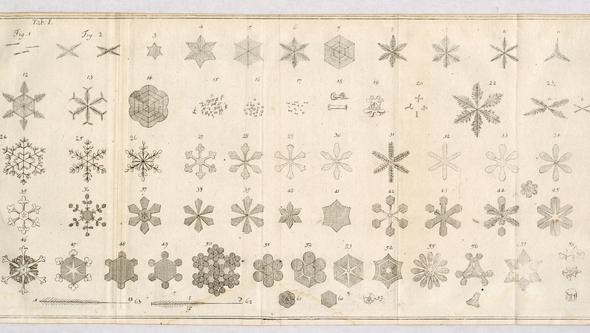
In the seventeenth and eighteenth centuries, older worldviews were gradually replaced by experimental natural philosophy, where measurement and observation were central. Cold became a phenomenon to be understood and explained scientifically. The English natural philosopher Robert Boyle was one of the first to attempt a systematic study of cold in his work A History of Cold.
Everyday attention to the weather also grew during this period, with systematic temperature recordings and early weather reports appearing in the press. Winter and its various expressions — from snowflakes to ice — became prominent themes in both art and philosophy.
Travels to the Arctic
Less ordinary, but crucial to this development of knowledge, were the polar expeditions undertaken to the Arctic. For early modern travellers, the icy landscape was both an exotic and perilous environment. At the same time, encounters with these frozen realms sparked fascination and new questions about icebergs, the northern lights and the broader climatic significance of great ice masses.
“There were even early speculations about climate manipulation. One thinker in the late eighteenth century — Charles Darwin’s grandfather — hypothesised about transporting icebergs southwards to cool warmer regions and simultaneously warm northern Europe,” says Björn Billing.
A Nordic Identity
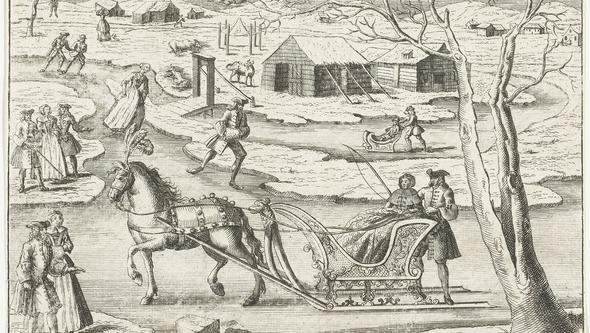
The project also highlights how people learned not just to endure the cold, but to live with it. During this period, northerners began to defend and reinterpret their climate.
“There was once a belief that the North was inhospitable and barely habitable. But Nordic scholars and thinkers turned this around, emphasising the positive aspects of cold,” says Rosengren.
Cold was associated with industriousness, health and ingenuity. The ability to build warm houses, make clothing and thrive amid extreme contrasts between indoors and outdoors became part of a Northern identity. Cold was even seen as a source of creativity.
Humanities Meet Natural Science
Although the project focuses on cold, it offers important perspectives for understanding today’s climate change.
“Today we talk almost exclusively about warming, but during this period, it was cold that was the problem. What unites then and now is that rapid climate change leads to extreme and unpredictable weather events,” says Billing.
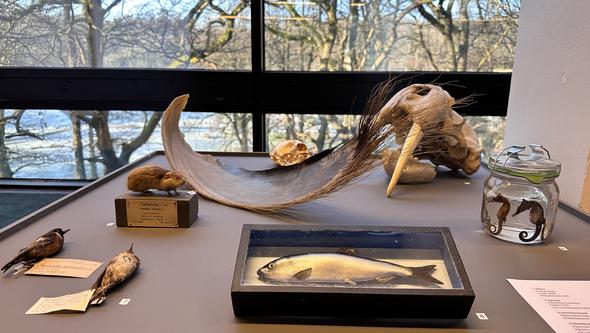
The research on cold during the Little Ice Age is presented in a mini-exhibition and seminar series in collaboration with the Natural History Museum. Researchers emphasise the value of cooperation between the university and institutions with strong communicative and educational roles, as well as the importance of creating spaces where the humanities and natural sciences can meet.
Text: Hanna Erlingson
The Little Ice Age (c. 1550–1820) was a period of colder climate in Europe and across the Northern Hemisphere. Cold winters and short summers affected agriculture, social life and the ways in which people understood nature and climate.
The term Little Ice Age is used primarily as a historical and climatological designation, rather than as a precisely defined climatic period.

