
"The Way Forward" – Industry Learns About Marine Microplastics Aboard R/V Skagerak
What can the latest research tell us about how microplastics spread through our seas? Over the course of two days, representatives from the Swedish plastics industry and several public authorities have had the opportunity to explore these questions at this year’s GUIDE-days.
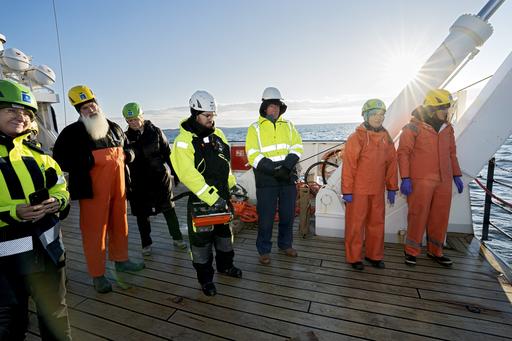
This year’s GUIDE-days focused on microplastics in the ocean, and the first day was spent on board R/V Skagerak, where participants were able to experience just how much work lies behind scientific results.
During the journey from Gothenburg port out into the archipelago, researchers from the University of Gothenburg and Chalmers University of Technology demonstrated how sediment and water samples are collected. It was a sunny day at sea, where mud and seawater blended with new knowledge and fresh insights.

Voices from GUIDE-days: Microplastics and Marine Health – Challenges and Solutions
Helena Martinell, County Administrative Board of Västra Götaland

Environmental engineer working with oversight of chemical industries, including plastics production.
Why do you take part in GUIDE-days?
“Understanding what researchers find helps us make better decisions, and events like this lower the threshold between academia and industry.”
What was it like to come aboard and take part in the research work?
“It was an eye-opener to see how much effort and precision are required to collect reliable data. And the vessel itself is fantastic.”
How do you view bringing industry, authorities and researchers together?
“The more we understand each other’s realities, the easier it becomes to find solutions. Seeing the science behind the results makes you more motivated to take action.”
What will you take with you from GUIDE-days?
“A greater respect for how complex this research is – and for the importance of continuing to talk to one another.”
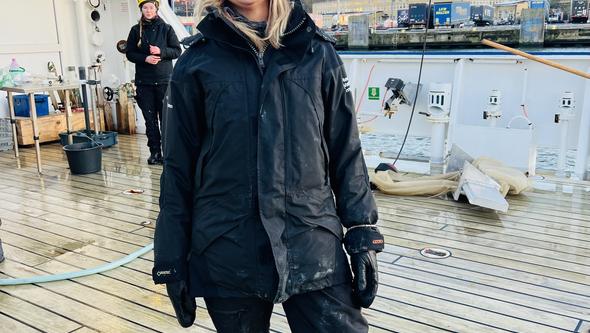
Johanna Eriksson, Swedish Agency for Marine and Water Management (HAV)
Policy analyst working with marine environmental monitoring and governance.
Why do you take part in GUIDE-days?
“Networking is invaluable. Meeting in person makes future collaboration so much easier.”
What was it like to join the sampling activities on board?
“As someone who often works at a desk, it was incredibly rewarding to actually take samples myself. It changes how you read reports and think about policy.”
What are the biggest challenges for you in the field of microplastics?
“To create effective measures, you need to understand how the research is carried out and what is actually possible.”
What will you take with you from GUIDE-days?
“A better understanding of research in practice – and new contacts I know I’ll make use of in the future.”

Rebecka Westerberg, INEOS/Inovyn
Laboratory Manager focusing on emissions issues and sustainable development.

Why do you take part in GUIDE-days?
“It sounded like a highly relevant forum. We face the same challenges as authorities and researchers, and we want to show that we are committed to improving.”
What was it like to come aboard and see the research up close?
“Very interesting and great fun. Seeing how the sampling is carried out definitely gave me a much deeper understanding.”
How do you view collaboration between industry and academia?
“This is absolutely the way forward. Collaboration is possible, and we want to show that we are willing to develop.”
What will you take home from the event?
“A fantastic atmosphere and a much better understanding of the research conducted on board.”
Mark Peternell, University of Gothenburg
Senior Lecturer in Structural Geology at the Department of Earth Sciences, University of Gothenburg.

Why do you take part in GUIDE-days?
“It’s an excellent opportunity to exchange perspectives between academia, industry and public authorities.”
What are the biggest challenges in microplastics research?
“We still need to understand how much microplastic is present in the environment, how it is transported, and what effects it has on organisms and human health.”
How do you view this form of meeting?
“A brilliant concept. We need more events like this, where different actors can meet and learn from one another.”
What will you take with you from the GUIDE-days this year?
“The hope that we can build even more collaboration, develop better methods and create a stronger shared understanding.”
Text: Agnes Faxén
Each year, the Faculty of Science and Technology at the University of Gothenburg creates opportunities for representatives from industry to engage with research groups at the university, with the aim of fostering collaboration focused on problem-solving and innovation.
The vision is to initiate, establish and develop meaningful and successful partnerships between the academic world and commercial actors — between researchers and industry partners. GUIDE-days therefore strives to build strong and lasting links in the form of joint research projects, educational collaborations at bachelor’s, master’s and doctoral level, as well as courses or even opportunities for shared office spaces between industrial and academic partners.


