Microplastics in glaciers
Short description
Microplastic pollution is a growing threat to the biosphere and affects the food chain and human health. This project studies the accumulation and transport mechanisms of microplastic pollution in glacial environments and their potential environmental impact. The focus of this case study is Vatnajökull, Europe’s largest ice cap by volume.



Microplastics in Glaciers (Örplast í jöklum)
A three‑year, RANNÍS‑funded project to trace how microscopic plastic particles reach, move through, and leave glaciers—and what that means for our rivers and oceans.
Why this matters
Microplastics—tiny fragments of plastic—are now found from the deep ocean to the highest mountains. Glaciers, which store freshwater and regulate ecosystems, may also trap and transport these particles. With global plastic pollution projected to triple by 2040, understanding the role of glaciers is a pressing scientific and societal need. This project uses Vatnajökull, Europe’s largest ice cap by volume, as a real‑world laboratory to deliver the first integrated picture of (i) how microplastics are deposited on glaciers, (ii) their fate within the ice, and (iii) the pathways that carry them from glacial systems to freshwater and the sea.
What we will do
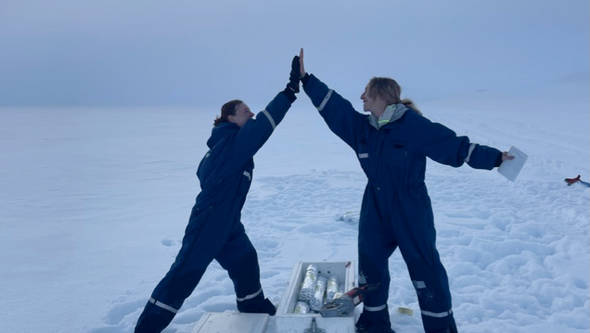
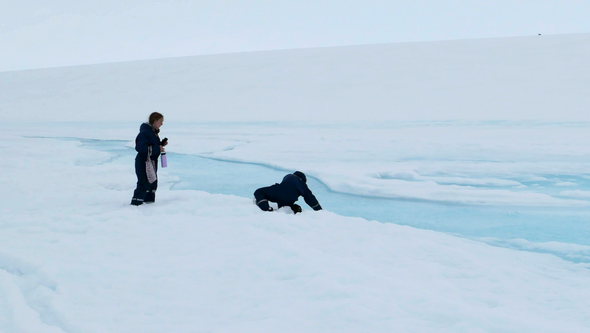
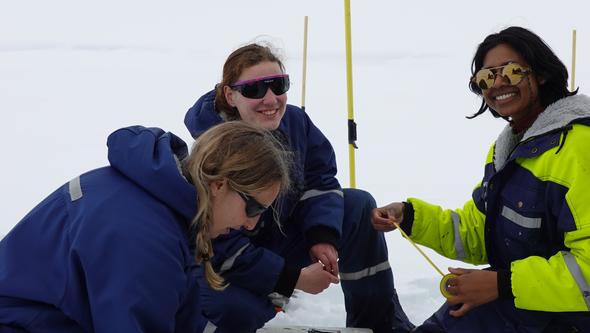
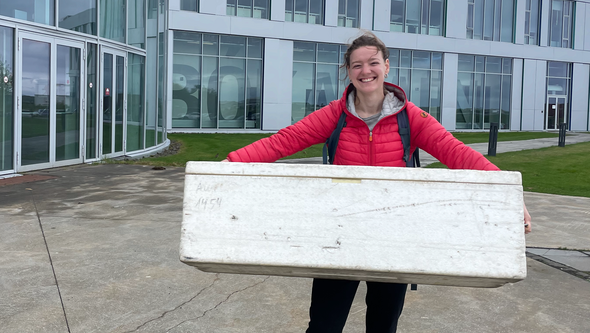
- Field campaigns on Vatnajökull: We will drill snow/ice cores that reach through the two most recent annual layers at five carefully chosen sites and collect matched samples from glacial and non‑glacial runoff. To ensure robust results, every location is sampled in triplicate and accompanied by field blanks.
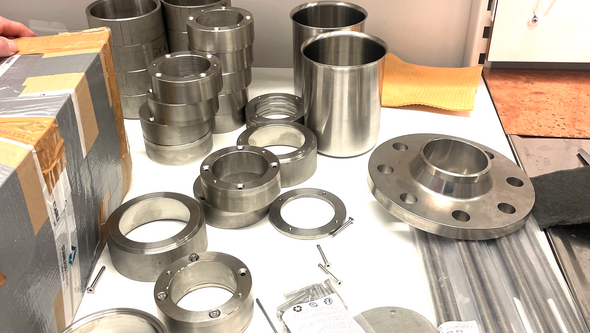
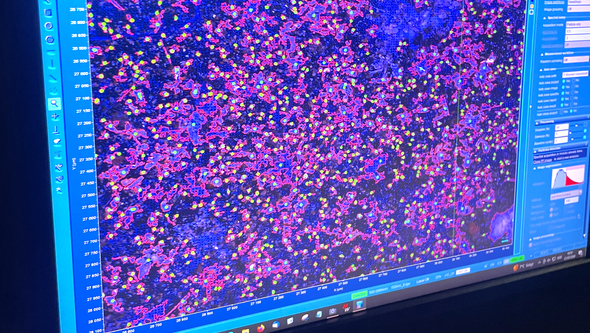
- Laboratory analysis: Using a state-of-the-art microplastic laboratory and micro‑Raman spectroscopy—with strict quality assurance and contamination controls—we will identify each particle’s size, shape, color, and polymer type. These data allow us to estimate concentrations in the annual snow layer and quantify how much plastic falls on Vatnajökull each year.
- Numerical modelling: Coupled ice‑flow, surface mass‑balance and hydrological models will track potential transport routes into, through, and out of the glacier to nearby rivers and to the coastal ocean. The goal is to reveal whether temperate glaciers act as sinks, sources, or conveyors of microplastics.
What will come out of the project
- The first glacier‑wide estimate of microplastic load for Vatnajökull’s annual snow layer and an assessment of the most likely sources and atmospheric pathways.
- New insight into the fate of microplastics inside ice, including whether and how particles accumulate or are flushed to runoff.
- Open, FAIR data hosted on a project repository, six peer‑reviewed articles, and tailored outreach products—including a short documentary and a policy seminar—to support evidence‑based decision‑making in Iceland and beyond.
Participants in the project
The project is led by Professor Hlynur Stefánsson (Reykjavík University), with a multidisciplinary team from the University of Gothenburg, the University of Iceland, the University of Akureyri, the Icelandic Met Office, the National Power Company (Landsvirkjun), and the Icelandic Glaciological Society. Two PhD projects are embedded in the work, ensuring strong training and continuity.
Reykjavik University
Hlynur Stefánsson
hlynurst@ru.is
Sydney Lauren Fox, PhD student
sydneyf23@ru.is
Floortje Johanna Van Bemmel, PhD student
floortje25@ru.is
University of Gothenburg
Mark Peternell
mark.peternell@gu.se
Philipp Wanner
philipp.wanner@gu.se
Erik Sturkell
erik.sturkell@gvc.gu.se
Matthias Konrad-Schmolke
matthias.konrad.schmolke@gu.se
University of Iceland
Guðfinna Th Aðalgeirsdóttir
gua@hi.is
Eyjólfur Magnússon
eyjolfm@hi.is
Finnur Pálsson
p@hi.is
Icelandic Met Office
Þorsteinn Þorsteinsson
thor@vedur.is
Hrafnhildur Hannesdóttir
hh@vedur.is
Landsvirkjun
Einar Jón Ásbjörnsson
Einar.Jon.Asbjornsson@landsvirkjun.is
Andri Gunnarsson,
Andri.Gunnarsson@landsvirkjun.is
University of Akureyri
Ásta Margrét Ásmundsdóttir
astam@unak.is
Funding and recognition
Funded by the Icelandic Research Fund (Rannís), Grant No. 2511294‑051. The team’s earlier discovery of microplastics in Vatnajökull has already attracted international attention, underlining the urgency and relevance of this work.
Contact

Contact