Plant Systematics and Evolution: Diversity in Space and Time
Short description
Focusing on flowering plants, we seek to:
- Document diversity (taxonomy, population genetics, systematics);
- Elucidate the processes by which diversity is generated and maintained (evolutionary biology);
- Explore trait and niche evolution, and their consequences for taxon distribution (evolutionary biology, ecology, ecophysiology);
- Understand the distributions of species richness and vegetation type (biogeography, ecology); and
- Use historical taxon data to reveal environment history (systematics, population genetics, evolutionary biology).
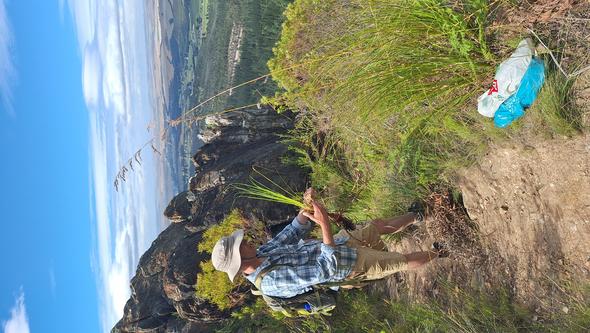
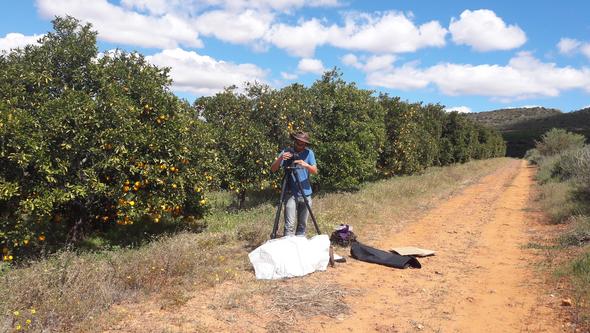
Our work is integrative, exploiting diverse data types and analytical approaches. Fieldwork is central. By improving our knowledge and understanding of biodiversity, our work supports biodiversity conservation.
Students with an interest in joining our team are welcome to get in touch!
About
Tony Verboom obtained his PhD from the University of Cape Town (UCT) in 2000. Following a postdoc at the University of Missouri-Saint Louis (2000-2001), he took up a lectureship at UCT, thereafter moving up through the ranks, and becoming a full professor in 2022. From January 2021 to December 2023 he served as Head of the Department of Biological Sciences and Director of the Bolus Herbarium (BOL) at UCT. Since January 2024, Tony has held the position of Professor of Plant Taxonomy and Geography jointly hosted by the University of Gothenburg and the Gothenburg Botanical Garden.
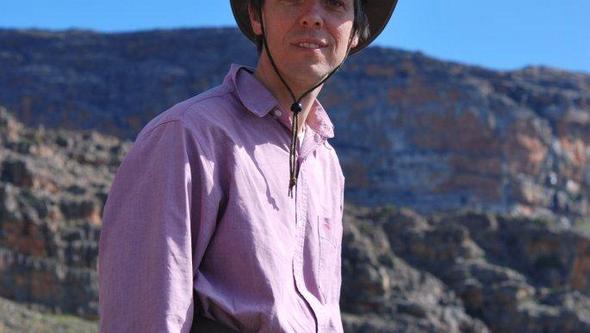
Tony’s research straddles systematics, biogeography, evolutionary biology, ecology, and ecophysiology. As such, it is integrative and exploits diverse data types and analytical approaches. Much of Tony’s research has focused on the flora of southern Africa, particularly the Greater Cape Floristic Region (GCFR) and, while he retains an active research program on this system, he is interested in developing research on Eurasian plants.
To date, Tony has authored or co-authored ca. 90 articles in peer-reviewed journals and three book chapters. He has also co-edited a book of contributed papers. His Google Scholar profile can be accessed here via this link.
Tony has considerable experience of supervising research students, having graduated 18 masters and eight doctoral students. He has also hosted five postdoctoral fellows. He is currently principal supervisor of two PhD students.
Current projects
Dispersal as an engine of diversification
Contact person: Tony Verboom
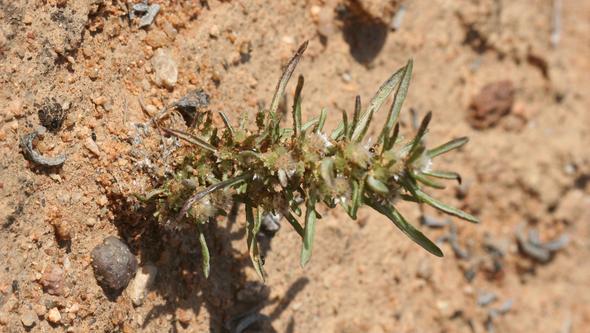
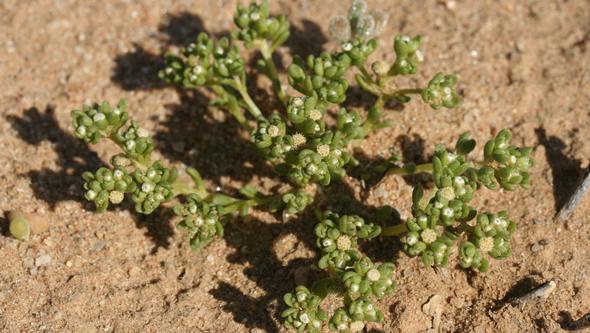
While human-mediated long-distance dispersal (LDD) presents a threat to biodiversity owing to the invasive success of many alien species, historical LDD appears to have stimulated diversification by presenting novel opportunities and conditions of ecological release. Focusing on the large Asteraceae Core Clade (ACC; 24 000 species), which radiated initially in southern Africa (SA) and globally following repeated LDD to other continents, this project tests the hypothesis that LDD stimulates diversification at both global and regional scales, producing a pattern of nested radiation. It also evaluates the factors that modulate the effect of LDD on diversification. Inter alia, a comprehensive species-level phylogeny of the SA ACC radiation is a core output of this project.
Twenty-first century species discovery
Contact person: Tony Verboom
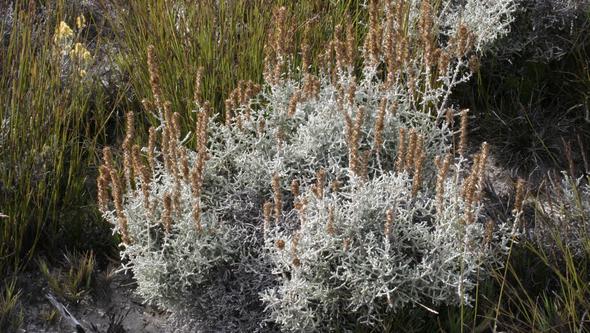
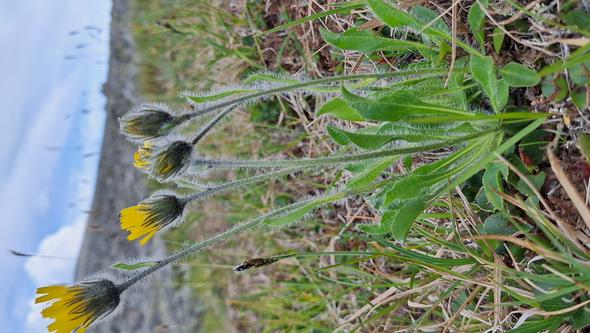
Along with the emergence of new theory and analytical methods, the development of next-generation DNA sequencing (NGS) technologies has transformed taxonomy, enabling the individual and population relationships to be resolved in a way that was previously unimaginable. Together with other kinds of data (e.g., phenotypic, ecological), we use NGS sequence data to re-assess the taxonomy of taxonomic entities which have hitherto been treated as single species but which likely comprise multiple, closely related species. Already this work has led to the discovery and description of many new species. While our focus to date has been on plants native to South Africa, we are keen to explore diversity in other systems, including the Eurasian flora, and are currently applying for funding to work on Swedish Hieracium.
Ex situ conservation of wild plants
Contact person: Tony Verboom
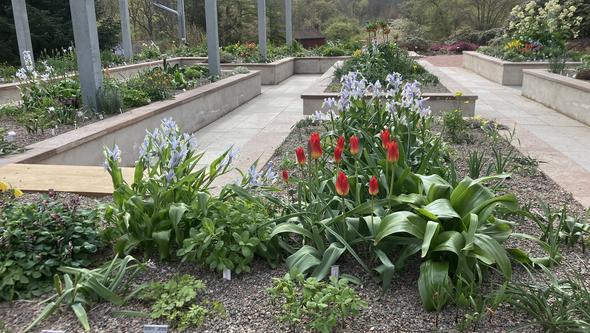
Botanical gardens have a critical role to play in the conservation of threatened plant diversity, primarily as sites of ex situ conservation. As the occupant of a position that straddles the University of Gothenburg and the Gothenburg Botanical Garden, I am involved in the development of research projects which support the garden’s conservation agenda. One such project aims to establish of a global network for the conservation of selected geophytic or bulbous plant clades. Inter alia this project seeks to establish conservation priorities using species threat status and phylogenetic distinctness, and to develop protocols for the capture and ex situpreservation of wild genetic diversity. A second project has a similar objective but for threatened Swedish wild plant species.
Understanding population genetic diversity
Contact person: Tony Verboom
Species vary in the amount of genetic diversity held in their populations and in amount of population genetic differentiation. Understanding the drivers of this variation is challenging since it also varies within species and is influenced by many factors. Since genetic diversity influences the ability of populations to adapt to a rapidly changing world, however, understanding its causes is important. Focusing on plant lineages native to the Cape region of South Africa, we study patterns of genetic diversity both within and across species, with the aim of understanding its causes and as a means of identifying areas and habitats which have likely functioned as climate refugia in the past. Historical refugia may offer protection against contemporary climate change and thus warrant special conservation attention.