
ERC Starting Grant to research on Southern Ocean’s critical climate function
The Southern Ocean plays a central role in making the Earth's climate habitable. Marcel du Plessis has now been awarded an ERC Starting Grant of €2.5 million from the European Research Council to investigate how air-sea interactions impact ocean heat uptake in the region.
“Despite its central role, we don’t have a grasp on how this heat moves from the atmosphere into the surface ocean and, critically, down to greater depths, where the heat is stored for centuries. This knowledge deficit leads to uncertainties about the ocean's continued capacity to provide this essential climate service,” says Marcel du Plessis, researcher at the Department of Marine Sciences, University of Gothenburg.

Unique wind and wave conditions
The Southern Ocean plays a dominant role for the earth’s climate, absorbing up to 80% of the excess heat in the atmosphere. It helps to mitigate global warming and prevents the temperature in the atmosphere from rising to uninhabitable levels.
However, it is still unclear exactly how these processes work. The knowledge gaps are particularly in understanding the interactions and feedback between storms and the complex three-dimensional ocean circulation – vital for slowing atmospheric warming. This lack of knowledge adds uncertainty to climate models, as the usual mathematical models for air-sea heat exchange and the vertical movement of heat in the ocean are insufficient for the unique wind and wave conditions in the Southern Ocean.
“Our goal is to deliver the first Southern Ocean-wide view of observed vertical heat transport, linking ocean temperature changes and climate-scale forcing. This brings us one step closer to understanding how the ocean and atmosphere interact to regulate our climate”, says Marcel du Plessis.
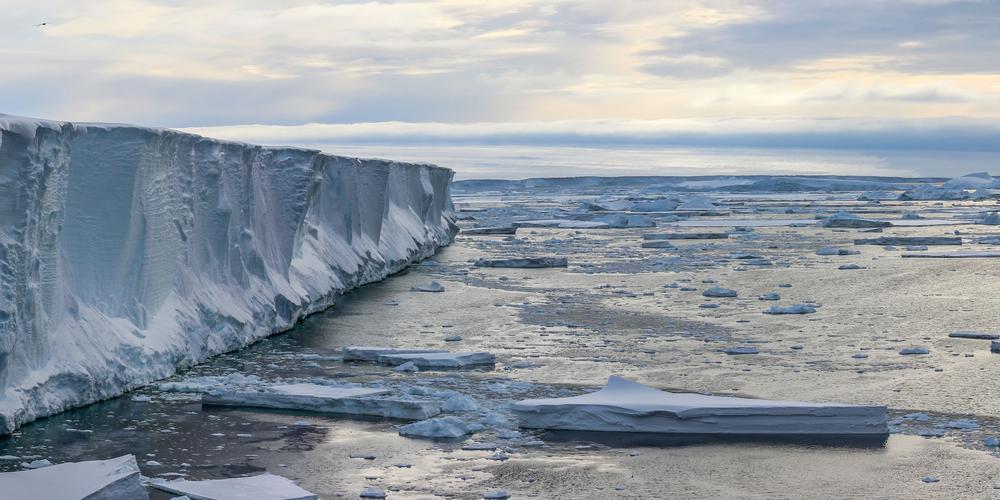
Main hypothesis: storms have an impact
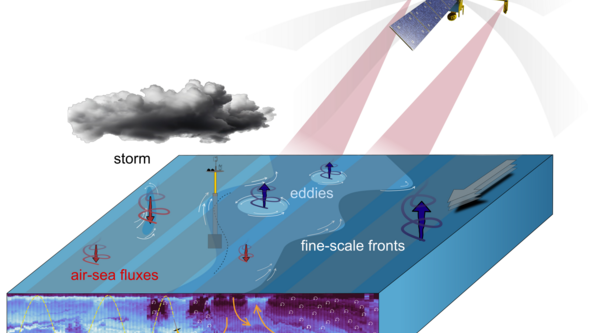
Marcel du Plessis previous research in the Southern Ocean has demonstrated the prevalence of rapidly evolving ocean eddies and fronts sizing between 1-100 km, termed the “ocean fine-scale”. His research has shown that the ocean fine-scale has a potential key role in longer-term heat capture in the Southern Ocean. The goal of this new project is to determine how efficient these fine-scale processes are at moving heat from the atmosphere to the deep ocean.
“My main hypothesis is that the vertical transport of heat into the ocean interior is strongly regulated by fine-scale ocean fronts, eddies and filaments, which are profoundly influenced by immense and turbulent storms” says Marcel du Plessis.
The research project will use a multi-disciplinary approach, integrating state-of-the-art modelling with novel observations using innovative ocean robots, including free-drifting air-sea interaction towers paired with state-of-the-art autonomous underwater gliders.
Critical climate challenge
The project will also use key satellite data from the newly launched ESA/NASA Surface Water Ocean Topography (SWOT) satellite mission, which offers a "never seen before view of ocean circulation.
“I’m excited to take on this responsibility and get started. It’s a critical climate challenge, and I am grateful that this project has been recognised by the ERC Starting Grant committee as important for global marine and climate research,” says Marcel du Plessis, researcher at the Department of Marine Sciences, University of Gothenburg.
Writer: Annika Wall
ERC Starting Grants are awarded talented early-career scientists who has already produced excellent supervised work, and show potential to be a research leaders.
Recipient: Marcel du Plessis, Department of Marine Sciences, University of Gothenburg.
Funder: European Research Council, ERC
Project title: Southern Ocean Fine-Scale Interactions with the Atmosphere (SOFIA)
Amount: 2.5 million euros
Duration: 5 years
The University of Gothenburg is contributing with a strategic co-financing of SEK 3.75 million to the research project, which will greatly assist the project, including the icebreaker expedition to the remote Southern Ocean.
Total amount: Approximately SEK 29 million
More information about the ERC Starting Grant
More information about the 2025 recipients of the ERC Starting Grant is available on the ERC website.


