

- Home
- Computer Science and Engineering
- Honorary doctors
Honorary doctors
Honorary doctors at the Department of Computer Science and Engineering, University of Gothenburg.
By nominating somebody for a honorary doctorate we want to draw attention and reward a person outside the organisation, who have contributed in a special way to the research and education at the Department of Computer Science and Engineering.
The Conferment of Doctoral Degrees takes place in the Congress Hall at the Swedish Exhibition Centre - Svenska Mässan - in Gothenburg.
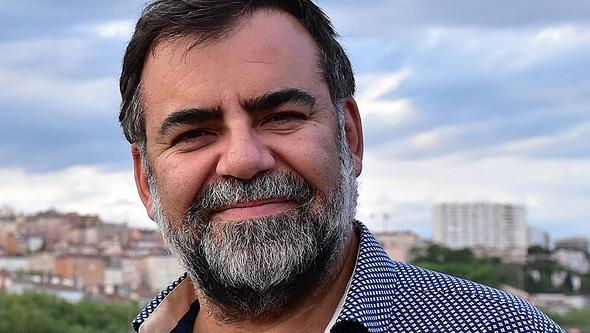
Renowned computer science researcher Ricardo Baeza-Yates has been appointed an honorary doctorate at the Faculty of Science and Technology. Baeza-Yates is a leading researcher in AI and information retrieval on the Internet.
Congratulations to the Honorary doctor title, what are your feelings upon this?
“It was a complete surprise; I didn't know that I had been proposed for this honor. In addition, as this is my first Doctor Honoris Causa, it seems a bit surreal. However, I am very happy and looking forward to receiving this honor in October.”
What in your research field makes it so interesting?
“AI is changing our world in so many ways and so fast, that looking at how to build AI systems that are responsibly owned by its creators is a real challenge. This is an interdisciplinary endeavour between computer science, ethics, law, design, sociology, psychology, which makes it even more challenging. It is a field that focuses on making a better society; it’s the perfect combination of a hard research challenge with practical benefits.”
Your recent research looks into operationalizing the responsible use of AI. Why is that so important?
“Because responsible AI (RAI) can only succeed if we understand how to put AI principles in practice. That entails how to correctly do risk and impact assessments, how to set up RAI governance, how to design, develop, evaluate, deploy and maintain an AI system and perhaps the most important one; how to train all the people involved.”
What have been the highlights in your cooperation with the University of Gothenburg?
“I have visited the Department of Computer Science and Engineering giving talks and last year I became an affiliated professor. Currently, we are preparing a proposal for the Scandinavian call of the responsible use of AI with Professors Dubhashi and Schneider.
This year seems to have a special Swedish connection as I also won a Distinguished Guest Professor position funded by the Wallenberg AI, Autonomous Systems and Software Program at the KTH Royal Institute of Technology. Hence, I will visit Sweden for six months in the next two years and therefore I will also be in Goteborg more often”, says Ricardo Baeza-Yates.
The promotion ceremony takes place on 17 October 2025.
Motivation:
Ricardo Baeza-Yates is a professor of the practice and the director of research at Northeastern University's Institute for Experiential Artificial Intelligence, based in Silicon Valley. He has held leading positions in both academia and industry: Full Professor (part-time) at the Dept. of Engineering, Universitat Pompeu Fabra, Barcelona, Catalonia, Spain, since 2004. And (part-time) at the Dept. of Computing Sciences, Universidad de Chile, Santiago, Chile. He was VP for Research for Yahoo Labs 2006-2016. He is a Fellow of the ACM and IEEE. He is a Corresponding member of the Brazilian Academy of Sciences since 2019, a founding member of the Chilean Academy of Engineering since 2010 and a member of the Chilean Academy of Sciences since 2023, corresponding member 2002-2022.
He has been a leading researcher in the area of information retrieval on the web. He is a co-author of the most used and cited textbook on search concepts and technology: Modern Information Retrieval (two editions and translated to Japanese, Korean, and Portuguese). More recently, he has focused attention on safe and responsible use of AI. He was a lead co-author with Jeanna Matthews of the ACM Statement on Responsible Algorithmic Systems, Oct 2022.
He has over over 600 publications, 57000 citations and a H-index of 92.
Ricardo has had close contact with the CSE Department for over two decades. There has been long running collaboration with Ricardo and the CSE department since the establishment of Yahoo Labs in Barcelona 2008. There have been exchange visits of faculty and Ph.D. students in both directions. Ricardo was the discussion leader for the Licentiate degree of Devdatt Dubhashi's Ph.D. Student Libertad Tansini. A joint paper appeared in the premier IR venue SIGIR 2011 on user intent detection. Ricardo visited the CSE Department most recently in 2024 to give a Department colloquium on responsible AI.
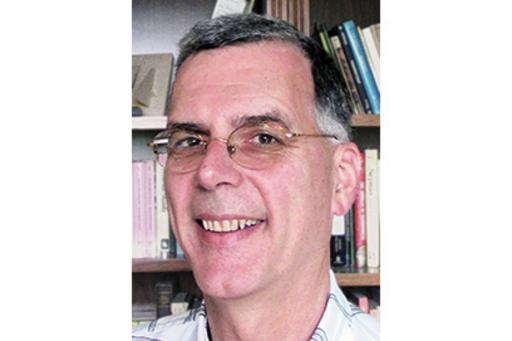
Terry Regier, professor of linguistics and and cognitive science at University of California, Berkeley, USA, has been appointed honorary doctor at the IT Faculty of 2023.
Professor Devdatt Dubhashi at the Department of Computer Science and Engineering is the host for Terry Regier during his time as honorary doctor at the IT Faculty, University of Gothenburg.
Motivation:
"Terry Regier is one of the world’s leading cognitive scientists and a professor of Linguistics and Cognitive Science at the University of California, Berkeley. He is known for his research on language acquisition, categorization, and semantics, particularly on the relationship between language and thought. Regier's work involves using experimental and computational methods to understand how humans categorize objects and concepts, and how they use language to communicate these categorizations. He has published numerous articles and books, including The Human Semantic Potential: Spatial Language and Constrained Connectionism (1996).
Beginning in around 2018, his research has directly inspired and led to collaborations with researchers in the Department of Computer Science and Engineering (CSE), leading to a series of publications presented at CogSci, the Annual Meeting of the Cognitive Science Society. The research initiated with him lies at the boundary of AI and Cognitive Science and has laid the foundations for a new research direction at CSE in neuro-symbolic AI initiated by Moa Johansson and Devdatt Dubhashi. This research has recently attracted funding from VR and WASP, with plans for collaboration and exchange visits with Terry Regier."
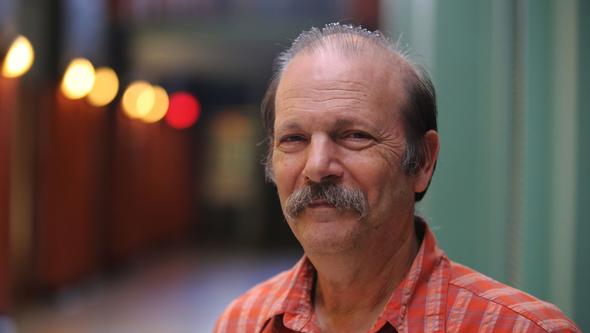
Professor Moshe Y. Vardi, Rice University Texas, has been appointed honorary doctor at the IT Faculty for 2020.
Summary of the nomination text:
Professor Moshe Y. Vardi has made considerable contributions to the usage of logic in various fields in computer science. Most notably the logical theory of databases, reasoning about knowledge, the automata-theoretic approach to program verification, and finite-model theory. His contributions were recognized by multiple awards. Professor Vardi is a member of the US national academy of sciences and of engineering and the European Academy of Sciences. He is a prolific writer with a vast number of scientific publications, co-authored with more than 300 co-authors.
In addition to this scientific contribution, Professor Vardi’s service work to the field of computer science is also of a similar magnitude. He has been Editor in chief of the Communications of the ACM for more than ten years and is responsible for a major revival of the journal. He is also very active in the popularization of computer science and has contributed greatly to debates related to the effects Artificial Intelligence has on society and economy and the future of our field.
This unique combination of scientific contributions and service work that promotes the entire computer science community make him a worthy candidate for an honorary doctorate.
Professor Vardi’s connection with the University of Gothenburg is mainly through his long-time collaboration with Dr Nir Piterman from the Department of Computer Science and Engineering. They have worked together on applications of temporal logic to verification and reactive synthesis, automata theory, as well as applications of logic and verification to biological modelling.
Personal webpage, Moshe Y. Vardi
Seminar: The Tsunami of Technology and Democracy
Due to the COVID19-pandemic there was a delay, but in 2023 professor Moshe Vardi could finally hold his seminar as the honorary doctor of 2020. The title of the seminar was The Tsunami of Technology and Democracy, a joint seminar event by CHAIR AI Ethics and the Colloquium at the Department of Computer Science and Engineering.
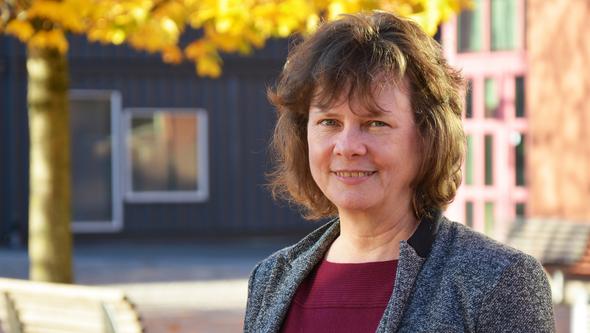
Jane Cleland-Huang, professor in Software Engineering at University of Notre Dame du Lac, Indiana, USA, has been awarded the honorary doctorate at the IT Faculty 19 October 2018. Jane is an eminent researcher in the area of requirements engineering, safety critical systems and traceability.
Tell us about your research
“Well, my research is aimed primarily at software that is safety critical. Which is software that if it were to fail would cause harm to a person or cause huge financial loss. Typically, we think of autonomous cars or any car with breaking systems. Traceability means being able to follow the requirements throughout the development process. You write the requirements, what is the system going to do and then you design the system, then you have to write code, have some test cases and in if it’s a safety critical system a whole additional layer of hazard analyses has to be added. Traceability allow us to connect all of these pieces. We could for example take a hazard and we could see exactly how that hazard is mitigated through the requirements, the design, and the actual code and what evidence we have in form of test cases or simulations.”
“I myself work in the area of unmanned aerial vehicles, UAV. Which is somewhat safety critical and works well as a proxy for our research. The first thing you do is use a methodical process to identify specific hazard. For example, with UAVs, one hazard could be that the localization of the UAV is incorrect. If the UAV doesn’t know where it is it could go off in the wrong direction and then there is a risk it might hurt someone or cause property damage. So, we would try to identify what specific failures can occur and how to mitigate those. In this case the UAV always use two separate methods for localization.”
“There are different ways of working with traceability. Traditionally developers manually create trace links, but it’s difficult and arduous. And when the system evolves, and you add new features, you have to maintain and evolve the trace links as well. Instead we’ve tried using machine learning and artificial intelligence deep learning methods to automate the creation and evolution of trace links. The vision is that we can infer, discover and generate trace links automatically so this arduous part of software engineering will eventually disappear.”
What collaboration do you have with the Department of Computer Science and Engineering?
“I have worked with several of the professors here, Dr Jan-Philip Steghöfer and PhD-student Salome Maro, Dr Richard Berntsson-Svensson and Dr Eric Knauss. The most active collaboration is with Jan-Philip. His research is in the usability side of traceability. When we automatically generate trace links they are not going to be perfect. How can we best support the user in taking care of these candidate links that are probable but not all correct? What other information do they need and how can we present that to the user, so they can make quick, accurate decisions. I’m hoping for even more collaboration in this area.”
What do you hope to do in the future within this area of research?
“If you’re building a safety critical system, one of the things you have to create is a safety argument. It’s the argument to why the system is safe to use, it shows that you identified and fully mitigated the hazards in your requirements, that the design correctly implement it, and that you have evidence. To do this you need to have traceability from the safety argument all the way through the whole system. We are looking at tools that will help people build those safety cases.”
“What we’re particular interested in is how tools can help when the software is developed continuously. In the traditional software process, you get all the requirements and then you design the system. You build the code, and for safety critical software you make sure it’s safe at the end, to have the software certified or approved. This thwarts innovation in software companies, because it’s very costly to recertify. We are building tools that, with the help of AI, can compare version one and version two of the software and understand what has changed and how it will impact the safety.
Motivation:
Jane Cleland Huang is Professor in Software Engineering at the University of Notre Dame. She is an eminent researcher in the area of requirements engineering, safety critical systems and traceability. Prof. Cleland-Huang has been working with a number of researchers in the software engineering division, among others: Dr Jan-Philipp Steghöfer, Dr Richard Berntsson-Svensson, Dr Eric Knauss, and PhD Candidate Salome Maro.
Jane Cleland Huang holds a PhD in Computer Science from the University of Illinois at Chicago. Prior to her involvement in academia, Dr. Cleland-Huang worked in industry as a developer. She is currently director of the Software and Requirements Engineering Research Lab and serves as North American Director of the Center of Excellence for Software Traceability.
Professor Jane Cleland-Huang will be awarded the honorary doctorate at the IT Faculty, University of Gothenburg, on the 19th of October, 2018.
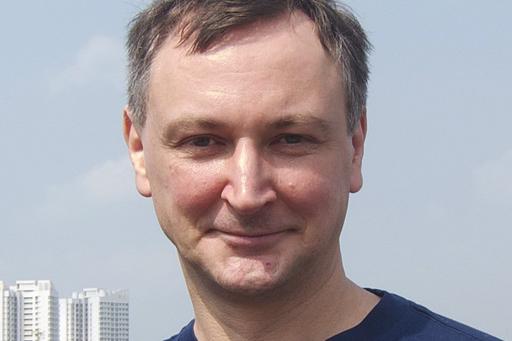
Fields Medalist Professor Vladimir Voevodsky is appointed 2016 Honorary Doctor at the Faculty of IT for his excellence in the field of mathematical proofs, where he has close collaboration with researchers in Gothenburg.
Motivation:
Professor Vladimir Voevodsky at the Institute for Advanced Study in Princeton, is a world-leading Russian mathematician working in algebraic geometry and algebraic topology. In 2002, he received the Fields Medal, the Nobel Prize in mathematics, for several groundbreaking results.
During the last decade Voevodsky has worked on computer verification of mathematical proofs. For this purpose, he used "proof assistants" of the kind that has been developed at the Department of Computer Science and Engineering at the University of Gothenburg. Proof assistants are computer programs that help mathematicians to build correct proofs.
Voevodsky also discovered an interesting correspondence between homotopy theory, one of his own specialities in mathematics, and the version of type theory that the proof assistants is based on. The discovery of the correspondence has led to improvements in both type theory as such and the ability to carry out verification of mathematical proofs. In recent years Voevodsky has collaborated with researchers from Gothenburg in further developing the correspondence he discovered.
Kurt Mehlhorn, founder of the Max Planck Institute for Informatics in Saarbrücken, has been appointed honorary doctor at the IT Faculty, University of Gothenburg. Kurt Mehlhorn has made a significant contribution to the field of theoretical computer science and also major contributions in areas such as data structures and computational geometry. He has for many years been in close contact with researchers and doctoral students at the Department of Computer Science and Technology in Gothenburg.

Motivation:
Kurt Mehlhorn is a German theoretical computer scientist. He is the director of Max-Planck-Institute für Informatik in Saarbrücken, the foremost research institute in computer science in Germany. He has also served as the vice president of Max-Planck-Society from 2002 to 2008.
Kurt Mehlhorn has made fundamental contributions to many areas of theoretical computer science, including data structures, computational geometry, geometric computing, computer algebra, parallel computing, VLSI_design, complexity theory, combinatorial optimization, and graph algorithms. Besides theory, he co-developed LEDA, the library of efficient data types and algorithms, which is widely used in academia and industry. He has over 250 publications, 16000 citations and an H-index of 60.
No less impressive is his dedication to education and his service to research community. His series of textbooks "Data Structures and Algorithms" (Springer-Verlag 1984) were a standard reference in courses around the world. A large number of his Ph.D. students and Post-docs have become prominent scientists in many universities around the world. He founded the Max-Planck-Institute für Informatik and was one of the founders of the prestigious research center of Dagstuhl. He initiated ESA, the primary conference in the area of algorithm design, and has served many times as the PC-chair of several important theoretical conferences. His contribution to science is widely recognized. The long list of prizes, honors, and titles, as shown on his CV, demonstrate his stature and influence. The two especially important awards that he has won are EATCS award, and Gottfried Wilhelm Leibniz prize. The former is annually given to a distinguished theoretical computer scientist while the latter is the highest honor in science in Germany.
Kurt Mehlhorn has a long-standing association to the Department of Computer Science and Engineering in Gothenburg through several generations of postdocs in his group, with whom he has had active research collaboration and publications.
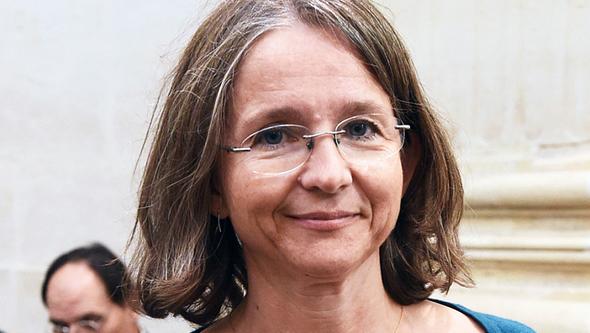
On 21 October 2011 Christine Paulin-Mohring, professor at the University of Paris-Sud, was appointed honorary doctor at the IT Faculty, University of Gothenburg. The appointment is based on Paulin-Mohring contributions in the field of programming logics, both theoretically and practically.
Motivation:
Christine Paulin-Mohring earned her doctorate from Paris 7 in 1989 and was appointed Professor at Paris Sud in 1997, a position she still holds. She was in charge of the work related to Coq for ten years. Coq is currently considered the number one proof editor in the world; a proof editor is an editor programme that can be used to prove characteristics of a programme or other mathematical objects. The computer checks that the proof is correct.
Paulin-Mohring has contributed significantly in the field of programming logics, both theoretically and practically. Coq has for example been used to provide a computer-checked proof of the so-called four colour theorem, a mathematical problem that used to have only a widely debated mathematical proof that was based on a non-verified computer programme.
In recent years, her work has become more practically oriented. Paulin-Mohring and her research team have developed systems and methods for computer-checked proofs of programmes written in the popular programming languages Java and C. This has enabled them to study and verify critical algorithms related to telecommunication and smart cards, which are plastic cards with built-in chips.
Workshop:
On 22 October, the day after the Conferment Ceremony, the Department of Computer Science and Engineering arranged a workshop within the area of Paulin-Mohring's research.