
Warming seas threaten mussels
There is growing concern worldwide about the future of mussels as the climate gets warmer. When heatwaves strike, mussels struggle to survive and many die. This was one of the topics discussed when around 60 mussel researchers gathered at Tjärnö in September.
“In Europe, as well as in North America, Australia, and New Zealand, we’re seeing mussel populations decline over time. They are sensitive to heat waves, which are becoming more frequent and intense,” says Pierre De Wit, Associate Professor at the Department of Biology and Environmental Science.
de Wit was the lead organizer of this year’s edition of the international mussel conference, AMMR, “Advances in Marine Mussel Research.”
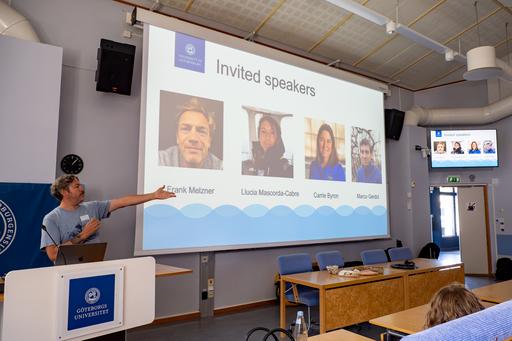
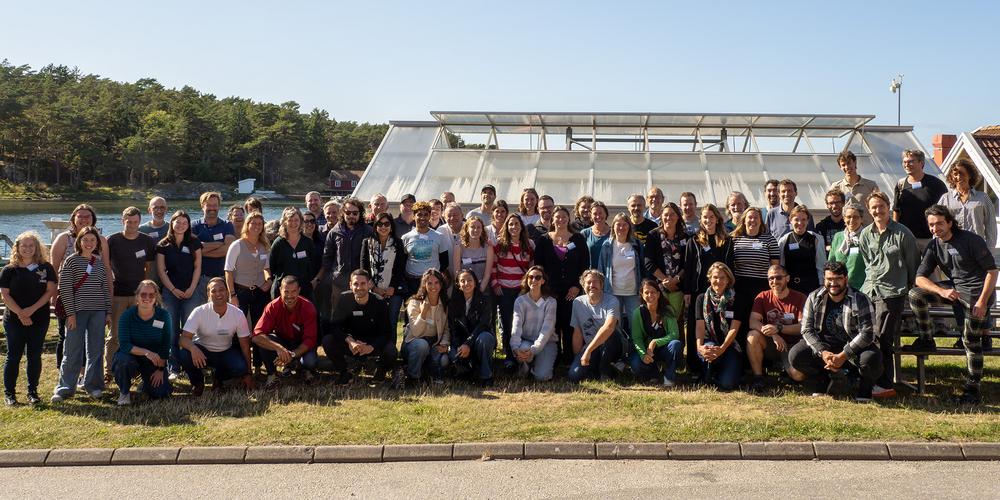
The conference is an international symposium held every other year, now taking place for the first time at the Tjärnö Marine Laboratory. About 60 researchers from 17 different countries attended. Many of them spoke about the problems that heat waves cause for mussel farms, which are on a significantly larger scale in other parts of the world than in Sweden.
“For example, we had a Greek delegation that described the problems with heat waves. They’ve experienced extremely high mortality rates among mussels in the Mediterranean,” says Pierre De Wit.
Predators: A Growing Problem
In Sweden, too, there are signs of a long-term decline. Earlier this year, the blue mussel was added to the Endangered Species Red List for the first time, and classified as nearly threatened. This assessment is based, in part, on an estimated decline of about 15 percent over the past ten years.
“Several of the researchers also raised the issue of predators, that is, animals that eat the mussels, such as starfish. We’ve seen a lot of that in Sweden as well,” says Mats Lindegarth, Professor at the Department of Marine Sciences, and co-organizer of the conference.

How mussels can become a larger part of global food production was another topic of discussion. When properly designed, mussel farms can contribute to a healthier marine environment, while the mussels absorb nutrients from the water and help combat eutrophication.
Can mussels be farmed in a warmer climate?
In the United Kingdom, there is a successful example where mussel farming takes place in relatively deep waters, over seabeds that have been heavily impacted by past trawling. The shells that sink to the bottom create structures where fish and other animals thrive, contributing to increased biodiversity in the area.
“But there’s also a challenge here: Should we expand mussel production if they can’t survive in a warmer climate? There’s also a lot of research underway to breed more resilient mussels, but it’s complicated,” says Pierre De Wit.
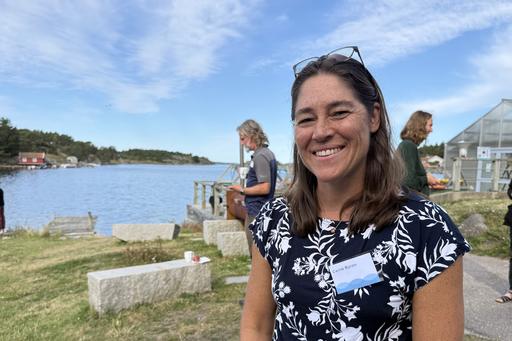
He has received nothing but positive feedback from the researchers who attended the conference. The sunny days, Thursday evening’s mussel-themed dinner, and the Bohuslän archipelago setting certainly played their part. But the most valuable aspect, according to Pierre De Wit, was still the opportunity to meet in person, beyond digital screens.
“It’s not the same on Zoom; you have to see each other in person, and that’s why conferences like this are so important.”
Geeks Dive Into Mussel Biology
He also highlights the conference’s final afternoon, which focused on mussels, molecular biology, and genetics. There, one topic was hybridization – the fact that mussels form hybrids across species boundaries. After all, a common biological definition of a species assumes that it cannot produce fertile offspring with another species.
But in several of Europe’s major ports, researchers are now finding populations consisting of hybrids between Blue mussel (Mytilus edulis) and the Mediterranean mussel (Mytilus galloprovincialis). The reason for this remains a mystery.
“Mussels are, of course, incredibly interesting from a purely biological standpoint, and not everything was about problems, food production, or societal relevance. It was a conference on mussel biology, and there’s an incredible amount to get really into,” says Pierre De Wit.
Text: Mikael Andersson


