
Common but declining – blue mussels now on the Red List
For the first time, the blue mussel has been listed as endangered by Swedish Species Information Centre (Artdatabanken), following a decline in its population over the last ten years. Mats Lindegart, a professor at the University of Gothenburg and an expert on mussels and oysters, is not concerned about the species’ future – but agrees that there are many indications of a decline over time.
"We believe the decline has been most pronounced on soft seabeds, where large mussel beds used to be common. But many of them have disappeared," says Mats Lindegart, Professor at the Department of Marine Sciences.
The blue mussel has been present along the west coast for thousands of years. It has been taken for granted, which is probably why it has not been systematically monitored, according to Mats Lindegart.
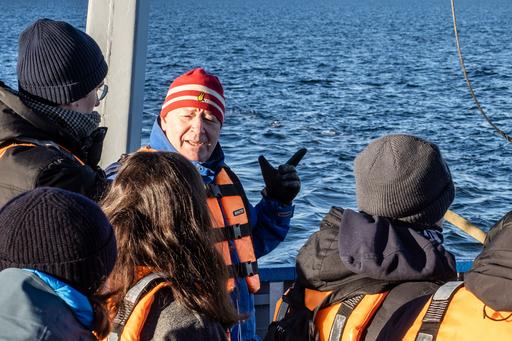
"We do not have any good, continuous time series. However, we do have observations and numerous accounts that point to clear changes over time, so all the evidence suggests that the blue mussel population has declined. Presumably from the mid-1990s and onwards."
Assessed as near the threshold for vulnerable
According to Artdatabanken, the blue mussel is listed as near threatened from 2025. This corresponds to a score of three on a seven-point scale ranging from viable to nationally extinct. The assessment is largely based on reports and observations of a significant decline in blue mussel beds since the mid-1990s.
Like Professor Mats Lindegart, Artdatabanken highlights the lack of documentation of historical occurrences, but overall the assessment is still that there has been a decline of around 15 per cent over the last ten years. Artdatabanken also states that the rate of decline for the Swedish population is estimated to be close to the threshold for ‘vulnerable’, category four on the scale.
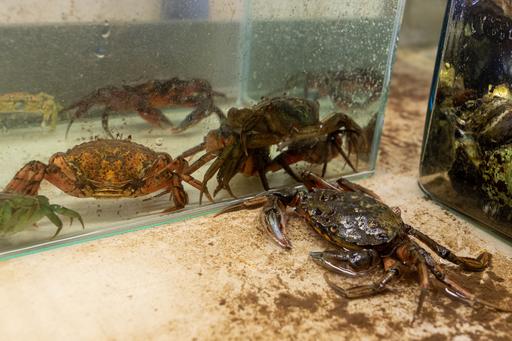
According to Artdatabanken, there is no obvious explanation for the decline. It is likely that several factors are at play. Mats Lindegart highlights one factor that he sees as a contributing cause to the decline of the blue mussels:
"They have been preyed upon by a great many animals that eat them. There are signs suggesting that crabs have increased significantly in number, and they are incredibly strong. A mussel does not survive for long if there are crabs nearby," says Prof. Lindegart.
Blue mussels have several important functions
The picture regarding the mussels is complicated by the fact that they are often found in abundance on surfaces suspended above the seabed, such as floating jetties and pontoons.
"We have conducted experiments on this, and one explanation for why they thrive on suspended surfaces may be that the crabs cannot reach them there."
Blue mussels have several important functions. Among other things, they provide food for other animals, they filter nutrients from the water, and they build habitats that are vital for other species. A continued decline could have consequences for the entire marine ecosystem.
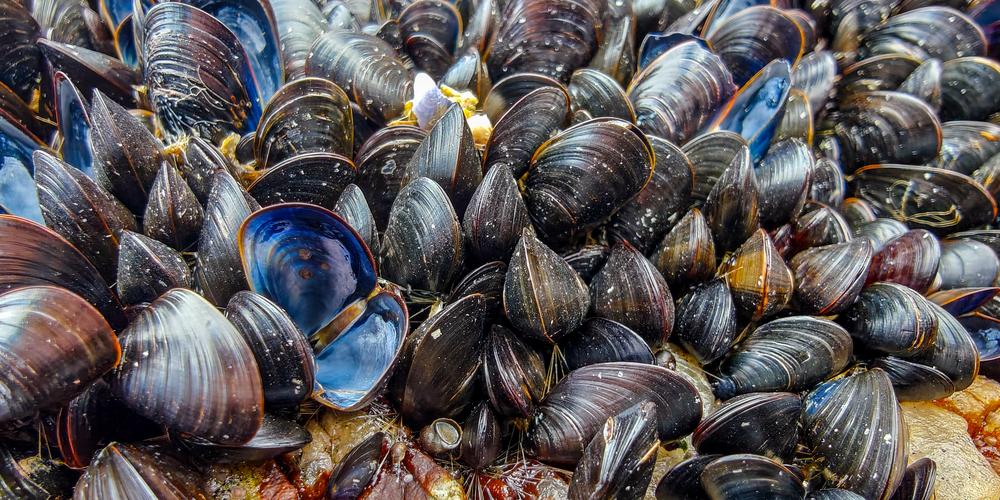
But Mats Lindegart isn’t particularly worried about the species’ future.
"It’s obviously not good that they are declining, but we’re out and about quite a lot doing various fieldwork and studies, and we find mussels practically everywhere, from Kungsbacka up to Strömstad. There are larvae and mussels throughout the whole area.
So you can still use mussels as bait when fishing for crabs with the children?
"Yes, I have to say you can do that," says Prof. Lindegart.
Text: Mikael Andersson
- Scientific risk assessment
Red Listing indicates the risk of a species becoming extinct in Sweden, based on international criteria (IUCN). - Based on trends – not on how common the species is today
A species may be relatively common but still be listed as red if its population is declining over time. - Produced by Artdatabanken, the Swedish University of Agricultural Sciences (SLU)
The assessment is developed with the help of researchers and expert groups and is updated approximately every five years. - Is not a system of prohibitions
The Red List is not legally binding, but is used as an important basis for nature conservation, planning and decision-making. What can you do?
Show consideration for nature (e.g. avoid damaging habitats), collect species in moderation, report findings on Artportalen and be aware that even ‘common’ species may be in decline.Facts: Artdatabanken, Swedish University of Agricultural Sciences

