
Memes as Political Weapons – and as Tools of Resistance
How are anti-feminist ideas spread online – and how can they be countered? A study at the University of Gothenburg examines how the so-called manosphere – the digital environment where misogynistic and anti-feminist messages circulate – emerges on Iranian social media. The study shows that these online spaces are closely connected to the global alt-right and its modes of communication.
By analysing memes and other digital expressions, the thesis maps how conflicts over gender, power and democracy move across national borders and are adapted to local contexts.
The global alt-right manosphere, a loosely connected movement that often spreads nationalist, anti-feminist and conspiracy-driven messages, serves as an important source of inspiration for many of the memes and arguments used in the Iranian manosphere. The thesis shows how these ideas travel rapidly between online environments: images, jokes and slogans that propagate across Western alt-right online spaces are adopted, reshaped and given new meaning on Iranian social media.
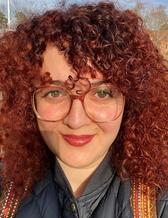
– I wanted to understand why ideas about gender and hatred spread so quickly online, and how they take root in environments that, on the surface, seem far removed from one another. The Iranian misogynistic online sphere illustrates that global digital conflicts are not merely a Western phenomenon, says Sama Khosravi Ooryad.
Memes amplify the messages
Memes – short, often humorous images or videos – play an important role in how political messages are spread and reinforced, the thesis shows. They are used both to attack women and feminists and to create a sense of community.
– Memes may appear harmless, but they function as small building blocks that connect groups digitally. I refer to them as ‘memetic alliances’ – in which groups in entirely different countries and political cultures recognise themselves in the same images, jokes and fantasies, thereby forming alliances and hybrid connections, says Sama Khosravi Ooryad.
Feministis resistance
The same tools are also used by feminist activists, who create their own memes to expose and challenge systemic misogyny. In her research, Sama Khosravi Ooryad has interviewed 23 Farsi-speaking feminist activists and documents how feminist resistance takes shape. According to the thesis, this resistance has grown stronger in the wake of the Woman, Life, Freedom movement.
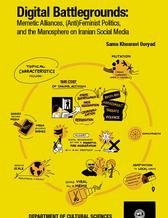
– Feminist actors online draw on humour, creativity and shared experiences to counter hostility, hence I call this tactic as ‘memeing back to misogyny’ online. Feminists also rely on offline transnational movement-building and grassroots organizing to counter systemic inequalities. This creates not only resistance, but also hope and solidarity.
The thesis Digital Battlegrounds – Memetic Alliances, (Anti)Feminist Politics, and the Manosphere on Iranian Social Media will be defended on 12 December at 13:00 in Lisebergssalen, C350, at Humanisten, Renströmsgatan 6, Gothenburg.
Text: Johanna Hillgren
Contact:
Sama Khosravi Ooryad, E-mail: sama.ooryad@gu.se


