
Kerstin Johannesson awarded for genetic research in the Baltic Sea
Professor Kerstin Johannesson has been awarded Björn Carlson Östersjöpris, worth SEK 4 million, for her research into the marine evolutionary biology of the Baltic Sea.
“I am very happy and a little surprised. It’s an international prize with a lot of competition,” says Kerstin Johannesson, Professor of Marine Ecology at the Department of Marine Sciences, University of Gothenburg.
The Björn Carlson Östersjöpris has established an annual prize for people who have made a valuable contribution to protecting the Baltic Sea’s environment and ecology. Professor Kerstin Johannesson is awarded the prize for her research, which has revolutionised the understanding of marine evolutionary biology in the Baltic Sea, particularly with regard to genetic diversity, local adaptation, and ecosystem resilience.
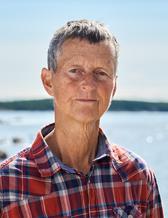
“I like that the award highlights the fact that researchers on the west coast of Sweden also conduct research in the Baltic Sea in the east. Some people may find this strange, but it’s a very young sea with very special marine conditions that are of interest to marine researchers in all fields,” says Kerstin Johannesson.
Discovered super clone of bladderwrack
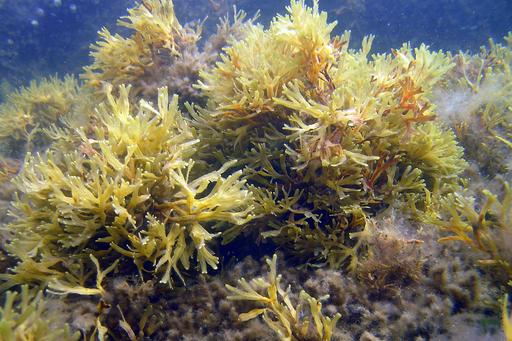
Kerstin Johannesson has shown, for example, that many marine species in the Baltic Sea consist of unique, locally adapted groups – something that paints a picture of the Baltic Sea as a natural “Darwinian laboratory”, where species evolve rapidly to cope with changing conditions. Kerstin Johannesson also participated in the discovery that the species narrow wrack, which was thought to be unique to the Baltic Sea, was actually a giant clone of common bladderwrack. The clone spreads over more than 500 km of the coast in the Bothnian Sea, from Öregrund in Uppland to just south of Umeå, and may be the world's largest clone of any organism.
“I was among the first to show that significant genetic changes have occurred in the Baltic Sea over the past 8,000 years. When I was a student, it was believed that this was too short a period for species to evolve, but this proved to be incorrect. When we began genetic research on seaweed after the turn of the millennium, the same possibilities did not exist with DNA sequencing, but today we have powerful DNA methods that reveal how species have adapted to the distinctive environment of the Baltic Sea,” says Kerstin Johannesson.
Significant contribution as an expert
Christina Rudén, chair of the nomination committee, highlights Kerstin Johannesson's important discoveries, her strong commitment to sustainable marine environments, and the importance of protecting ‘common’ species, as well as her role as a visionary leader and initiator of major research programmes.
Kerstin Johannesson's significant contribution as an expert and advisor to decision-makers, as well as her commitment to communicating scientific insights to the general public and schools in an accessible way, are also highlighted as reasons for the award.
“Genetic research has revolutionised our understanding of how marine species function, and we need this new knowledge to have a better management of our marine resources,” says Kerstin Johannesson.
Text: Annika Wall
Björn Carlsons Östersjöstiftelse, also known as BalticSea2020, was established in 2005 by Björn Carlson. In the 15 years since its formation, the Foundation has funded measures and development projects that actively support a healthier Baltic Sea, as well as research that has broadened or enhanced knowledge of the Baltic Sea and its catchment area.
Ninety per cent of the SEK 4 million prize sum is to be used for continued research, with the remaining 10 per cent being awarded to the prize winner personally.
Award nomination
"Professor Kerstin Johannesson is awarded the prize for her pioneering efforts to promote a healthier and more prosperous marine environment. Her research has revolutionised our understanding of marine evolutionary biology in the Baltic Sea, particularly with regard to genetic diversity, local adaptation, and ecosystem resilience."
Link to press release from Björn Carlsons Östersjöstiftelse.

