
Eight steps for saving eelgrass in Europe
Over 50 researchers from 17 countries are calling on decision-makers to protect and restore one of Europe’s most important marine ecosystems – seagrass meadows.
“Over the past 15 years, we have been working to develop methods for restoring eelgrass in Swedish waters. There is now finally a European consensus on how we should save these valuable ecosystems,” says Per-Olav Moksnes, professor at the Department of Marine Sciences, University of Gothenburg, who contributed to the recommendations.
The interdisciplinary Zorro research group at the University of Gothenburg has been highly successful in developing knowledge and methods for managing and restoring eelgrass meadows in Sweden. The results have led to several handbooks on eelgrass restoration that have been used successfully in many large-scale restoration projects both along Sweden’s coasts and in northern Europe, for example in Askeröfjorden and in the German part of the Baltic Sea.
To improve the sustainable restoration of seagrass across Europe, researchers from the European organisation ESRA are now publishing a guide aimed at politicians and decision-makers: “European Seagrass Recommendations 2026”.
“This is the first scientific consensus on how to protect, monitor, and restore seagrass beds in Europe. We are delighted to have been able to contribute our experience from Zorro to these recommendations,” says Per-Olav Moksnes.
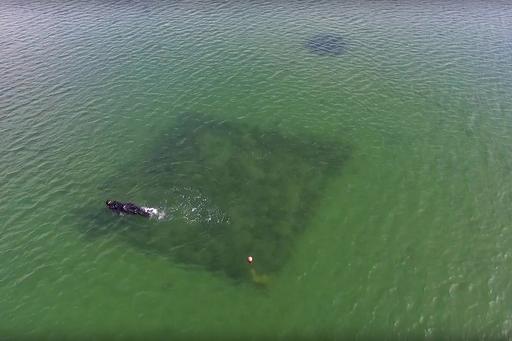
Almost half of the eelgrass has disappeared
The guidance has been co-created by more than 50 researchers from 17 European countries, including Per-Olav Moksnes and several other researchers from Zorro. It contains eight concrete recommendations to guide decision-makers, managers, and funders in their efforts to reverse decades of seagrass loss. Among other things, it highlights the importance of:
- protect remaining meadows,
- address the causes of meadow decline before embarking on active restoration,
- base methods on scientifically proven knowledge, and
- share that knowledge openly.

“Along the Swedish west coast, for example, nearly 50 per cent of eelgrass has been lost since the 1980s. This amounts to many thousands of hectares, and restoring such large areas of meadows poses an enormous challenge that primarily requires improvements to environmental conditions, but also the replanting of eelgrass to speed up the process,” says Per-Olav Moksnes.
“It requires political will, long-term funding and the development of methods for different environments that enable large-scale restoration, which are research issues that Zorro is working on today. However, it is important that there is international consensus on these issues, and these recommendations provide a clear, scientifically grounded way forward for that work,” says Per-Olav Moksnes.
Volunteers can help with planting
The guidance calls for better coordination between European environmental policy and restoration practices, simplified permit processes, and significant increases in long-term funding. It also emphasises the importance of public engagement, ethical guidelines and the open sharing of data and knowledge among all stakeholders.
“It is very important that ordinary people are also engaged in these issues, both to influence political decisions, and to help seagrass recover. At Zorro, we are currently researching methods to restore eelgrass that do not require diving, which volunteers could use,” says Louise Eriander, a researcher at Zorro, Department of Marine Sciences.

“The guidelines provide important support and contribute at the right time to the implementation of the EU Nature Restoration Regulation. They cover the entire restoration chain – from protecting existing meadows and reducing human impact, to large-scale planting and long-term monitoring,” says Marlene Jahnke, researcher at Zorro, Department of Marine Sciences, who also contributed to the recommendations.
Contact
Per-Olav Moksnes, Professor at the Department of Marine Sciences and Research Director at Zorro, is the Swedish representative on ESRA’s Advisory Committee and has contributed to drafting the recommendations.
Tel: + 46 732 576224
Email: per.moksnes@marine.gu.se
Seagrass meadows
Seagrass meadows, where eelgrass is the dominant species in northern Europe, are among the most productive ecosystems on Earth. They are vital for coastal fisheries, protect the coast from erosion and flooding, filter water, and store significant amounts of carbon. Despite this, these habitats have declined drastically across Europe as a result of deteriorating water quality, coastal development, disease, invasive species and unsustainable use.
About ESRA
The European Seagrass Restoration Alliance (ESRA) is an international collaborative organisation for seagrass restoration that links research with large-scale restoration work.
ESRA serves as a platform for collaboration and knowledge exchange within European seagrass restoration efforts.

