Differing views in Arabic mother tongue tuition
A new doctoral thesis shows that teachers of Arabic mother tongue tuition share positive views of Standard Arabic, but hold differing perspectives on dialects and how they should be addressed in teaching and assessment. These differences may have consequences for what actually takes place in the classroom.
Arabic is characterised by diglossia, meaning that Standard Arabic and spoken varieties (dialects) are used in parallel for different purposes. Standard Arabic is the language traditionally used in writing, formal communication and education, while everyday communication takes place in dialect. Many children starting school therefore have limited or no prior experience of Standard Arabic and encounter it for the first time in an educational context.
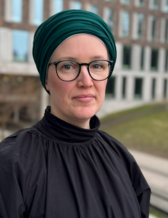
– Traditionally, only Standard Arabic is taught and all teaching materials are written in Standard Arabic. When pupils start school, they speak and understand only dialectal Arabic, so Standard Arabic is something they need to learn at school, says Louise Backelin, doctoral student in Humanities with a specialisation in Educational Sciences within the CUL Research School at the University of Gothenburg.
Her thesis examines the beliefs held by teachers of Arabic mother tongue tuition about Standard Arabic and dialectal Arabic. The study is based on a survey of 333 teachers and interviews with eleven of them. It focuses on how teachers describe the Arabic varieties, what functions they attribute to them, and how they view their role in mother tongue tuition.
– How teachers think about their subject influences what and how they teach.
Creates different teaching practices
A key finding is that teachers hold differing views on how the interplay between Standard Arabic and dialect should be managed.
– Everyone in the study expresses positive views of Standard Arabic, but opinions diverge when it comes to dialects and their place in teaching.
The analysis identifies four groups of beliefs. The first advocates teaching exclusively in Standard Arabic and does not recognise dialects as a pedagogical problem. The second divides language skills between the varieties, for example writing in Standard Arabic and speaking in dialect. The third resembles the first but views dialect as a key or a tool for reaching Standard Arabic. The fourth adopts a more pupil-centred perspective and accepts dialect in all language skills at the beginning of instruction, gradually transitioning to Standard Arabic.
Call for clearer guidance
The study also shows that Standard Arabic is often associated with a pan-Arab identity, something that connects all Arabic speakers regardless of their background, and is seen as a right, whereas dialectal Arabic is in some cases portrayed as a problem. At the same time, other teachers link dialect to pupils’ identity and see it as their actual mother tongue.
Like all teachers in the Swedish school system, teachers of Arabic mother tongue tuition have a degree of local autonomy in relation to the national curriculum, but some call for clearer guidance on how diglossia should be addressed. Time constraints also mean that many prioritise reading and writing skills.
– The thesis can help shift the focus from linguistic ideology to pedagogical and didactic questions about how Arabic is best taught and learned, says Louise Backelin.
The thesis Teachers’ Beliefs about Standard and Vernacular Arabic – The Case of Mother Tongue Tuition in Sweden was publicly defended on 20 February 2026. It is available digitally: https://hdl.handle.net/2077/90290
Text: Johanna Hillgren
Contact:
Louise Backelin, Email: louisebackelin@gmail.com