
Coral discoveries may influence protection of Atlantic seamounts
Deep in the Atlantic Ocean lies the Corner Rise Seamounts, a chain of extinct underwater volcanoes in international waters. New research shows that the area contains vulnerable ecosystems – a finding that may be significant when the protection of the area is reviewed.
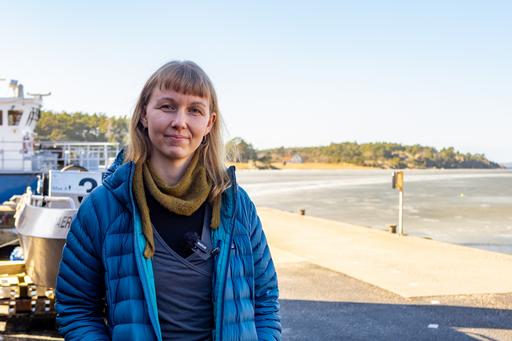
“The key result of our study is the identification of six high-density coral and sponge areas that meet recognised criteria used to identify Vulnerable Marine Ecosystems,” says Lara Beckmann, doctoral student at the Department of Marine Sciences and lead author of the study.
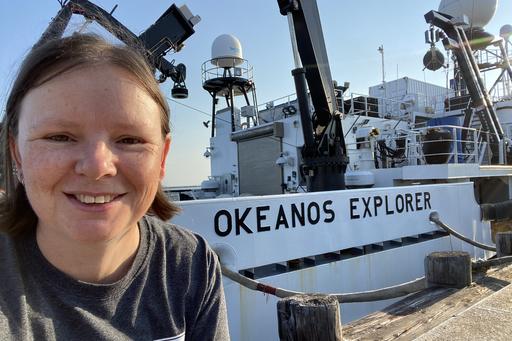
She and her co-authors, including Lova Eveborn, who was a master’s student at the University of Gothenburg at the time, reviewed and analysed over 40 hours of under water footage. It was collected with ROV (remotely operated vechicle) during an expedition to the Corner Rise Seamounts in 2021.
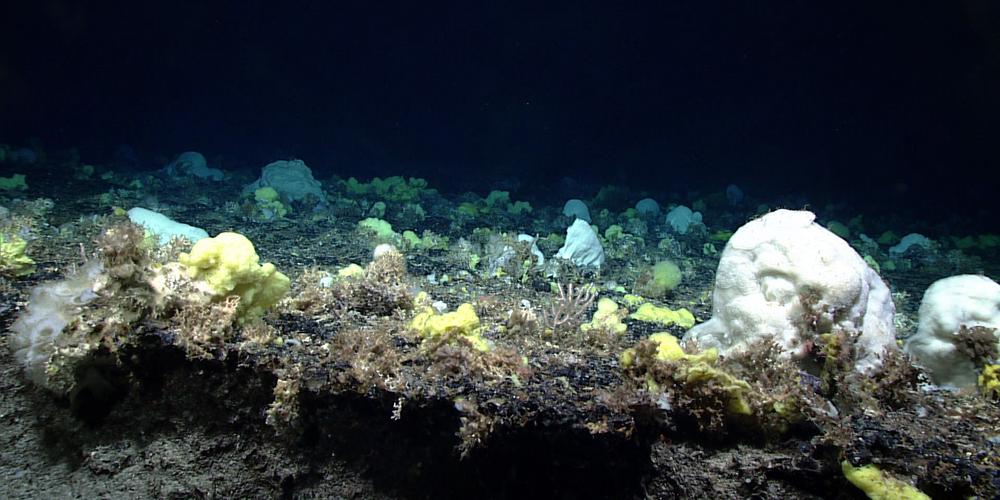
The videos covered several seamounts at depths ranging from 900 to just over 4,000 metres in the Atlantic Ocean and revealed high densities and a remarkable diversity of corals and sponges.
”We knew that corals and sponges existed here, but until now there had been no comprehensive, quantitative survey documenting their densities and distribution across the seamounts,” says Lara Beckmann.
Do you think there may be more areas that look the same?
“Yes, I think so. These videos were taken in limited areas along several seamount slopes, but we don’t know what it looks like just a few metres away from the transect, or on the other side of the mountain. It’s a bit like shining a torch onto a huge mountain in complete darkness - you only see the small patch illuminated in front of you. So it’s quite likely that similar areas exist beyond what we were able to film.”
Damages from bottom trawling
Seamounts are often biodiversity hotspots. Here, corals and sponges attach to hard surfaces and form complex structures – almost like underwater forests – that provide homes and shelter for many other species, including fish.
During the 1970s and 1980s, Soviet fishing fleets heavily exploited the Corner Rise Seamounts. The fishery led to stock depletion and left lasting physical damage on the seabed, including visible trawl scars that have been documented in previous surveys.
”In areas that have been trawled, the recovery of corals and sponges can take centuries, and in many cases these ecosystems may not recover at all. Because of their extreme vulnerability and slow growth, bottom trawling poses a particularly high risk in areas with dense coral and sponge communities,” says Lara Beckmann.
In 2007, trawling was banned in large parts of the area by the Nortwest Atlantic Fisheries Organization (NAFO), an intergovernmental body that regulates fishing in the area. Next year (2027), that decision will be reviewed, which is why this report is particularly important right now, says Lara Beckmann.
Part of the area not protected
”This is the first quantitative study of coral and sponge density in the area that directly evaluates the sites against internationally recognised vulnerable marine ecosystems criteria. It is important knowledge for the NAFO re-evaluation next year.”
What do you researchers say about continued protection against bottom trawling?
“Our overall recommendation is that the existing protection measures should be maintained beyond 2027 and, ideally, strengthened,” says Lara Beckmann.
She points out that the southern part of the seamount chain does not have the same protection against bottom trawling, as there is another organisation managing the fisheries there, the Western Central Atlantic Fishery Commission.
“Although there are recommendations in place to limit bottom trawling, we believe this area would benefit from stronger and more formal protection, particularly given the high-density coral and sponge communities we documented.”
Text: Mikael Andersson
Location: Corner Rise Seamounts
Geology: Chain of extinct underwater volcanoes, part of the New England–Corner Rise chain, located between North America and the Mid-Atlantic Ridge.
Depth range in the study: approx. 940–4,189 metres
Data collection: NOAA expedition Okeanos Explorer, 30 June–29 July 2021
Method: High-resolution ROV video (remotely operated underwater vehicle)
Organisms analysed: Deep-sea corals and sponges
Main results:
- 6 high-density areas identified
- Meets international criteria for Vulnerable Marine Ecosystems (VME)
- Depth (and water masses) is the most important factor governing species composition
Biological significance: High species turnover between different deep-sea mountains
Management relevance:
- Northern part protected by the Northwest Atlantic Fisheries Organisation (NAFO) since 2007 (ban on bottom trawling)
- Protection to be reviewed in 2027
- Southern part lacks legally binding protection


