
Art Education Crucial in the Fight Against Disinformation
In a society where film and images dominate the flow of information, the ability to understand and create images is becoming increasingly important. A new report from Bildkonst Sverige shows that art education plays a key role in strengthening resilience against disinformation
The report Visual Literacy and Preparedness, commissioned by the Swedish Psychological Defence Agency, identifies visual literacy as a central democratic competence. At the same time, art education is limited, and the subject has a lower status compared to subjects such as Swedish and mathematics.
– In a visually dominated society, it is problematic that art education plays such a marginal role. It affects how well equipped students are to understand and critically examine the images they encounter, says Tarja Karlsson Häikiö, Professor of Visual and Material Culture at HDK-Valand and one of the researchers behind the report.
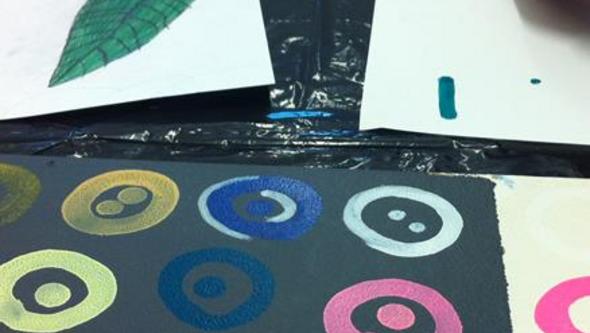
The report highlights that art education is not only about creativity and making, but also about developing critical and analytical skills from preschool, through compulsory school and upper secondary education. By working practically with images, students learn how visual messages are constructed—and how they can influence emotions, opinions, and interpretations.
– Being able to produce images oneself is an important part of recognizing manipulation and disinformation. Just as we learn to read through writing, we need to actively work with images to truly understand them. That is why we propose, among other things, that art should once again become a core subject in upper secondary school, says Tarja Karlsson Häikiö.
Integrated into more subjects
Today, visual literacy is mainly associated with art education, even though visual expression permeates many school subjects. The authors of the report argue that visual literacy should be a natural part of source criticism and integrated into subjects such as social studies and history. At the same time, the report shows that this is often left to individual teachers’ initiative, rather than being a clearly defined part of teaching.
– To strengthen visual literacy in society, we also point to the importance of teacher education. Future teachers need tools to work with visual issues—regardless of subject. Our teacher students at HDK-Valand gain this competence, but it is equally important for all teachers who will work with source criticism in the future, says Tarja Karlsson Häikiö.
The report concludes that visual literacy is not only an educational issue, but a matter of society’s overall resilience.
– In today’s media landscape, where young people in particular consume news through image- and video-based platforms, the risk of exposure to misleading content increases. Visual literacy is therefore a fundamental competence for participating in democratic dialogue and resisting influence. While it is good to limit screen time and strengthen reading skills through books, it is at least as important that children develop visual and digital competence.
About the report
The report “Visual Literacy and Preparedness – What Knowledge Is Needed to Address Disinformation Through Images?” was produced by Isabelle Karlsson, Hedvig Ördén, Tarja Karlsson Häikiö, and Magdalena Malm.
Read more (In Swedish): Bildkunnighet och beredskap
This workshop is part of HDK-Valand’s interdisciplinary research cluster focusing on themes related to environment, ecology, and climate challenges. You can read more about the research environment here: Environment: Ecological and Climate Challenges
