Expression of interest: Early-career researchers in Chemistry and Molecular Life Sciences seeking a host institution in Sweden
The Department of Chemistry and Molecular Biology at the University of Gothenburg invites outstanding early-career researchers in chemistry and molecular life sciences to submit an expression of interest in pursuing research funding in Sweden, with the department as a potential host institution for their application.
Selection process
Researchers with a strong scientific profile that aligns with the department’s research areas are welcome to submit an expression of interest. All submissions will be evaluated by the department’s research committee. We assess applicants’ qualifications, their fit with the current funding calls, and how well they align with the department’s long-term strategy and recruitment needs.
Only selected candidates will be supported in their applications to the specific funding calls listed below. Please note that an expression of interest is neither a job application nor an application for external research funding.
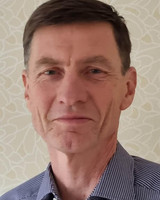
Submit a letter of intent, including a brief research plan and your curriculum vitae, to Professor Per Sunnerhagen, Assistant Head of Research.
Open position within the Gothenburg Global Scholars Initiative
The University of Gothenburg is launching the Global Scholars Initiative, a coordinated international recruitment effort. The Department of Chemistry and Molecular Biology is recruiting an Assistant Professor in Chemistry, with a specialization in chemical glycobiology, as part of this initiative. Interested candidates should apply directly through the job advertisement in the link below by clicking “Apply”.
Current research funding calls
Strategic Recruitment of Associate Senior Lecturers (Assistant Professors) - Swedish Research Council
The Swedish Research Council has set up a programme to support the strategic recruitment of Associate Senior Lecturers (Assistant Professors), with the aim of strengthening research in Sweden. It targets outstanding early-career researchers and is carried out in collaboration with host universities.
The Swedish Research Council is setting up a programme for strategic recruitment of associate senior lecturers (vr.se)
About the Department of Chemistry and Molecular Biology
The Department of Chemistry and Molecular Biology offers a dynamic and internationally competitive research environment in chemical sciences and molecular life sciences. Around 45 research groups form the core of the department’s research activities in analytical chemistry, atmospheric science, biochemistry, inorganic chemistry, medicinal chemistry, organic chemistry, physical chemistry, cell biology, genetics, genomics, microbiology, molecular biology and structural biology.
Research addresses key global challenges such as human health, climate change and the development of new materials, and contributes to several of the UN Sustainable Development Goals. The department also contributes strongly to the University of Gothenburg's top ranking in life sciences and atmospheric sciences. Interdisciplinary collaboration, together with access to advanced research infrastructure, creates excellent conditions for innovative research.
Our research areas
Research at the Department of Chemistry and Molecular Biology is organised into five research areas.
Research environment
The Department of Chemistry and Molecular Biology is located in Natrium, a new research building in the heart of the life science area, close to Sahlgrenska Academy and the university hospital Sahlgrenska Universitetssjukhuset. By offering excellent facilities and supporting interdisciplinary collaboration with national and international partners in academia, industry and the public sector, the department provides a strong environment for innovative research.
Research infrastructure at the University of Gothenburg

Top ranking in life sciences and atmospheric sciences
The department contributes strongly to the University of Gothenburg's top ranking in life sciences and atmospheric sciences.
Top 75 worldwide in the field of Life Sciences according to ShanghaiRanking 2025
In the field of Life Sciences - Biological Sciences, the University of Gothenburg ranks second in Sweden and 66th worldwide according to ShanghaiRanking’s Global Ranking of Academic Subjects 2025. Biological sciences include biochemistry, molecular biology, biophysics, cell biology and microbiology.
2025 Global Ranking of Academic Subjects - Biological Sciences (shanghairankning.com)
Top 50 worldwide in the field of Atmospheric Science according to ShanghaiRanking 2025
In the field of Atmospheric Science, the University of Gothenburg ranks second in Sweden and 50th worldwide according to ShanghaiRanking’s Global Ranking of Academic Subjects 2025.
2025 Global Ranking of Academic Subjects (shanghairankning.com)
Meet some of our young international researchers
Daniel Bojar, Senior Lecturer in Bioinformatics

Daniel Bojar is an early-career researcher at the University of Gothenburg who studies glycans, complex sugar molecules in cells that remain poorly understood. His work combines biology and AI models to investigate how glycans function. His research group has recently discovered that a specific type of glycan is present in the cell nucleus, challenging current textbook knowledge. After receiving a prestigious European Research Council (ERC) Starting Grant and funding from the Swedish Foundation for Strategic Research’s Research Leader of the Future programme, he is now expanding his research group.
Leonardo de Assis, Associate Senior Lecturer in Molecular Medicine

Leonardo de Assis is an early-career researcher at the University of Gothenburg who studies how the body’s internal clock regulates skin biology. His work explores how skin cell populations communicate over the course of the day and how this dynamic interaction influences skin function and health. By combining molecular biology, bioinformatics and experimental models, he aims to understand how disruptions in these processes contribute to disease and how timing could be used to improve treatments. His research bridges basic science and clinical applications, with the goal of developing new therapies that benefit patients. It is supported by funding from the Wallenberg Centre for Molecular and Translational Medicine (WCMTM).
Contact