Viktoria Hennings: New clues to sex-based differences in autoimmune diseases
Autoimmune diseases affect around 5–8 percent of the population and are more common in women. In her thesis, Viktoria Hennings investigates whether differences in the thymus – the organ where T cells develop – may contribute to this sex-based difference.

VIKTORIA HENNINGS
Dissertation defense: 17 April 2026 (click for details)
Doctoral thesis: Translational studies of sex differences in human thymic central tolerance induction
Research area: Pediatrics
Sahlgrenska Academy, The Institute of Clinical Sciences
Autoimmune diseases arise when the immune system reacts against the body’s own tissues. Women are affected more often than men, whereas men have an increased risk of certain infections and cancers. The reasons behind these differences are still not fully understood.
“My research focuses on the immune system and the processes that can lead to the development of autoimmune diseases,” says Viktoria Hennings, who holds a master’s degree in medical science and is a doctoral student at the Institute of Clinical Sciences.
The thymus and immune tolerance
T cells are a type of white blood cells that help the immune system recognize and fight infections. The thymus plays a central role in T cell development and in establishing tolerance to the body’s own tissues.
Viktoria Hennings’ thesis is based on the hypothesis that sex-based differences in these processes may contribute to the higher prevalence of autoimmune diseases in women.
“A common feature of autoimmune diseases is dysregulation of the immune system, leading to autoreactivity, where the immune system reacts against the body’s own tissues.”
Stable X chromosome inactivation
The first study examines how gene regulation on the X chromosome affects T cell development. Women have two X chromosomes, and to avoid a double dose of X-linked genes, one is inactivated in each cell.
“Our results show that X inactivation is highly stable throughout T cell development. This suggests that the link between abnormal X inactivation and autoimmunity may be less pronounced than previously thought.”
Sex-based differences in the thymus
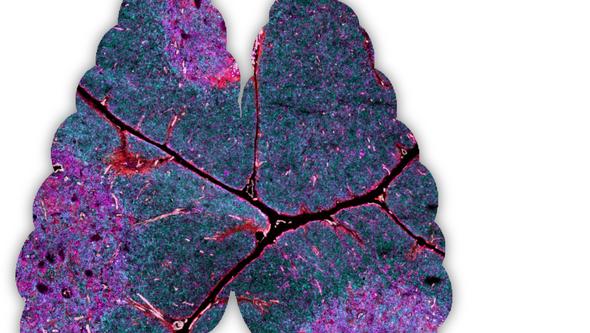
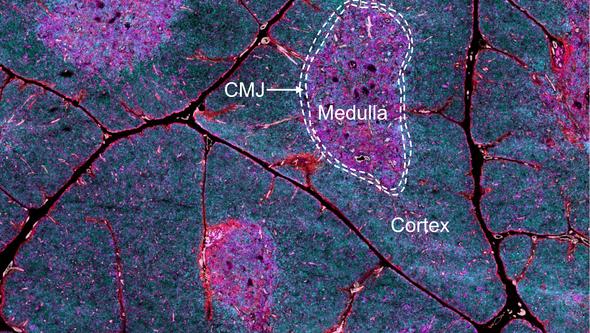
In the second study, thymic tissue from healthy boys and girls was analyzed using spatial methods, making it possible to determine exactly where different cells and molecules are located within the tissue, rather than only measuring their abundance.
“We observe structural and cellular differences in the thymus between boys and girls. This may provide new clues to the mechanisms underlying sex-based differences in the risk of developing autoimmune diseases.”
A unique opportunity to study the thymus
The thymus is located in the upper chest, in front of the heart. During open-heart surgery in young children, parts of the thymus are sometimes removed to allow access to the heart. This tissue can then be donated for research.
“This gives us a unique opportunity to study thymus function and T cell development directly in human tissue,” says Viktoria Hennings, continuing:
“We have used modern techniques such as DNA and RNA sequencing, along with spatial analyses, to characterize the tissue in detail. This work has been challenging, as it requires extensive bioinformatics analysis and interdisciplinary expertise.”
What may your research lead to?
“We hope that these findings will contribute to a better understanding of how the immune system develops and, in the longer term, form the basis for translational applications. This means that the knowledge could ultimately benefit patients, for example through improved diagnostics or new treatments.”
Text: Jakob Lundberg
Autoimmune diseases occur when the immune system attacks the body’s own tissues. Below are some common examples. The figures indicate the approximate ratio between women and men (female:male).
• Systemic lupus erythematosus (SLE): an inflammatory disease that can affect multiple organs (9:1)
• Rheumatoid arthritis: causes inflammation in the joints (3:1)
• Multiple sclerosis (MS): the immune system attacks the nervous system and damages the protective sheath around nerve fibers (3:1)