
She seeks to improve support for ALS, epilepsy and brain tumours
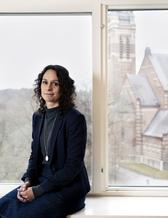
Severe neurological conditions do not only affect the person who is ill, but also the family around them. Anneli Ozanne, a newly appointed professor of nursing, researches how care can better support both patients and their relatives throughout the different stages of the illness.
When a person is diagnosed with ALS or a brain tumour, life is often turned upside down from one moment to the next. For some, the path to diagnosis has been long, while for others it comes as a shock, even if healthcare has tried to prepare them. Either way, the situation suddenly becomes definitive, both for the person affected and for those close to them.
"How life is affected depends on many factors, such as the symptoms, how quickly the disease progresses, what treatment is initiated, the person’s own resources and the support available within their social network. Healthcare needs to be responsive and address physical, psychological, social and existential needs. This applies both to the person affected and to their family" says Anneli Ozanne.
High-quality care is not only about medical interventions, but also about recognising psychological, social and existential needs.
Hela familjen drabbas
A central theme in her research is the situation of the family. When a serious neurological condition becomes part of everyday life, it often affects everyone around the person who is ill. Relatives may take on extensive practical responsibilities, manage ongoing worry and be involved in difficult decisions.
"It is also important not to overlook children as relatives. They often see, hear and understand more than we think, and need support in making sense of their thoughts and questions", says Anneli Ozanne.
The circumstances of relatives are a key focus of her research. They often act as informal caregivers, while their own health is also affected.
"Relatives often experience a high psychological burden, and research shows that in many cases they feel worse than the person who is ill. By systematically including and supporting them at an earlier stage, we can improve both their situation and the conditions for care", she says.
Focus on quality of life and symptom relief
Symptom relief is often of great importance for people with progressive diseases. There is a need to identify and relieve symptoms earlier and more systematically, particularly in palliative stages, says Anneli Ozanne.
"High-quality care is not only about medical interventions, but also about recognising psychological, social and existential needs. When a disease cannot be cured, relieving symptoms and creating the best possible quality of life become central, both for the person and for their relatives. At the same time, there are often treatments that can slow the disease and its symptoms, and in some cases also prolong life. But the focus must always be on what matters to the person and the family in the situation they are in. My research aims to contribute to better coordinated care, where support and interventions are more closely adapted to both the person and the family".
Coordinated care is needed
An important part of Anneli Ozanne’s research concerns what happens between different parts of the healthcare system. People with neurological disease may need specialist care, primary care and municipal services at the same time, but the support is not always joined up. Registry studies show that people with neurological diseases do not have access to specialised palliative care to the extent they need.
Anneli Ozanne sees this as an important knowledge gap. How can collaboration between different forms of care be improved? How can care become more coordinated over time? And how can support be designed so that it actually fits the situation of the person and their family?
"We need to become better at following people and their families across different levels of care and between different care providers. Today, gaps often arise in the care pathway, which risks affecting both continuity and quality".
One important question going forward is how working methods can be developed so that advanced specialist care can be combined with safe and functional care at home.
"The aim is to create care that is better joined up, where both the person who is ill and their relatives receive the right support at the right time", says Anneli Ozanne.
Professor of Nursing with a specialisation in neurological care and palliative care
Position: Institute of Health and Care Sciences at the University of Gothenburg, combined with a position as senior university hospital nurse in neurological care at Sahlgrenska University Hospital
Background: Graduated as a nurse in 2000 and has since worked in neurological care. She began working with patients with ALS in 2003, which came to shape her future research.
Research in brief: Her research focuses on care and support in neurological diseases, with a particular focus on ALS, brain tumours and epilepsy.
Roles and assignments: Research group leader for Care in long-term conditions: paediatric care, neurological care and palliative care
Programme coordinator for the Specialist Nursing Programme in Neurosurgical Care
Member of several national and international research networks in neurological and palliative care.


