
Leda Pistiolis: Exploring the role of melatonin in breast cancer
Melatonin regulates the circadian rhythm and is produced mainly at night. In her thesis, Leda Pistiolis examines whether melatonin influences survival in patients with early breast cancer, if the levels of melatonin receptors in breast tumors are associated with tumor characteristics and survival – and whether the hormone could play a role in treatment.

LEDA PISTIOLIS
Dissertation defense: 27 March 2026 (click for details)
Doctoral thesis: The role of melatonin in breast cancer
Research area: Surgery
Sahlgrenska Academy, The Institute of Clinical Sciences
Melatonin is a hormone regulating the body’s internal clock that controls sleep and other daily cycles.
“We investigated the potential association between melatonin and breast cancer from different perspectives,” says Leda Pistiolis, general surgeon subspecialized in breast surgery at Sahlgrenska University Hospital and doctoral student at the Institute of Clinical Sciences.
No survival benefit in early breast cancer
The thesis examined whether taking melatonin tablets influences survival in early breast cancer and whether melatonin receptor expression in tumor tissue is associated with tumor characteristics or survival.
“Night shift work appears to increase the risk of breast cancer, and one hypothesis is that this could be linked to reduced melatonin levels. However, we found no improvement in either breast cancer-specific or overall survival among patients with early-stage disease who had used melatonin.”
Most patients who had used melatonin had a prescription for a median of only 30 days. The research also found no clear association between the level of melatonin receptor expression and tumor characteristics or patient survival.
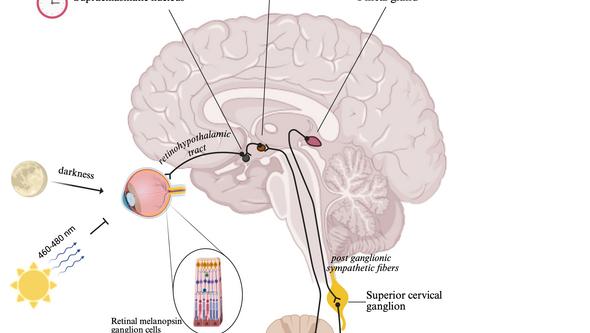
Visual impairment and cancer risk
The work also included a population-based analysis of cancer risk among individuals with visual impairment, a condition that could also reduce melatonin production. Patients with visual impairment had a clearly increased overall cancer risk, including breast cancer, compared with individuals matched for age, sex, and municipality of residence.
“Several factors are likely involved, including comorbidities, lifestyle, and socioeconomic conditions that influence well-being and access to care.”
Possible benefit in metastatic disease
A systematic review and meta-analysis showed that adding melatonin to systemic therapy in metastatic breast cancer was associated with improved tumor response and one-year survival, as well as reduced chemotherapy-related side effects.
“These findings are based on a small number of studies and do not allow for generalization. However, they suggest a potential benefit of melatonin in this patient group, where disease control and quality of life are particularly important,” Leda Pistiolis says.
Further randomized trials are needed to clarify the role of melatonin in metastatic breast cancer.
What has been the most rewarding and the most challenging part of your doctoral project?
“Having the opportunity to investigate the potential effects of melatonin in breast cancer has been very rewarding,” she says, continuing:
“The fact that most of the research did not generate ‘positive’ results has been challenging. Given that preclinical evidence indicates that there could be some association, we may have to reconsider how the topic is approached.”
Text: Jakob Lundberg
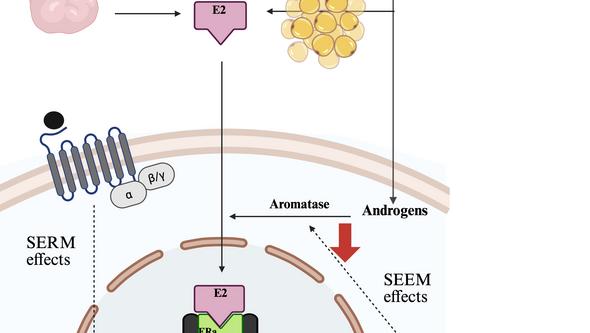
Experimental evidence indicates that melatonin reduces ovarian estrogen (E2) synthesis. It inhibits aromatase activity (Selective Estrogen Enzyme Modulator, SEEM effects) and decreases estrogen receptor (ER) expression (Selective Estrogen Receptor Modulator, SERM effects). These mechanisms are particularly relevant in hormone receptor-positive breast cancer, where tumor growth is driven by estrogen signaling.