
Eva Philipson: New clues about pancreatic cancer and chemotherapy resistance
Pancreatic cancer is one of the cancers with the worst prognosis. Eva Philipson has investigated both how the disease develops from precursor lesions and how tumors are affected by chemotherapy before surgery.

EVA PHILIPSON
Dissertation defense: 11 June 2026 (click for details)
Doctoral thesis: Clinical and translational aspects of malignant progression and pancreatic cancer
Research area: Surgery
Sahlgrenska Academy, The Institute of Clinical Sciences
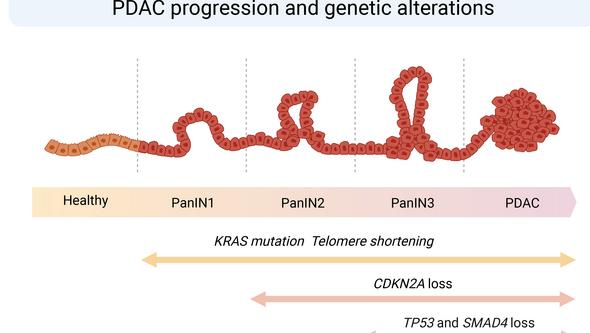
Pancreatic cancer develops over many years through different stages. Despite this, effective treatment is still lacking, and many patients develop resistance to chemotherapy.
“We know that pancreatic cancer develops from mutations and precursor lesions over a long period of time. This means there are opportunities for treatment if we can better understand how the disease develops,” says Eva Philipson, senior consultant at the Department of Surgery in Kungälv and doctoral student at the Institute of Clinical Sciences.
Protein linked to worse prognosis
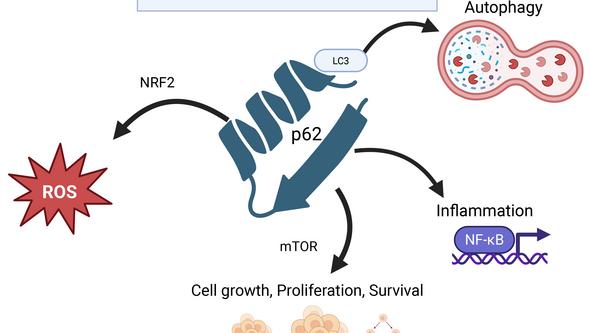
Part of the thesis focuses on the protein p62, which accumulates in cells and is believed to play a role in cancer development.
“Study I shows that high expression of p62 is associated with shorter disease-free survival in patients who underwent surgery for pancreatic cancer.”
The findings support the potential use of p62 as a prognostic marker in pancreatic cancer.
Study III examined how the accumulation of p62 changes during disease progression.
“We found that accumulation of p62 is stage-dependent and follows inflammatory activation and immune cell infiltration. This supports the idea that abnormal p62 signaling plays a role in the progression from precursor lesions to cancer.”
Biomarkers may improve selection
The thesis also investigates so-called mucin biomarkers in fluid from pancreatic cysts.
“Study II shows that analysis of mucin biomarkers in cyst fluid may, in single cases, improve selection of patients for surgery in unclear pancreatic lesions. However a high number of incorrect recommendations of surgery calls for caution.”
The final study investigated the effects of neoadjuvant treatment with FOLFIRINOX, a chemotherapy regimen given before surgery. Using single-cell analysis, tumors from pretreated patients were compared with tumors from patients who underwent surgery directly without prior chemotherapy.
“We found no major differences in gene expression between tumors treated with FOLFIRINOX and tumors operated on directly without prior chemotherapy. The differences that were observed nevertheless suggest that the treatment may contribute to chemotherapy resistance and tumor progression.”
From patients to molecular mechanisms
What have been the most rewarding and the most challenging aspects of your doctoral project?
“The most rewarding part has been to see the entire translational chain, from patient, resected tumors and clinical validation of cyst fluid analysis to studies in mice, cells, and gene expression at the mRNA level,” says Eva Philipson and continues:
“It has been incredibly rewarding to immerse myself in this research field. The most challenging part has probably been learning so much about the preclinical world and methods that are very different from my everyday work as a surgeon.”
Text: Jakob Lundberg