
A pioneer in growth hormones with an eye for the human side
After more than 40 years at Sahlgrenska Academy, Jörgen Isgaard is retiring. As a researcher, he has explored how growth hormones influence recovery after stroke and heart disease. He has also been a highly regarded manager, physician and supervisor – always guided by curiosity and humour. Here, he shares his journey, what lies ahead, and how he became an honorary professor in Australia.
The bookshelves in Jörgen Isgaard’s office loom empty. Over the past few weeks, he has gone through hundreds of binders – materials from travels and conferences, student material and articles. Found his docent lecture from 1993. He enjoys the memories but discards most of it.
We meet in his office on Medicinaregatan the week before he is due to move out. It’s a beautiful day in September. Outside the window, demolition work is underway for the new Sahlgrenska Life building. Dust swirls in the sunlight. Jörgen Isgaard is looking forward to retirement. He’s had a long holiday this year and has slowed down the pace.
“Just sleeping an hour longer in the morning makes a big difference to quality of life. I’ve had the energy to tackle those heavier novels and films. I’ve started reading Kafka and watching Dogme films. It’s an interest that’s been dormant for a while. Work has consumed a lot, even though it’s been great fun,” he says.
A tricky specialty
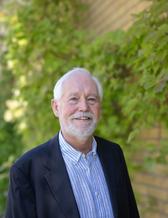
Jörgen Isgaard is a senior consultant in internal medicine and endocrinology, combining research with clinical work at Sahlgrenska University Hospital. For a time, he was head of the Endocrinology section. He enjoys meeting patients and has felt a renewed joy in that recently.
“Endocrinology is a somewhat tricky specialty that requires patience. We take lots of samples and run tests. It’s a bit like solving a puzzle. Sometimes the pieces don’t fit, and you must assess probabilities and rely on your experience. It’s always exciting to meet new patients. My plan is to continue working clinically part-time, though not at SU,” he says.
Jörgen Isgaard comes across as warm and down-to-earth. He’s quick-witted and answers questions thoroughly and clearly. Curiosity and the ability to build collaborations have helped him throughout his career.
“Humour is important to me. That you can have fun together and keep things light – not just the serious and solemn, even though that’s needed too,” he says.
Improved recovery
Jörgen Isgaard’s research focuses on how growth hormones affect recovery after ischaemic injuries to the heart and brain, such as stroke and heart failure. He has several notable publications, including in the journals Science and Stroke.
A preclinical study he conducted with colleagues in Australia found that mice given growth hormones after a stroke recovered better in cognitive functions such as learning and memory. He has also led clinical observational studies, identifying pituitary dysfunction in some stroke patients – a condition that can lead to hormone deficiencies.
“Our results have been very promising. Unfortunately, it’s been difficult to get pharmaceutical companies on board and to initiate clinical trials, especially in stroke. They continue to view growth hormones as an expensive niche product. Traditionally, they’re used to treat short-statured children,” he explains.

In the future, he hopes others will pick up the thread and continue the research.
“As a researcher, you need to be persistent and believe in what you’re doing. I’m proud of the work we’ve done. Some publications are still highly cited. It feels good to leave behind knowledge that no one else had produced in quite the same way, which others can build on,” he says.
An inspiring supervisor
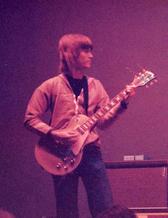
Jörgen Isgaard decided to become a doctor in secondary school and has never regretted it. The inspiration came from a friend whose parents were doctors. They had a garage band together and played rock and blues.
He studied medicine at the University of Gothenburg and began to do research in his fourth term. The starting point was an oral physiology exam, led by Olle Isaksson, professor and former head of the Institute of Medicine. He asked Jörgen if he was interested in research – which he was.
After his medical studies, Jörgen Isgaard became a doctoral student under Olle Isaksson, alongside Claes Ohlsson and others. In 1989, he defended his thesis on growth hormones and bone length growth and was the first researcher to introduce a molecular biology method at the Physiology section. He describes Olle Isaksson as a fantastic supervisor.
“He sent us PhD students all over the world. Sometimes we gave lectures on his behalf and travelled alone to conferences. Olle was very generous and supportive, while also giving us space to establish ourselves as independent researchers. He has meant an enormous amount to me,” he shares.
International collaborations
Jörgen Isgaard was also interested in hormonal effects on the circulatory system. He began collaborating with researchers in cardiology and neurology and initiated partnerships with groups in Naples and Turin, in Italy.
His Swedish colleague Michael Nilsson was appointed director of the Hunter Medical Research Institute at the University of Newcastle, on Australia’s east coast. That marked the beginning of a long-term collaboration.
For ten years, Jörgen Isgaard travelled to Australia twice a year to review data, plan experiments and write articles. He became an affiliated professor at the university and has held the title of honorary professor since 2024.
A challenging role
In addition to his research and clinical work, Jörgen Isgaard has held several administrative roles at Sahlgrenska Academy. He served on the Academic appointments board for many years and was also Deputy Head of the Department of Internal Medicine and Clinical Nutrition until 2024.
As a manager, he has made an effort to ensure everyone was pulling in the same direction, to foster a positive atmosphere, and to bring out the best in his colleagues – helping them feel seen and motivated to do their best.
“It’s a challenging role being middle management. You carry a lot of responsibility and face pressure from many directions, while having limited authority. But it has been incredibly rewarding.”
Teaching has also been an important part of his work. He has supervised PhD students, taught medical students, served as course coordinator for internal medicine on the medical programme, and been part of the course leadership for many years. He has had a particular passion for internationalisation.
A new chapter in life

One thing that worries him about the future is the increasing pressure on the healthcare system. He finds that many young doctors he meets struggle with stress and tough working conditions.
“When I started out, there was less pressure in the system. It was easier to juggle multiple responsibilities. Today, we have ALF-funded positions, which is a good thing, but much of the time allocated for research risks being consumed by teaching duties and growing administrative demands. There are many brilliant researchers who aren’t doctors, but it’s important that physicians also have the opportunity to conduct research in order to maintain clinical relevance.”

For Jörgen Isgaard, a calmer pace now awaits. He plans to spend more time with his sons and grandchildren, and at his house on Visingsö. He recently started a course in crawl and will take a refresher course in guitar playing – bringing out his old Gibson Les Paul from 1971.
He will also help see the final PhD students he is co-supervising through to the finish line. Looking back on his professional life, Jörgen Isgaard feels joy and gratitude.
“I’ve had a very multifaceted and varied career. I sometimes joke that I never became truly great at anything. I may not have secured the biggest grants or conducted the most high-profile research. But I’ve worked on many different things, had an incredible amount of fun, and had the privilege of working with fantastic colleagues,” he says.
TEXT OCH PHOTO: KARIN ALLANDER
Age: 66 år
Profession: Senior Consultant in Internal Medicine and Endocrinology; Professor Emeritus since 1 October, 2025
Family: Three sons, two grandchildren
Lives: Central Gothenburg; also owns a house on Visingsö.
Interests: Travelling, watching films, reading novels, playing guitar, listening to music (devoted Beatles fan)
Politics: Active in the regional healthcare group of the Demokraterna party. Passionate about reducing political control and giving more influence to healthcare professionals. Member of the board at Carlanderska Hospital.
Career Highlights: Medical degree in 1984, PhD in 1989, Associate Professor (Docent) in 1993, Full Professor in 2003, Deputy Head of the Department of Internal Medicine and Clinical Nutrition (2019–2024), Honorary Professor at the University of Newcastle since 2024.

