
Where the Next Generation of Artistic Researchers Is Trained
At HDK-Valand's doctoral programme in artistic research, students from a wide range of artistic disciplines come together. The aim is not to become a better artist, but to learn how to conduct research. Doctoral student Seda Yildiz and Director of Doctoral Studies Mick Wilson explain the programme and its goals.
In today's increasingly collaborative art world, artistic research is moving in the same direction. At HDK-Valand, doctoral students are encouraged to develop collaborations—within the academy, beyond it, with fellow students, and with established researchers.
− Knowledge creation is a collective process. The idea of the lone artistic genius is no longer particularly relevant. We teach in groups and encourage students to connect their projects with one another, while also joining ongoing research projects, says Mick Wilson, Associate Head of Department for doctoral education at HDK-Valand.
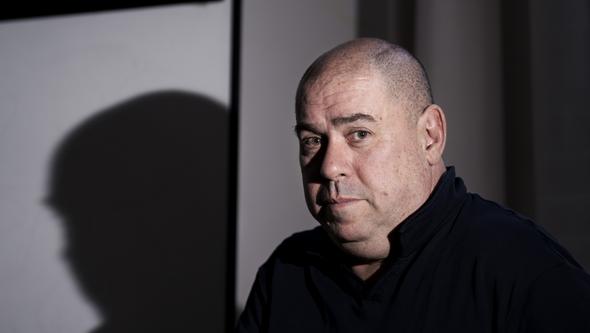
Seda Yildiz is halfway through her doctoral studies. She has a diverse professional background as an independent curator, artist and writer. Collaborative practices and socially engaged art are among her main research interests.
− My research explores how collaborative, socially engaged art can be presented, communicated and shared without losing the values that define these practices. I work with two artist collectives that I have collaborated with previously—one based in Belgrade and the other in Istanbul, where I grew up.
She explains that art was not a natural part of her childhood. Her parents worked in banking and rarely engaged with contemporary art, while her own interest developed during her teenage years.
− I believe my upbringing has shaped my motivation as a curator. I constantly look for new ways and new environments—beyond museums and galleries—to connect with audiences.

The doctoral programme at HDK-Valand was established around the turn of the millennium. Until a few years ago, photography, film, fine art, design, crafts and literary composition each had separate doctoral curricula. Today, they are all brought together within the subject area of Artistic Practice, creating a strong foundation for interdisciplinary collaboration.
− That interdisciplinary dimension is incredibly enriching. I come from several different academic and artistic disciplines myself, and I only see advantages in working across them, says Seda Yildiz.
A Strong Focus on Research Skills
Pursuing a doctorate was not an obvious choice for Seda. However, the research project she is now developing actually began several years ago. While searching for the right context to continue it, she realised that artistic research offered the most suitable environment.
She became particularly interested in HDK-Valand's doctoral programme because of its clear emphasis on developing research skills.
− I wanted to make my research more effective, but I lacked certain tools and methods. A strong doctoral training environment was exactly what I was looking for.
Educating Professional Researchers
According to Mick Wilson, this is one of the programme's defining characteristics.
The purpose of the programme is to educate professional researchers. Applicants are expected to be accomplished artists with an active artistic practice, but the doctoral degree is not intended simply as the culmination of a successful artistic career.
− Many people think doctoral education is like a master's programme, only longer and more advanced. In reality, the difference is qualitative. Once you earn a doctorate, you can engage with researchers from other disciplines as an equal.
He also highlights HDK-Valand's strong research infrastructure. This includes the Centre for Art and the Political Imaginary (CAPIm), Sweden's first centre of excellence in artistic research, as well as research platforms and publications such as PARSE, L'Internationale Online, ArtMonitor, and Afterall Exhibition Histories.
The programme also offers extensive national and international networks.
− We place great emphasis on international collaboration and mobility. We work with universities and educational institutions in countries such as Moldova, Latvia, Slovenia, Romania, Ireland, Portugal and Italy. We also seek to look beyond the traditional art centres of London, Paris and New York.
Teaching as Part of Doctoral Studies
For Seda Yildiz, these international opportunities are particularly valuable. Her work frequently takes her to the Balkans and Eastern Europe, while she currently divides her time between Gothenburg and Rotterdam, where she plans to settle in the future.
Before that, however, she has at least two more years of doctoral studies ahead of her—possibly longer, depending on the amount of teaching she takes on.
− I'm very happy to have the opportunity to teach as part of my doctoral studies. This summer I'm teaching an introductory course on contemporary art and politics.
Text: Camilla Adolfsson

