
A Master’s Programme That Paved the Way to Doctoral Studies
Both Björn Eriksson and Yuxi Chen enrolled in HDK-Valand’s Master’s Programme in Design to explore questions of ethics and environmental sustainability. Today, they are pursuing doctoral studies – in Sydney and Tampere respectively – and regard their time in Gothenburg as a pivotal step in their academic journeys.
After several years in the textile industry, Björn Eriksson grew tired of chasing fashion trends and sales figures. He longed to return to a more craft-based approach, one that allowed him the time and space to ask a fundamental question: Why do we design? That was when he realised it was time to return to university.
−The fashion and textile industry often involves ethical compromises. Financial performance tends to take priority. I wanted to regain the freedom to think about design in terms of values and what matters to society. That’s exactly what I found at HDK-Valand, says Björn.
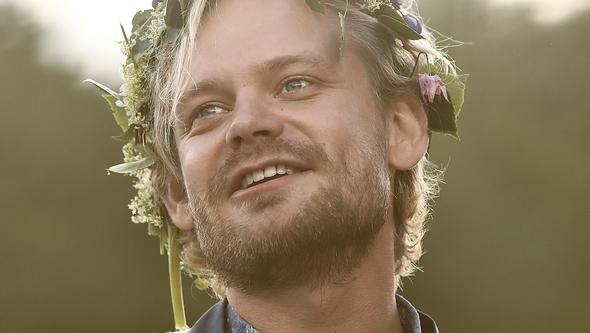
He describes the master’s programme as valuable in many ways. One of its greatest strengths, he says, was the opportunity to experiment beyond textiles and explore different materials and forms of expression.
− There’s a strong artistic spirit and an openness to experimenting with new ways of working.
Research Became More Interesting Than Trends
Björn first began considering doctoral studies during the second year of his master’s programme. The idea was reinforced when one of his teachers told him, “I think a PhD position would suit you.”
− That comment had a real impact on me. I already felt that the work I wanted to do had to go beyond sales figures. I found myself becoming more interested in the latest research than in the latest trends.”
For nearly two years, Björn has been a doctoral researcher at the University of Technology Sydney. Although Australia may seem like an unexpected destination, his ambition to experience the world took him there shortly after finishing upper secondary school. In 2014, he completed his bachelor’s degree in Melbourne. His current doctoral project explores the relationship between artificial intelligence, fashion and sustainability.
− AI is already being used throughout the textile and fashion industry. For example, many companies want to automate pattern making. My research investigates the sustainability implications of these developments.
Occasionally, Björn reflects on why textiles and sustainability have become the central themes of his work. He traces that interest back to his childhood on a farm outside Norrtälje in Sweden.
− We kept sheep, which we sheared ourselves, and a family friend spun the wool into yarn. I wore clothes my mother had sewn or my grandmother had knitted. That’s where it all began. I experienced first-hand how materials can connect people and animals.
More than human
Yuxi Chen shares a similar background. She grew up on China’s east coast, where cultivating the land was an integral part of family life. Nature has always played an important role in her life, she explains, but it was during her master’s studies at HDK-Valand that she found the theoretical framework she had been searching for.
− It was there that I was introduced to the ‘more-than-human’ perspective. My degree project was based on the idea that plants and humans are equals, and that we can playfully create more sustainable relationships between people and nature.

As a doctoral researcher at the Research Centre of Gameful Realities at Tampere University in Finland, she has continued to develop these ideas.
− It’s exactly the right place for me. My research interests align so closely with the focus of this doctoral position that I haven’t needed to adapt my work at all. At the moment, I’m exploring living materials as interfaces for interaction between humans and nature.
When Yuxi completed her bachelor’s degree in product design in China, the emphasis was on producing a finished product. At HDK-Valand, however, the design process itself took centre stage. She invited participants to workshops and gained experience of participatory design methods.
− I’m grateful that HDK-Valand offered that opportunity. It was a completely new way of working for me, and I learned a great deal from organising workshops.
A Researcher First and Foremost
Although both her undergraduate education in China and her master’s programme in Gothenburg had strong artistic elements, Yuxi does not primarily see herself as an artist.
− First and foremost, I’m a researcher. But in many ways, the distinction isn’t that great. Both researchers and artists build on previous work, push the boundaries of their fields and contribute new knowledge.
What she does not see herself returning to is a career as a product designer.
− No, I don’t think so. There are already far too many products in the world.
Text: Camilla Adolfsson

