
The masters behind Bronze Age rock art
For more than 200 years, Nordic Bronze Age rock art has sparked the interest of academics. Yet we still know surprisingly little about the individuals who carved these figures into the rock. A new doctoral dissertation at the University of Gothenburg now turns the spotlight on the people behind the symbols.
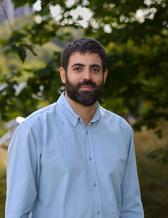
Julián Moyano Di Carlo, a doctoral student in archaeology, suggests that rock art in Bohuslän was overseen by master carvers operating within institutions that controlled the technical and ritual knowledge associated with the carvings, as well as its transmission to future generations.
– Through such control, carvers may have not only used the figures to express ideas or interact with the supernatural, but also to exert political influence within their societies, says Julián Moyano Di Carlo.
In his research, he has analysed how the carvings vary in form, spatial arrangement, quantity, and in their association with other elements. The analysis employed a novel approach that integrates social theory and cross-cultural comparisons with accurate 3D documentation of the panels and statistical methods to detect patterns in the data.
– The results show that rock art in Bohuslän developed slowly and gradually, likely because it was rooted in conservative traditions reproduced by a small number of individuals. These individuals seem to have controlled both the choice of figures and their placement in the landscape, favouring locations near water and rocks with suitable geological properties.
An elitist practice
According to Julián Moyano Di Carlo, such locations appear to have served two purposes. While small panels spread across the region were probably carved during rituals linked to boat construction and launching, large panels may have been created during maritime gatherings. These gatherings may have promoted mobility and interaction among carvers, fostering a consistent regional style and the development of carving skills.
– Given how sophisticated some carvings are, it is likely that carvers acquired these skills by learning from more experienced peers. These apprenticeship systems shaped rock art as an elitist practice and reinforced the conservative nature of the tradition.
Taken together, the findings suggest that carvers were key actors in the ritual machinery of the Bronze Age, actively shaping and maintaining its sociopolitical structures. It is hoped that the dissertation will convince other researchers that rock art is a primary source for understanding the sociopolitical dynamics of the past and will inspire further research on the topic.
The dissertation Masters of Water and Stone – Exploring the Social Role of Rock Art Carvers in Nordic Bronze Age Societies will be defended at a public defence on 23 January in Lisebergssalen (C350), Humanisten, Renströmsgatan 6, Gothenburg.
Contact:
Julián Moyano Di Carlo, phone: +46 (0)705 234 232, Email: julian.moyano.di.carlo@gu.se