
Skagerrak's invisible diversity – may be lost in silence
Fish caught in the same trawl and sold under the same name may in fact have significant genetic differences. Beneath the surface of the Skagerrak lies a biological diversity that is rarely seen in fishmongers.
”If management does not take this into greater consideration, we risk depleting the genetic variation that makes species resistant to future changes,” says Simon Henriksson, PhD at the Department of Marine Sciences.
In the management of marine species, all individuals within a species are often treated as a single stock when they are located in a limited geographical area. However, this is not the biological reality, according to a new scientific report produced by Simon Henriksson and his research colleagues.
"If we look at the Skagerrak as a single sea, most of the species we have studied are divided into several different populations, with limited exchange of genetic material between the populations," he says.
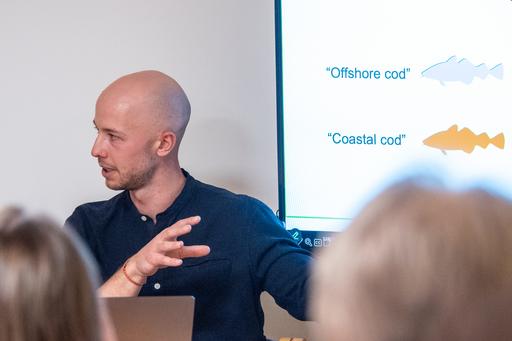
The report covers nearly 50 species in the Skagerrak, including phytoplankton, eelgrass, fish and blue mussels. It shows that the pattern also applies to species where individuals travel long distances and can easily swim from one place to another. A stock of fish, for example, found in one area may consist of individuals from several genetically distinct populations.
They may swim in the same shoal, but they do not always mate with each other.
Genetic diversity is a key to survival
"Just because an individual, such as a cod, moves from one place to another does not necessarily mean that it will reproduce there. Instead, it may return as an adult to the place it came from and spawn there."
It has been known for some time that there are individual species that are genetically divided into several populations, but the new study shows that this does not only apply to individual species.
“This is the rule rather than the exception,” says Simon Henriksson.
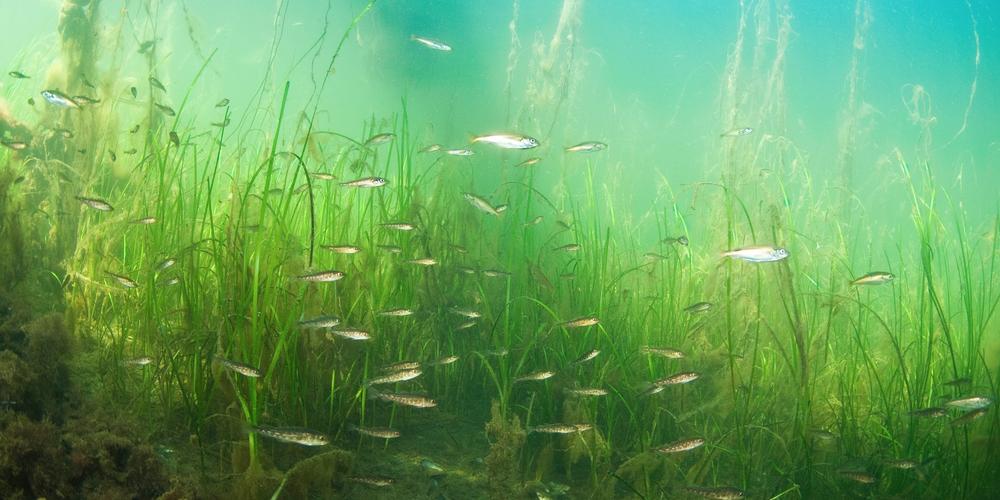
In practice, this means that fish of a single species caught in a single trawl may consist of individuals from several different populations. These individuals may in turn have genetic adaptations to different life strategies or different environmental conditions, such as depth, salinity and temperature.
"Genetic diversity within a species gives the entire species greater resilience to environmental changes. If there is significant genetic variation within the species, evolution can, over time, favour traits that enable the species to adapt to changing conditions," says Simon Henriksson.
Shift of paradigm is needed
However, if, for example, fisheries management does not take into account that a stock may comprise several populations, sensitive populations may be overexploited or disappear completely without us knowing.
"The risk is that we lose genetic diversity silently. And that could have consequences for the entire species in the long term."
Simon Henriksson emphasises that the species covered by the report represent a very small proportion of the thousands of marine species found in the Skagerrak, and that much more research is needed in this area. At the same time, the study clearly shows that the starting point going forward should be that species often consist of several populations, which may exist in the same area but still carry significant genetic differences.

According to Henriksson, this knowledge should have consequences for how marine life is managed:
“Somewhere along the line, there needs to be a paradigm shift in management, where we actually start monitoring genetic diversity within species, which populations exist in an area and how they are affected by both fishing and changes in the marine environment.
Researchers suggest several measures
Among other things, the researchers suggest that the measures taken must be sufficiently detailed to include even small populations, especially along coasts and in fjords. In fishing, genetic analyses should be used to determine how much of the catch comes from different populations. In addition, the management of marine life needs to be based on the latest and most up-to-date knowledge in the field.
All this is necessary to preserve a genetic diversity that is also fascinating.
"It is amazing how complex the marine environment is. It is very exciting that we can have such a high exchange of individuals between locations and still have a clear population structure," says Simon Henriksson.
Text: Mikael Andersson
Here you can find the report: Connectivity and Population Structure in a Marginal Sea—A Review
Based on 172 scientific studies published between 1990 and 2023.
Covers 48 marine species, from phytoplankton and eelgrass to mussels, fish and marine mammals.
The studies have investigated how the species spread and how they are genetically divided.
The report shows that around 60 per cent of the species studied exhibit population structure in the Skagerrak.
Population structure means that a species consists of several genetically distinct populations that reproduce with each other to a limited extent, even though they live in the same sea.
Read the full repoprt here: https://onlinelibrary.wiley.com/doi/10.1111/ddi.70056

