
R/V Skagerak sets course for two months of Arctic research
With the last instruments secured and expectations running high, R/V Skagerak has left Gothenburg for a two-month voyage to some of the Arctic’s most rapidly changing environments.
– We have been preparing for many, many months. Now the easy part should begin, says Isaac Santos, professor of marine chemistry at the University of Gothenburg.
But on board R/V Skagerak the day before departure, activity is at its peak.
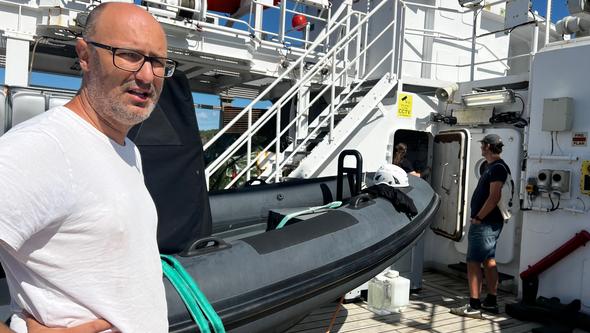
Scientists and crew carry instruments through the vessel’s narrow corridors, secure equipment and check that everything is working. Several expeditions will take place back-to-back, each requiring different researchers, instruments and supplies.
We have been preparing for many, many months.
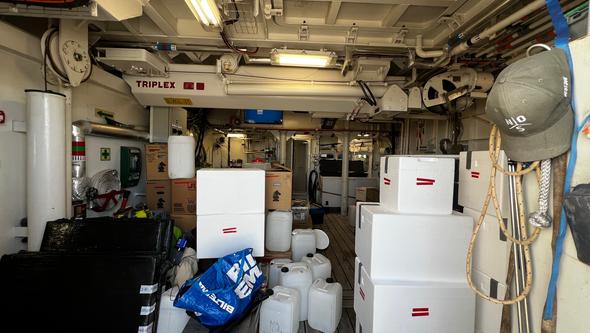
Everything needs to be on board. A forgotten component or missing spare part could prove costly once the vessel is far from port.
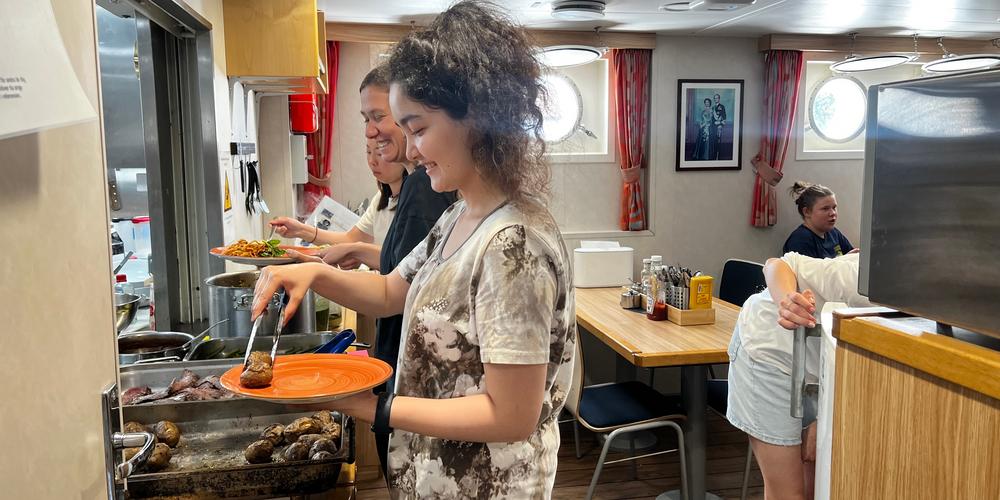
The atmosphere is upbeat and full of anticipation, but also slightly tense. There is still time for a substantial lunch in the mess before the preparations continue. After months of planning, the voyage is finally about to begin.
Students embark on their first research voyage
Master’s students Karima Keyum and Laura Laier, who both study marine science at the University of Gothenburg, are joining R/V Skagerak on the first leg to Tromsø.
For both of them, it will be their first research expedition at sea.
– It will be really interesting to experience what it is like to work on a ship, says Laura Laier.
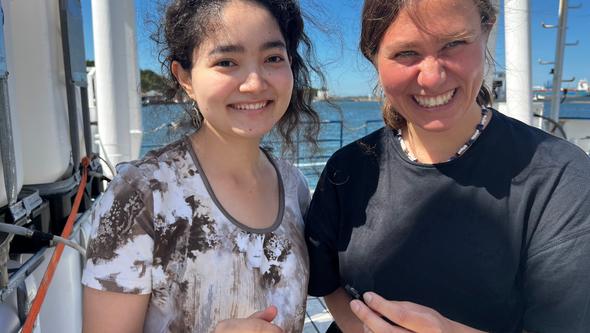
Karima Keyum will use radon and radium isotopes to trace groundwater discharge and explore its links with greenhouse gases. Laura Laier will collect water samples in several fjords to analyse carbon.
Preparing for the expedition has not only involved instruments and sampling plans. The students have also had to prepare mentally for living and working on board.
– It is a lot to take in, so we support each other. I am looking forward to the research, but also to seeing the fjords. I am sure they will be stunning, says Karima Keyum.
They describe the opportunity to take part in a research voyage so early in their careers as both unusual and empowering.
– Many universities do not have their own research vessel or the opportunity to offer students this kind of experience, says Laura Laier.
Following carbon from glaciers to the sea
The first expedition to Svalbard is led by Isaac Santos. His team includes experienced researchers, doctoral researchers and students at different stages of their careers.
– Skagerak is the right size and has the right technology to bring students together with experienced researchers. They learn from one another, he says.
– As this is a university vessel, educating students is an important part of our mission.
The team will collect samples in fjords along the Norwegian coast and on Svalbard. Several participants have never taken part in an expedition of this kind before, and uncertainty is part of the work.
– We never know exactly what we are going to face. We are always a little concerned about the weather and the conditions, says Isaac Santos.
The researchers will study how retreating glaciers affect the movement of carbon between land, sea and atmosphere.
Svalbard is a climate-change hotspot where glaciers are retreating rapidly. The archipelago also allows the researchers to compare fjords that are geographically close but affected in very different ways.
– You can cross a small hill and find a fjord where the glaciers are melting much faster than in the fjord next to it. We can investigate those gradients during a single expedition, says Isaac Santos.
Using chemical tracers, particularly radium isotopes, the researchers will follow water and dissolved substances from the land, through and beneath glaciers, into the fjords and onwards to the open sea.
They will also investigate less visible carbon pathways, including subglacial meltwater and groundwater flowing beneath the seabed.
Several expeditions in one voyage
R/V Skagerak has left its home port in Gothenburg and is expected to return in mid-September. Its route takes the vessel via Tromsø to Bjørnøya, Svalbard, Iceland and Greenland.
Research teams will succeed one another throughout the voyage. The vessel will conduct sampling in Norwegian fjords, put a team ashore on Bjørnøya and later collect them, and support research around Svalbard, Iceland and Greenland.
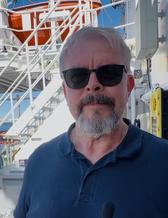
– There are several expeditions within one voyage, so there is a great deal to prepare, says Richard Olsson, captain of R/V Skagerak.
He will captain the first leg from Gothenburg to Tromsø and describes Skagerak as a highly versatile research platform.
– The vessel can do many different things. We have equipment that can be launched and recovered quickly, and Skagerak has proved to be extremely adaptable.
For Richard Olsson, captaining the vessel is more than just an assignment.
– It is the best job I have ever had.
Prepared for two months away
Chief engineer Axel Magnusson and his colleagues have made sure that the vessel has the fuel, equipment and spare parts required for the journey.
– We are loading a great deal of scientific equipment and bunkering for the voyage to Tromsø, Svalbard and Greenland, says Axel Magnusson.
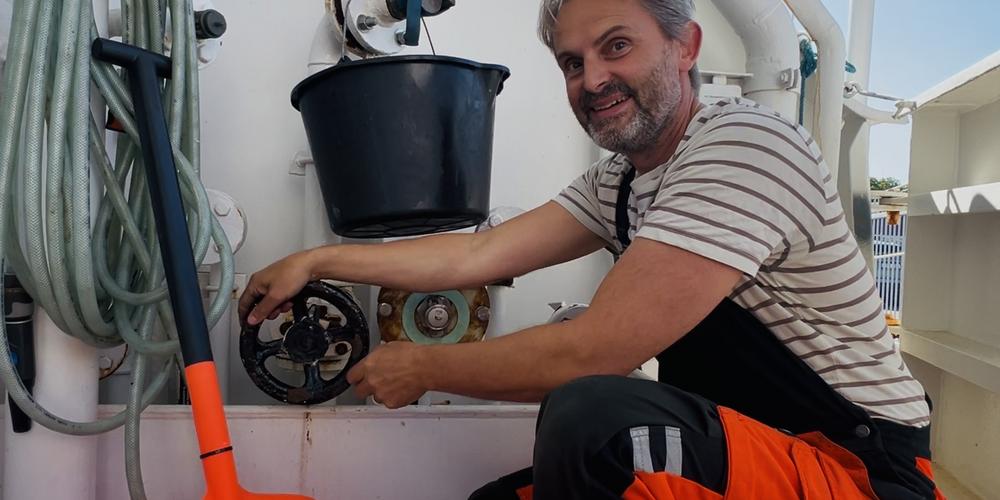
R/V Skagerak will call at ports including Tromsø and Reykjavík, where supplies and spare parts can be taken on. Even so, the crew must be prepared for unexpected situations during two months away from its home port.
With the instruments checked, the stores loaded and the equipment secured, R/V Skagerak has now left Gothenburg and set a course north.
The preparations are over. The research at sea has begun.

