
Rare 18th-Century Instrument Comes to Life in New Research Collaboration
A unique 18th‑century instrument in Gothenburg is about to be brought back to life through a collaboration between the University of Gothenburg, the Museum of Gothenburg, and the Göteborg International Organ Academy. Together, the partners will rediscover and recreate the sound of Patrick Alströmer’s important claviorganum—an instrument that once connected Gothenburg to Europe’s musical life during the Enlightenment.
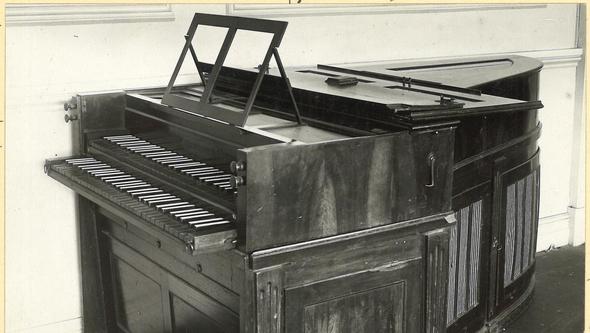
The instrument is an unusual combination of organ and fortepiano and is part of the Museum of Gothenburg’s collections. Built by Johann Andreas Stein (1728–1792) and owned by Patrick Alströmer—diplomat, merchant, and one of the most influential cultural figures in 18th‑century Gothenburg—the claviorganum held a central place in his home. There, it served as a key link between the city’s cultural life and the broader European currents of the time.
Jesper Lundgren, Head of Department at the Academy of Music and Drama emphasises that the initiative both strengthens research and highlights a unique part of the city’s cultural heritage:
“This is a very interesting project and an excellent example of how collaboration between different parties can enable high-quality research.”
Reconstruction and Research Starting in 2026
The work is carried out within the framework of the research project REM@KE, funded by the European Research Council (ERC). It will begin in 2026, when the instrument will be documented in the museum’s collections storage facilities. A precise, playable replica is planned to be completed between 2028 and 2029.
REM@KE contributes specialist expertise in historical instruments and reconstruction; the Museum of Gothenburg provides historical context and access to the original instrument; and the Göteborg International Organ Academy supports the project with artistic development, public activities, and funding contacts.
Museum Director Carina Sjöholm emphasises that the project contributes positively to the museum’s work with its extensive collections:
“Besides highlighting the museum’s unique claviorganum, its history and context, the project also contributes to developing a method for presenting other culturally and historically valuable musical instruments and objects in the museum’s collections in the future.”
Together, the partners aim to restore a lost sound world to Gothenburg and deepen the understanding of the city’s 18th-century musical heritage.
The initiative also includes a range of public activities. Hans Davidsson, Artistic Director of the Göteborg International Organ Academy, describes how the instrument will be heard and experienced in new contexts:
“In concerts and encounters with the public, Alströmer’s claviorganum will be brought back to life. We will explore his extensive music collection in solo and ensemble performances in spaces where the instrument once played a central role in Gothenburg’s musical life.”
Agreement and Research Project
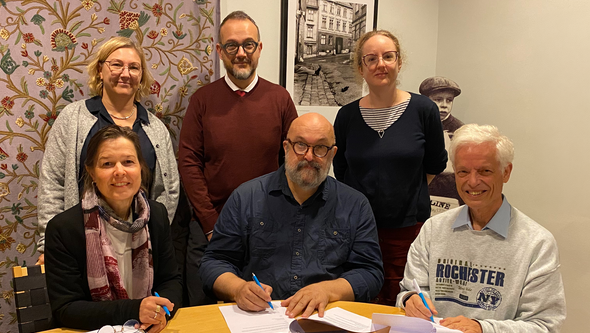
The collaboration agreement between the University of Gothenburg, the Museum of Gothenburg, and the Göteborg International Organ Academy was signed in November 2025. It formalises a multi‑year effort combining research, documentation, reconstruction, and public engagement centred on the claviorganum.
The work forms part of the research project REM@KE, funded by the European Research Council (ERC). REM@KE brings together researchers from the Academy of Music and Drama at the University of Gothenburg, the University of Pavia, and the University of York. With a total budget of around 80 million SEK and a project period running until 2030, the project investigates how historical keyboard instruments were created, played, and perceived, and how their sound worlds can be recreated today.
The three partners in Gothenburg play a central role in this international collaboration, in which Alströmer’s claviorganum becomes one of the most extensive and publicly visible research threads.
