
Grant to research for greenhouse gases from melting glaciers in Svalbard
Tobia Politi has received a SEK 6 million grant from Formas to investigate greenhouse gas emissions in Svalbard, where glaciers, ice, and snow are rapidly melting due to an increasingly warmer climate.
"The Arctic landscape is changing rapidly, and there is a growing demand for knowledge about the shifting role of coastal ecosystems and biogeochemical dynamics in these environments under conditions of global warming," says Tobia Politi, a postdoctoral researcher at the Department of Marine Sciences.
Emerging mosaic of aquatic ecosystems
Melting glaciers have created over 500 coastal lakes, 200 lagoons, and countless ponds, wetlands, and waterways on Svalbard. Although greenhouse gas emissions from these newly formed fresh- and brackish water ecosystems may have a significant impact on the Earth's atmosphere, we still lack sufficient knowledge about the processes taking place there.
“Glacier retreat and sea ice loss are leading to an emerging mosaic of aquatic ecosystems. The increased meltwater runoff is likely to alter organic matter mineralization and associated gas emissions, creating unknown climate feedback loops. Our hypothesis is that these newly formed systems are biogeochemical hotspots and modify Arctic greenhouse gas budgets,” Politi explains.
Measure carbon dioxide, methane, and nitrous oxide
The project will therefore conduct large-scale measurements along the land-to-sea transition zones of Svalbard's coasts to fill the knowledge gaps in emissions of the three important greenhouse gases: carbon dioxide, methane, and nitrous oxide.
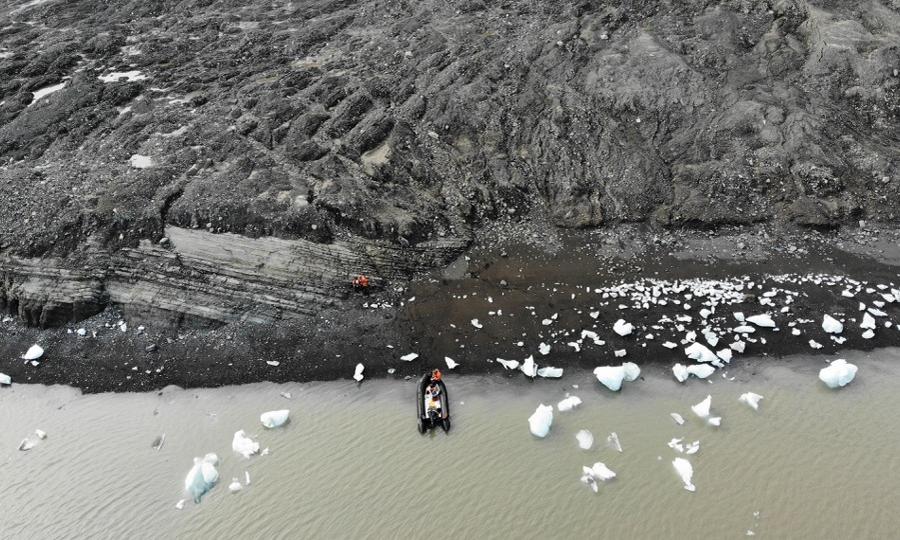
Arctic freshwater ecosystems often exhibit strong seasonal variations in GHG production, with winter ice leading to gas accumulation and significant emissions during the ice-free spring. The research will also identify the ecological and biogeochemical processes linked to these areas.
Identify variations in emissions
Therefore, this project will analyze emissions during two different seasons to fully capture these variations. The overall goal is to identify spatial and temporal variations in net emissions.
"The results are important for understanding how changes in the Arctic may affect the global climate system. They will provide a basis for improved climate models and help to develop strategies to mitigate the effects of climate change," says Politi.
Writer: Annika Wall
Research project: Melting Boundaries: Revealing Greenhouse Gas Emissions from Emerging Arctic Landscapes
Recipient: Tobia Politi, post doc in biogeochemistry, Department of Marine Sciences
Funder: Formas call ‘Career Grant for Early-career Researchers 2025’
Amount: SEK 5,999,606
The project will run for the next four years in collaboration with UNIS-University Centre in Svalbard, Aarhus University (Denmark) and IOPAN-Institute of Oceanology Polish Academy, and will establish a stronger collaboration with the Department of Biology and Environmental Science, University of Gothenburg.