
Eel Futures in Österlen
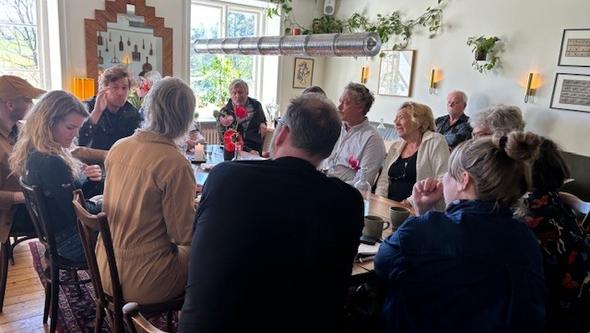
Can sustainable eel fishing, gastronomy, and cultural heritage coexist and work together to save the European eel? That question was at the center of a workshop held in Österlen where researchers, professional fishers, chefs, and cultural heritage actors gathered to discuss “Can We Save the Eel by Eating It?"
Project leader Viktor Vesterberg described the day as an “action research” project, where the goal not was to deliver ready-made answers, but to create encounters between different forms of expertise and experience. The focus was on research, collaboration, living traditions, and how the eel might hold future value — ecologically, culturally, and gastronomically.

Fishing is not the main problem
Several participants emphasized that small-scale Swedish eel fishing accounts for only a very small share of the total mortality of the European eel. According to professional fishers present at the workshop, around 100 tons of eel are currently landed within Swedish commercial fisheries, compared to significantly higher levels before restrictions were introduced.
At the same time, hydropower was repeatedly highlighted as the single largest cause of mortality among migrating silver eels.
“The fishing is not the main impact. Hydropower is,” stated eel researcher Wilhelm Dekker during his presentation.
Several examples were given of power stations and migration barriers where large numbers of eels are injured or killed on their way to the sea. The discussion also addressed the need for bypass channels and other technical solutions to reduce the impact of hydropower.
Illegal Trade and Demands for Traceability
Participants also raised concerns about extensive poaching and illegal eel trade. Estimates mentioned during the day suggested that illegal catches may be as large as the legal commercial fishery.
At the same time, it was emphasized that legally caught Swedish eel is subject to very strict traceability requirements.
“Everything is digitally logged directly at landing. As a customer, you should ask whether the eel was legally caught,” said one participant.
Several restaurant owners stressed the importance of being able to document exactly where the eel comes from and how it was caught.
The Eel as Cultural Heritage and Storytelling
A large part of the workshop focused on the eel’s role in the cultural heritage of Skåne. Representatives from the Ålakusten Cultural Heritage Association described the eel feasts (ålagillen), eel huts (ålabodar), and fishing traditions as a living intangible cultural heritage with roots stretching far back in history.
“It’s not just about the food. It’s about the stories, the people, and a culture that risks disappearing,” said one participant.
Several attendees expressed concern that knowledge, language, and traditions surrounding eel fishing are gradually dying out as older generations disappear and few young people enter the profession.
At the same time, efforts are underway to strengthen the international cultural heritage perspective through collaboration with UNESCO and other organizations.
Gastronomy, Identity, and Sustainability
Some of Sweden’s most prominent chefs and restaurateurs participated in the meeting. Both chefs and restaurant owners described eel as a unique ingredient with strong ties to place, history, and identity.
“Food is about relationships and is one of the most emotionally charged things we have. Guests become part of a story involving cultural history, sustainability, and the identity of a place,”
said restaurateur Emma Höök from Talldungen.
Several participants compared eel to other regional quality products such as Kalix vendace roe and fermented herring (surströmming) — products where cultural and geographical context form an important part of their value.
The discussion also revolved around the possibility of creating new models in which restaurants and consumers contribute financially to research, habitat restoration, and eel restocking projects.
A Polarized Debate
At the same time, it was acknowledged that eel is one of the most controversial ingredients in today’s food debate. Many restaurants hesitate to serve eel despite the fishery being legal, partly due to fear of criticism and simplified narratives surrounding endangered species.
“The debate often lacks nuance. It’s complex and difficult to communicate to guests,”
noted Emma Höök.
A recurring idea throughout the day was that the eel needs to be assigned a clearer value in order to create stronger incentives to protect both its habitats and its cultural traditions.
“Come and eat eel, save the eel,” as one participant expressed during the discussions.
The workshop concluded without definitive solutions, but with a clear ambition for continued collaboration between researchers, gastronomic actors, small-scale fishers, and cultural heritage organizations in order to keep the issue alive.
