
Coral reef growing at Väderöarna: ‘Encouraging’
In the Life Lophelia project, 160 artificial reefs have been sunk into the depths of the Skagerrak. During the final conference, around forty participants got to see both the reefs and living eye coral at Väderöarna, just outside Grebbestad.
‘The goal is to have large, living and healthy coral reefs in Swedish waters, similar to those found in Tisler, Norway,’ says Anita Tullrot, project manager at the County Administrative Board.
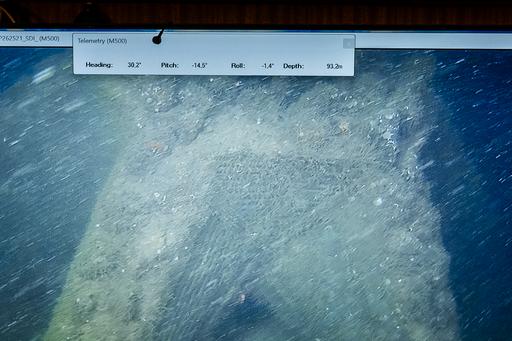
At first, only white particles, plankton and other living organisms can be seen rushing past on the screens of the research vessel Nereus. Beneath the boat, which is moored off the Väderöarna islands off the coast of Bohuslän, an underwater robot descends towards the seabed, while the boat's passengers wait curiously to see what will appear in front of the robot's camera.
This is the second group of the day, and about half of the approximately 40 participants in the Life Lophelia project's final conference, which was held just outside Grebbestad in early September. Part of the conference involves going out with Nereus, looking at living Lophelia pertusa 90 metres down in the depths of Koster-Väderöfjorden, and also viewing the artificial reefs that the project laid out last year. The expectation is that new coral reefs will begin to grow there.
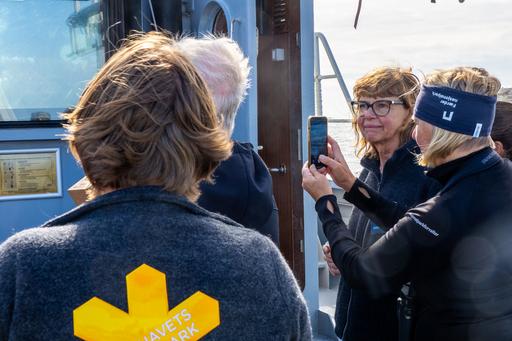
‘We have placed over 60 artificial reef structures here,’ says Anita Tullrot, project manager at the county administrative board.
Corals at Väderöarna are growing
The Life Lophelia project was launched in 2019 and is a collaboration between the Västra Götaland County Administrative Board and the Department of Marine Sciences at the University of Gothenburg. The budget is just over SEK 30 million, most of which comes from the EU. The overall goal is to restore reefs of Lophelia pertusa at six locations in the Swedish part of the Skagerrak. At four of the locations, only dead coral gravel remains today, while at Säckenrevet there are a few living corals and the reef at Väderöarna is growing.
‘At the beginning of the 2000s, only dead corals were found here. But from 2013 onwards, we have seen living corals growing in this area, which is of course very encouraging,’ says Anita Tullrot.
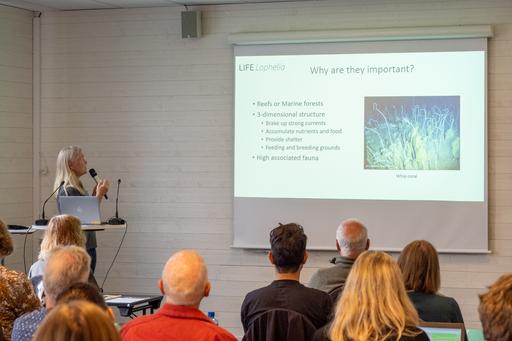
'The studies we have conducted within the project indicate that this particular reef offers the best conditions. We naturally hope that coral will also grow at the other sites, but it is the Väderöarna islands that we have the highest hopes for.'
Extensive research within the project
Last year, 160 artificial reefs were lowered at the various sites. This was preceded by a long and thorough process, including mapping of the seabed. A research team at the Tjärnö Marine Laboratory carried out various environmental measurements and worked to find the best locations for the artificial reefs. The researchers also tested different materials and designs for the reefs to find suitable materials that would attract coral larvae.
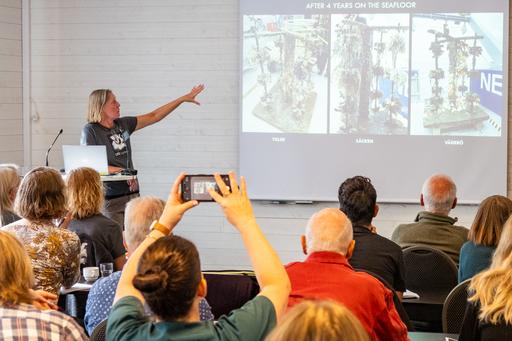
‘We have learned a great deal during this project, and it is of course very exciting and stimulating to gain new knowledge about Lophelia and how we can help them return,’ says Ann Larsson, researcher at the Department of Marine Sciences and leader of the research team in the project.
´We have been researching the species for several years at the Tjärnö Marine Laboratory, including their reproduction. These were, of course, important pieces of information that we brought with us into the project,' she says.
The target image is in Tisler, Norway
At Nereus, everyone suddenly focuses on the screens. The underwater robot has reached the bottom and is filming the living corals. After a few minutes, one of the artificial reefs also appears. No living corals can be seen here yet, as it is too early, but several other organisms have settled on the reef. A spiny squat lobster peeks sleepily out of one of the holes towards the underwater robot's powerful spotlight, much to the interest of the spectators.
'This project is coming to an end, but we will continue to monitor the development of the reefs. We have introduced both fishing and anchoring bans to protect these areas, but we expect it will take a few years for the coral larvae to settle and start forming their own reefs here,' says Anita Tullrot, highlighting the Norwegian reef of eye corals off Tisler, just north of the Koster Islands, as a target for the Swedish project.
‘There is a living coral reef there that is approximately 1,200 by 200 metres in size. We don't have the right conditions in terms of seabeds and currents to have such large reefs in Sweden, but it is a viable reef. That is how we hope these reefs will also develop in the long term,’ says Anita Tullrot.
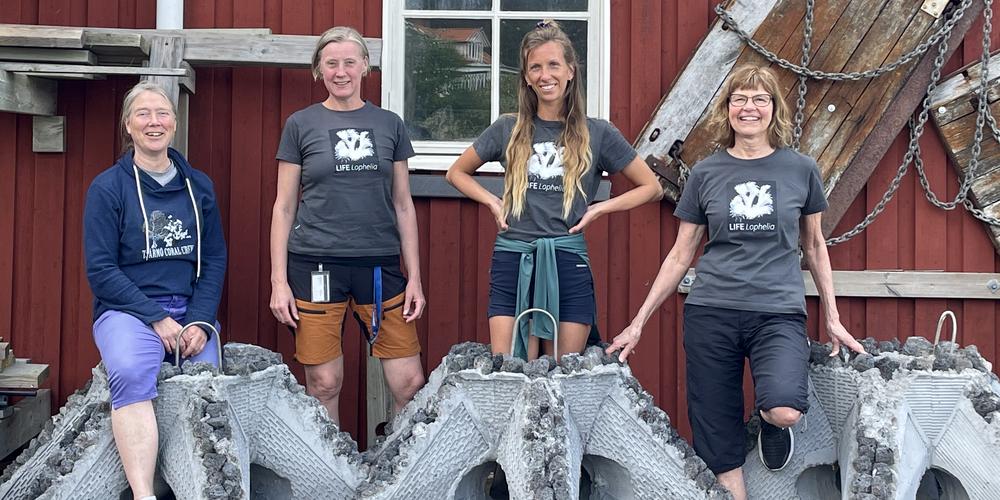
The LIFE Lophelia project has developed a method for restoring reefs of the deep-sea coral Lophelia pertusa. Research and method development have been carried out at the Department of Marine Sciences, University of Gothenburg, to develop the appropriate shape and surface structure for artificial reef structures that coral larvae will settle on and grow into coral reefs. The environmental conditions in the areas to be restored have also been investigated. The County Administrative Board of Västra Götaland is the project owner and has carried out a thorough survey of the seabed and reinforced protection with a total fishing ban. The project has a budget of 32 million and is financed by the European Union's Life Fund, the Swedish Agency for Marine and Water Management, the County Administrative Board of Västra Götaland and the University of Gothenburg.


