
Children question fiction in non-fiction books
“But dragons don’t exist, do they?”. A new doctoral thesis that explores children’s imagination in encounters with non-fiction books. As children develop knowledge about how books present their subject matter, they question, appreciate and imagine more.
Children in preschool want non-fiction books to be read aloud to them in preschool – but according to previous research they are rarely given the opportunity.
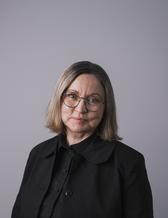
– In addition, the non-fiction books available for preschool children are often quite literary, says Anna Backman, a doctoral student in the humanities with a specialisation in education at the University of Gothenburg, as well as a lecturer at the Preschool Administration of the City of Gothenburg and with a background as a preschool teacher.
In her thesis she studies representations in picturebooks from the perspective of children – what the children themselves say they discern in them. The analyses use variation theory, which explains what makes it possible for children to experience a representation in a particular way, for example as fictional. The same theory is used to explain what enables children to imagine, for instance, what is amusing about a representation.
Questioning precedes imagination
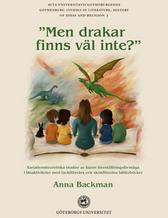
The thesis introduces the concept of fictionalised non-fiction picturebooks. By this Anna Backman refers to books that, when encountered by children – for example in libraries – are classified as non-fiction but “borrow” one or another characteristic from fiction. For instance, factual representations may be wholly or partly replaced by fictional ones.
When the children in the study discern what is “real” and what is “pretend” in fictionalised non-fiction picturebooks, it becomes possible for them to question the content – and afterwards to imagine and take pleasure in it.
– The analyses repeatedly show that children’s ability to question precedes their ability to imagine, says Anna Backman.
At first, for example, the children express both curiosity and irritation that there are non-fiction books about dragons and dinosaurs that seem to want them to believe in things that are “fake!”. But once they understand that the representation is fictional, they later begin to appreciate what is amusing about it and to imagine things themselves on the basis of it.
Children focus on the content
One result that surprised her was how the children reasoned when asked to sort books as non-fiction or fiction. The analysis shows that whether the representation in a book is “real” or “pretend” is decisive when children decide whether it is a non-fiction book or not.
– That is interesting given that many non-fiction picturebooks for children contain fictional elements.
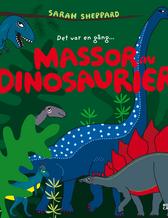
For example, the children categorised the book Det var en gång… Massor av dinosaurier (Once upon a time… Lots of dinosaurs) (Sheppard, 2008) as fiction, even though the library classifies it as non-fiction.
– After some discussion, however, the children concluded that the book is “something in between”, because some things in it have happened “for real”, but much of it is still “pretend”. This shows how important it is that children are given the opportunity to talk about books in order to understand what kind of book it is, says Anna Backman.
Purposeful reading activities
She hopes that the thesis will inspire more purposeful reading activities in preschool, in which non-fiction picturebooks are used alongside and in comparison with fiction.
– I would like children who do not otherwise encounter non-fiction books to have more opportunities to do so in preschool. And I would like those children who already have an interest in non-fiction to have the chance to develop it.
A better balance between non-fiction and fiction can benefit children’s understanding that texts and images have different purposes, Anna Backman argues. Such an understanding can be crucial when children themselves choose what they want to read.
Contact:
Anna Backman, tel: +46 720-22 73 32, email: anna.backman@lir.gu.se or anna.backman@forskola.goteborg.se
The thesis “Men drakar finns väl inte?” Variationsteoretiska studier av barns föreställningsförmåga i läsaktiviteter med facklitterära och skönlitterära bilderböcker will be defended on 20 March at 13.00 in Jubileumssalen (J222) at Humanisten, Renströmsgatan 6, Gothenburg.