AI-powered slow TV aims to strengthen fish migration research
In 2026, the University of Gothenburg will launch a research collaboration with Lerum Energi, Partille Energi and the Swedish Society for Nature Conservation. Using advanced AI-powered fish cameras, the project combines cutting-edge technology with ecological research to improve our understanding of fish migration in the Säveån River. At the same time, it will give the public a unique opportunity to follow life beneath the surface through a live slow TV broadcast.
The initiative involves installing advanced fish cameras in the river to record migrating fish as they pass. The footage will be analysed to determine the timing of fish migration and assess how effectively fish passages support different species.
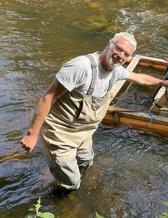
“This gives us an entirely new opportunity to study fish migration in detail and collect data that has previously been difficult to obtain,” says Johan Höjesjö, Professor at the Department of Biological and Environmental Sciences, who leads the research component of the project."
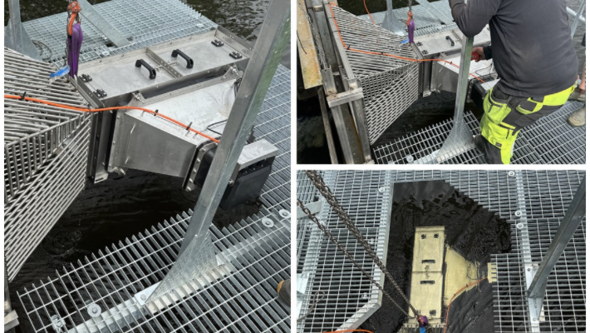
The system uses artificial intelligence to automatically identify, count and measure fish in real time. This makes it possible to collect large amounts of data over extended periods, providing a more reliable picture of fish movements in the Säveån River. The project also includes complementary studies using PIT tags (Passive Integrated Transponders) – small electronic tags that make it possible to track individual fish as they pass monitoring stations.
The technology opens up new opportunities for research while also allowing the public to experience life beneath the water's surface through live slow TV broadcasts. Every year, Atlantic salmon, European eel and other species migrate through the river, largely unnoticed. It is already well established that salmon and eels migrate upstream from the sea into the Säveån River and onwards to Lake Sävelången, north of Floda.
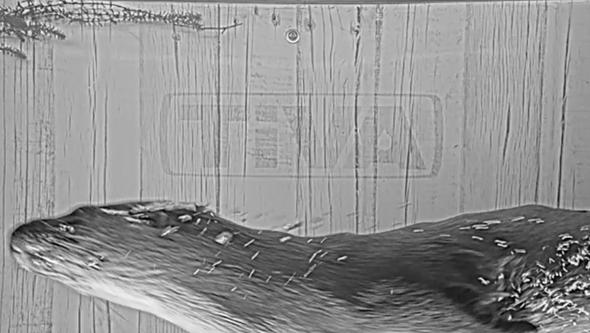
Just a few days ago, the cameras captured footage of a Eurasian otter, an event that was also reported by Swedish broadcaster TV4. The otter is a protected species and had long been absent from the Säveån River, although there had been occasional unconfirmed sightings. Capturing the animal on camera at Hedefors therefore represents both an important and encouraging milestone.
The research initiative will also be integrated into teaching at the University of Gothenburg.
“The project will create opportunities for both master's theses and doctoral research, for example in areas such as smolt migration and ecological connectivity – the ability of fish to move freely through an ecosystem,” Johan Höjesjö continues.
Data collection begins this spring as juvenile brown trout migrate downstream towards the sea. It will continue in the autumn, when adult fish return upstream to spawn. The project is being carried out in collaboration with several external partners and demonstrates how emerging technologies can help advance research on biodiversity in flowing freshwater ecosystems.
