
Towards more precise care for extremely preterm infants
Care for extremely preterm infants has advanced considerably, but needs can vary from one child to another. Chatarina Löfqvist researches how biological signals and improved risk assessment can help determine which infants need closer follow-up and additional support.
For the most preterm infants, those born before 28 weeks of gestation, care often involves managing major medical risks at a very early stage of life. Although survival has improved, there is still a risk of serious complications that can affect vision, brain development and quality of life much later on. This is the starting point for Chatarina Löfqvist’s research.
“The common thread running through my research is the most vulnerable children, namely those born extremely preterm, and how their care can be improved through greater precision,” says Chatarina Löfqvist.
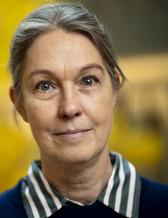
Early signals can show which infants are at greatest risk
An important part of Chatarina Löfqvist’s research focuses on how biomarkers and other early biological signals can be used both to improve understanding of disease development in very preterm infants and to identify, at an earlier stage, which infants are at greatest risk of complications.
During a postdoctoral position at Harvard University in Boston, she deepened this line of research through studies of fatty acids and nutrition. This contributed to greater knowledge of which infants are at greatest risk and how complications can be predicted earlier.
“Over time, my research has developed towards prediction, with a focus on identifying the right child for the right intervention at the right time through interdisciplinary collaboration,” she says.
When care becomes more precise, resources can be used more effectively while children and families receive the support they need most.
One major challenge is the variation within the group of very preterm infants. Risks differ from one child to another, making it difficult to determine which infants need close follow-up and treatment.
There is a need for more precise methods to identify the infants at highest risk, while at the same time reducing the burden on those at low risk of complications.
Decision support tools that can reduce unnecessary examinations
An important part of Chatarina Löfqvist’s research is aimed at improving risk assessment. She has, among other things, helped develop digital decision support tools that enable clinicians to determine early on which infants are at greatest risk of developing treatment-requiring retinopathy of prematurity, ROP, a vascular disease of the retina that can occur when a child is born before the retina has fully developed and which may lead to visual impairment.
“In practice, this makes it possible to identify more accurately exactly which infants need repeated eye examinations,” says Chatarina Löfqvist.
Research that also includes the family and society
Chatarina Löfqvist’s research is not limited to biological mechanisms and clinical data. Extremely preterm birth also affects parents, family life, and the support that may be needed from healthcare services and society at large. For this reason, parents’ experiences and health economic analyses are also important parts of the research.
“Parents’ experiences provide valuable knowledge about how care is perceived and how it can be improved, while health economic analyses make resource use visible. Integrating these perspectives with medical research is central to creating care that is more sustainable and relevant. There is also a broader societal perspective here. When care becomes more precise, resources can be used more effectively while children and families receive the support they need most.”
Looking ahead, Chatarina Löfqvist sees several important research questions. One of the biggest is how biomarkers, clinical data and prediction models can be combined and actually used in everyday clinical practice.
“It is not only a matter of developing models, but also of implementing and evaluating them in real-world care. That is why parents’ experiences and health economic analyses are also important parts of the research,” she says.
Lives in: The Linné area in Gothenburg
Family: Husband and an adult son who has moved out
Interests: Travel has been a passion since her youth, and more recently, somewhat unexpectedly, exercise
Background: Biomedical scientist
PhD: Awarded in 2001 in paediatric endocrinology
Postdoc: Harvard University, Boston
Research focus: How care for extremely preterm infants can be better tailored
Other role: Scientific secretary at the Swedish Ethical Review Authority
