Spreading knowledge about cold corals
The ecology of cold-water corals is a new field of research that has emerged over the last 25 years. Rhian Waller has been involved right from the start. “In 2002, I published the very first scientific article on their propagation. It was actually something of a coincidence. I was more interested in anemones, but when I was encouraged to do a doctoral degree, there was a position available on cold-water corals.”
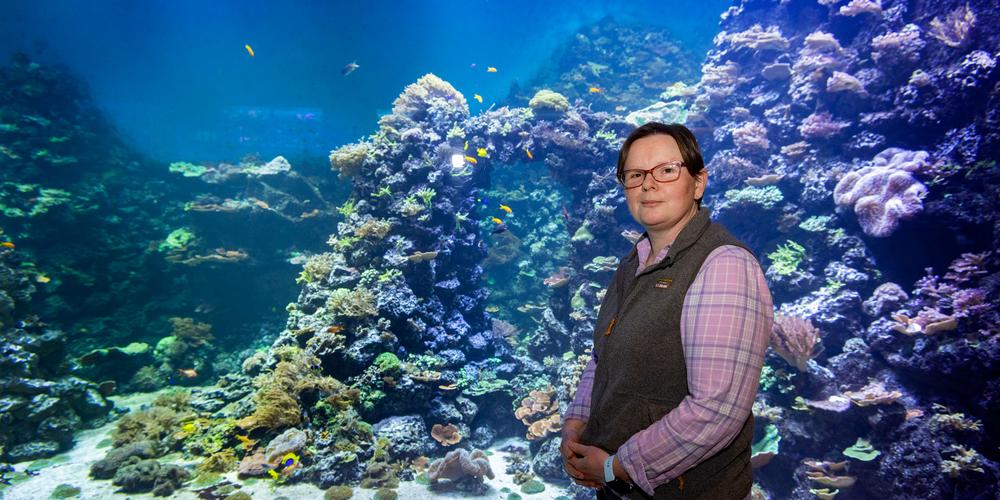
RHIAN IS A COMMON NAME in Wales. This was also where she once studied to become a marine biologist. Her degree project on how anemones are affected by climate change impressed her supervisor so much that she was encouraged to apply for a doctoral position immediately after her bachelor’s degree. She intended to study how cold-water corals reproduce off the coast of Ireland, but things didn’t go to plan.
“The corals I collected at the beginning of my project turned out to be non-reproducing. So I had to travel around the world to different institutions and study different species of cold-water corals. But the initial failure ultimately gave me much broader knowledge, and I was able to see global patterns in coral reproduction.”
What attracted you to marine biology?
“I lived in Saudi Arabia as a child, where my parents worked as microbiologists, and my father also trained as a diving instructor in his spare time. So I was interested in marine life from the start. In fact, I initially wanted to become a primary school teacher, but that requires a double degree, so I started studying marine biology because I found it fascinating. I ended up becoming a teacher anyway, but at university level. Working with the students and seeing which ones are creative and curious enough to pursue doctoral studies is the best part. Passing on the baton to the next generation feels rewarding.”
Why is it important to study cold-water corals and how they propagate?
“I’m generally interested in species that build structures and environments in the sea that other marine life can benefit from. Sponges and corals are the builders and decorators of the seabed. A study off the coast of Norway showed that more than 1,000 other species depended on the cold-water coral Lophelia pertusa living there. If the corals don’t survive, the entire ecosystem is disrupted.”
Many people are alarmed that the colourful warm-water corals are fading due to global warming affecting the world’s oceans. How much interest is there in cold-water corals?
“More and more researchers are studying them. When we held a conference on cold-water corals in 2000, there were maybe twenty attendees. This year I think there will be more than 300. The basic research on cold-water corals has been done now, so it’s time to deepen the research and find out more about their lives. I feel fortunate to have been involved right from the start.”
You’re based at Tjärnö Marine Laboratory, but you also go on expeditions to Alaska and Chile. What do you find there?
“Cold-water corals can be found in all oceans, but their living conditions differ. In Chile, cold-water corals grow in shallow waters in the fjords, so you can go out on a day trip by boat and come back to the lab the same day. This isn’t the case everywhere, such as the Aleutian Islands in Alaska, where they can live at depths of several thousand metres. I carry out research projects in several parts of the world and I like to travel, but it’s harder now that the children are old enough to ask me to stay home. At the same time, it’s good for them to see what the world of science involves and to start caring about the oceans when they grow up.”
How did you end up in Sweden and on Tjärnö?
“I’d been a researcher in the USA for 20 years, and I felt I had stagnated a bit. That’s why I applied for an EU-funded sabbatical position at Tjärnö. I got the job two days after my second son was born, and I then waited a year before moving here with my family. I love the research environment here. There’s a wealth of expertise, and the facilities are excellent. On Tjärnö, they’ve made cold-water corals reproduce in the laboratory for longer than anywhere else in the world. My family also enjoys living close to nature, so it was a sad time when we returned to the United States when my employment came to an end. Luckily, another position came up and I got it, although there was some moving back and forth involved. Now I’m staying here, and I’ve reached a stage where I want to share and hand over.”
Rhian Waller
Work: Recently appointed Professor of Marine Biology.
Born: 1978.
Family: Husband and two sons, aged 8 and 11. The family lives on Tjärnö.
Leisure interests: “We like to go cycling and camping as a family. Our children are very active. When I need to switch off from everything, I like to spend time in the garden.”
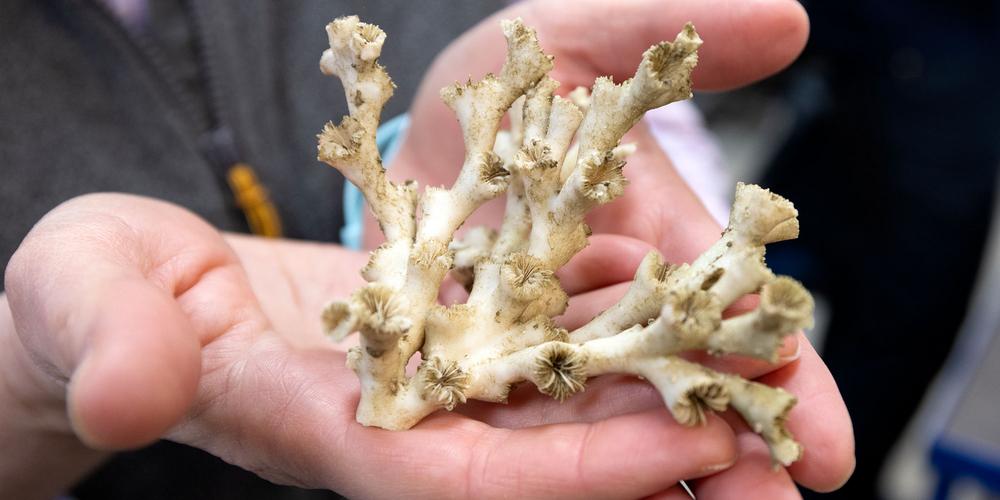
Cold-water corals
The scientific community has agreed to divide corals into cold-water corals and warm-water corals. Another classification could be those corals that are dependent on sunlight and those that are not. Rhian Waller focuses on the group of corals that are not reliant on sunlight, sometimes referred to as deep-water corals, even though they can sometimes be found in shallower waters.
WHAT DRIVES YOU AS A RESEARCHER?
“It’s the students. I get a warm feeling when I lecture to students about the deep sea, and they take an interest when they hear about something new that they didn’t know about. And then to follow some of them as doctoral students.”
WHEN IS IT MOST DIFFICULT?
“Research is hard work! Especially in the deep sea, and not everyone is cut out for it. It’s important to always have a plan B and not to despair.”
HOW DO YOU CELEBRATE YOUR RESEARCH SUCCESSES?
“I celebrate the Swedish way: with cake! And it’s important to celebrate when we make progress in research.”