Lisa Wahlgren: Life expectancy has increased for boys with Duchenne muscular dystrophy
Research in Lisa Wahlgren’s doctoral thesis shows an increased life expectancy for boys and men with Duchenne muscular dystrophy (DMD), along with a quality of life that is better than expected. Heart failure is the most common cause of death, while non-cardiopulmonary causes contribute to increased mortality among younger patients.
LISA WAHLGREN
Dissertation defense: 5 June 2026 (click for details)
Doctoral thesis: Living with Duchenne muscular dystrophy in Sweden: A national study of health status, respiratory care, life expectancy and causes of death
Research area: Pediatrics
Sahlgrenska Academy, The Institute of Clinical Sciences
Duchenne muscular dystrophy (DMD) is a severe progressive muscle disease that primarily affects boys. The muscles gradually become weaker, leading to pronounced weakness, loss of the ability to walk already in the early teenage years, and a significantly shortened lifespan.
There is currently no curative treatment. However, improved care has gradually increased life expectancy, resulting in a growing group of adult men living with the disease. This creates new challenges that need to be understood and considered in the care and treatment of boys and men with DMD.
“My research focuses on describing how many people in Sweden are living with the disease, how life expectancy has developed, and what the most common causes of death are,” says Lisa Wahlgren, physiotherapist at Queen Silvia Children’s Hospital and doctoral student at the Institute of Clinical Sciences, and continues:
“Furthermore, I investigate the occurrence of respiratory complications, and which treatment interventions have been used, as well as how these have affected life expectancy, cause of death, perceived health, and quality of life.”
Certain risk factors linked to early death
At the end of 2019, approximately 3.2 men per 100,000 in Sweden born in 1970 or later were living with DMD. Median survival was around 30 years, and the most common causes of death were heart and respiratory failure.
“At the same time, about one in five died from causes unrelated to the heart or lungs, and these individuals were generally younger. This knowledge may help healthcare professionals identify risk factors for early death at an earlier stage, particularly those not related to the heart and lungs.”
The research also showed that pneumonia is common, with around 70 percent of patients having experienced one or more episodes during their lifetime. For many, the first episode of pneumonia occurred when lung function had deteriorated to the point where they began requiring nighttime respiratory support. The researchers also observed an increased risk of dying from respiratory-related causes in connection with or following the first episode of pneumonia.
“The risk of serious consequences during severe respiratory infections and pneumonia highlights the importance of actively informing and guiding patients regarding available treatments during infections.”
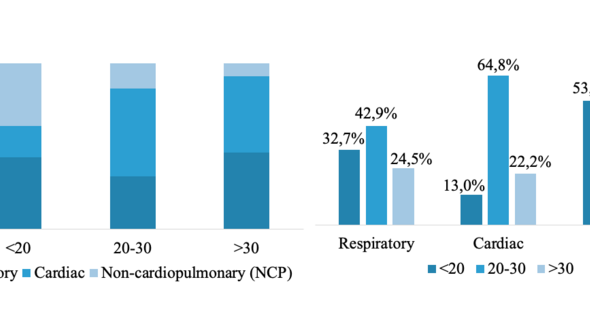
Figure 4 from thesis: Figure to the left: Stacked bar chart showing proportion of causes of death across three different age ranges. Figure to the right: Grouped bar chart showing proportion of three age ranges (<20, 20–30 and >30) per cause of death.
Fatigue, sleep problems, pain, and depression affect quality of life
The research found no clear associations between self-rated health and age, level of functioning, lung function, or degree of use of respiratory support devices. However, fatigue, sleep problems, depressive symptoms, and pain were common and associated with poorer quality of life.
“Taken together, these findings increase our understanding of how the disease affects daily life for adult men with DMD and demonstrate the importance of looking beyond measurable functional changes alone.”
What has been the most rewarding and challenging part of the doctoral project?
“During childhood and adolescence, healthcare focuses on preparing patients for adult life. Having the opportunity to look ahead and try to understand what affects their lives in the long term was very rewarding. Meeting these adult men has also been one of the most appreciated parts of the project,” says Lisa Wahlgren, and continues:
“The research process involves many challenging and educational moments. For me, communicating my research has been a particular challenge, where I have gradually pushed myself and accomplished things I previously did not believe I would be able to do.”
Text: Susanne Lj Westergren