Linnéa Gustavsson: Right level of care faster when a physical therapist performs the first assessment for hip and knee osteoarthritis
The aim of Linnéa Gustavsson’s thesis was to evaluate physical therapist-led triage in orthopedic specialty care for patients with hip and knee osteoarthritis. The findings show that physical therapist-led triage can free up orthopedic specialist resources and contribute to more efficient specialty care.

LINNÉA GUSTAVSSON
Dissertation defense: 16 October 2026 (click for details)
Doctoral thesis: In safe hands? Physical therapist-led triage for hip and knee osteoarthritis: Comparisons of quality of care, patient reported outcomes, and cost-effectiveness
Research area: Orthopaedics
Sahlgrenska Academy: The Institute of Clinical Sciences
Hip and knee osteoarthritis is common and can cause pain, impaired function, and reduced quality of life. Treatment is primarily nonsurgical, but for patients with more severe symptoms, joint replacement surgery may become necessary. However, waiting times for orthopedic specialty care are often long.
“Physical therapist-led triage has the potential to make care more efficient, but it has not previously been evaluated for this patient group. We therefore wanted to investigate the model used at Sahlgrenska University Hospital,” says Linnéa Gustavsson, a physical therapist at Sportrehab Lindholmen in Gothenburg. She is also the registry manager of the Swedish Osteoarthritis Registry and a doctoral student at the Institute of Clinical Sciences.
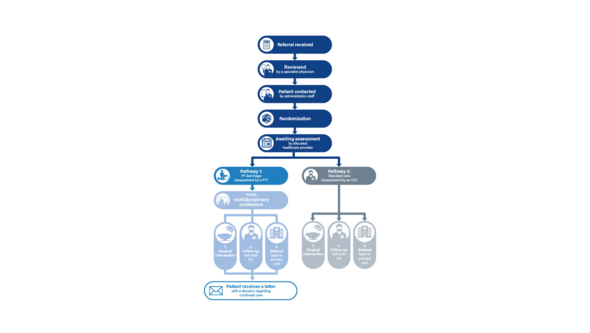
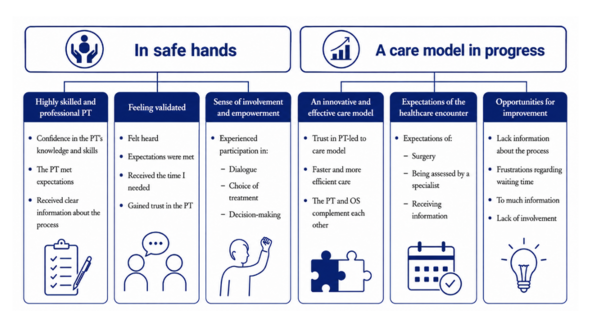
The model was compared with standard care. The evaluation included patient-perceived quality of care, patient-reported health outcomes, agreement between physical therapists and orthopedic surgeons in their assessments, factors associated with subsequent joint replacement surgery, healthcare resource use, cost-effectiveness, and patients’ expectations and experiences.
Physical therapists and orthopedic surgeons made similar assessments
In the model used at Sahlgrenska University Hospital, a physical therapist performs the first specialist assessment and determines whether the patient needs joint replacement surgery or should continue treatment in primary care.
“The results showed that physical therapists and orthopedic surgeons generally made similar assessments regarding the choice of treatment. Overall, the findings suggest that physical therapist-led triage and assessment can help more patients reach the appropriate level of care sooner, reduce the need for assessments by orthopedic surgeons, and lower costs compared with standard care.”
The model should be viewed as part of a broader care pathway rather than as a replacement for orthopedic expertise. It requires close collaboration between physical therapists and orthopedic surgeons, as well as clear information and active patient involvement.
What has been the most rewarding and challenging part of your doctoral project?
“The most rewarding part has been following a clinical problem all the way from an idea to results and seeing how research can lead to tangible improvements in healthcare. I have also really enjoyed working closely with both my supervisors and the staff at the clinic who use this model in their everyday clinical practice. The greatest challenge has been keeping all the different parts of the project together while running several studies in parallel.”
Text: Susanne Lj Westergren
Below, you can view the figures more clearly as PDFs.