
Christian Jepsen: Additional skin layer may protect implants in breast reconstruction
A technique in which an extra layer of the patient’s own skin is used to cover implants in breast reconstruction has become increasingly common, but robust evidence has been lacking. Christian Jepsen’s thesis shows that the method has a complication profile similar to established alternatives – while also offering clear advantages.
CHRISTIAN JEPSEN
Dissertation defense: 8 May 2026 (click for details)
Doctoral thesis: Immediate breast reconstruction with a dermal sling and implant: Clinical studies on optimization and outcomes
Research area: Plastic Surgery
Sahlgrenska Academy, The Institute of Clinical Sciences
Breast reconstruction following mastectomy presents particular challenges, especially in women with large or sagging breasts. In these cases, excess skin must be reduced, the nipple repositioned, and tissue perfusion is often more compromised.
“This increases the risk of wound complications and implant exposure,” says Christian Jepsen, specialist in plastic surgery at Sahlgrenska University Hospital and doctoral student at the Institute of Clinical Sciences.
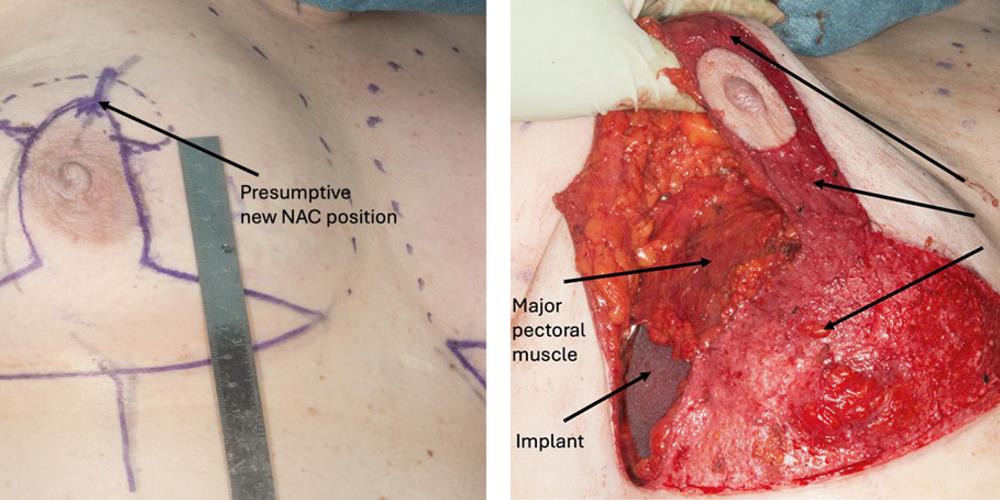
Dermal sling for implant coverage
One increasingly used technique is the dermal sling, in which part of the patient’s own skin is used as an additional protective layer over the implant.
“The technique has been used clinically for several years, but robust scientific evidence has been lacking.”
The thesis evaluates both the established dermal sling technique and a modified version developed at the clinic. These are compared with other reconstruction methods in a larger study.
Similar risk – clear advantages
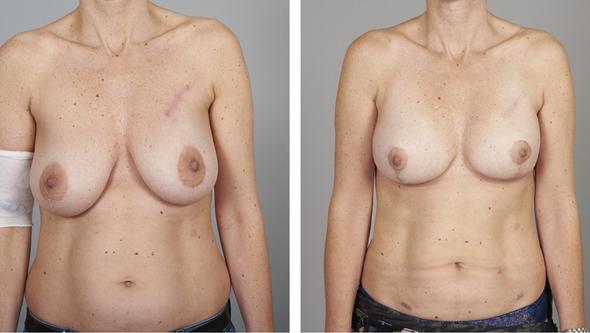
Christian Jepsen’s research shows that the dermal sling technique has a complication profile comparable to other implant-based methods.
“At the same time, we see clear advantages, particularly in preserving and repositioning the nipple–areola complex. The results also show a reduced need for further surgery,” says Christian Jepsen.
The thesis also includes the first Scandinavian reference values for BREAST-Q, a patient-reported outcome measure assessing quality of life and satisfaction after breast surgery. Swedish women report an average breast satisfaction score of 57 out of 100.
“This provides an important reference point for interpreting patient-reported outcomes after reconstruction.”
From challenges to improvements
What has been the most rewarding and the most challenging part of your doctoral project?
“Working on this project has been both instructive and rewarding. Our systematic review provided a deep understanding of the limitations of previous studies and common methodological challenges. We were able to apply that knowledge directly to improve our own study,” says Christian Jepsen, continuing:
“During data collection, we identified several practical challenges that required adjustments, such as improving response rates through reminders. The work therefore became an iterative process in which we gradually refined and improved the study design.”
Text: Jakob Lundberg