
Chiara Timperanza: New method may reduce side effects in targeted cancer therapy
Treating disseminated cancer without damaging healthy tissue remains a major challenge. Chiara Timperanza has investigated and evaluated a strategy that could improve the precision and effectiveness of targeted radionuclide therapy.

CHIARA TIMPERANZA
Dissertation defense: 5 June 2026 (click for details)
Doctoral thesis: Click chemistry–enabled pretargeted alpha therapy with astatine-211: Design, development, and preclinical evaluation of a poly-L-lysine scaffold
Research area: Medical Radiation Sciences
Sahlgrenska Academy, The Institute of Clinical Sciences
Targeted radionuclide therapy uses radioactive substances to attack cancer cells. One challenge is to deliver sufficient amounts of radiation to tumors while limiting damage to healthy tissue.
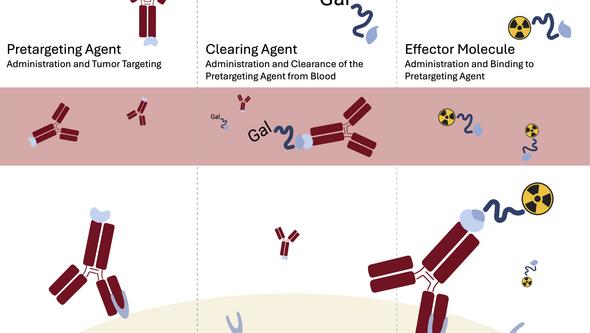
“My thesis investigates pretargeted radioimmunotherapy (PRIT), a strategy in which antibodies first target tumor cells, followed by delivery of radioactive substances through a small carrier molecule that binds rapidly to the antibody,” says Chiara Timperanza, licensed pharmacist, radiochemist at Atley Solutions AB, and PhD student at the Institute of Clinical Sciences.
Targeted alpha radiation therapy
The work focuses on astatine-211, an alpha-emitting radionuclide that releases high-energy radiation over a very short range.
In conventional radioimmunotherapy, the radioactive substance is directly linked to the tumor targeting molecule, an antibody with slow pharmacokinetics. In PRIT, these steps are separated in time.
“This approach aims to improve therapeutic efficacy and reduce side effects compared to conventional radioimmunotherapy by separating the slow antibody-mediated tumor targeting from dose delivery by a small molecule with rapid pharmacokinetics.”
The project combines PRIT with bioorthogonal click chemistry, a method known for highly selective and rapid chemical reactions.
Components designed and evaluated
The research included development and evaluation of several key components in the pretargeting system: the targeting molecule, the radioactive effector molecule, and a clearing agent used to remove unbound targeting molecules from the bloodstream to improve dose delivery to the tumor.
The effector molecule and the clearing agent were based on a poly-L-lysine structure, which is easy to modify and available in different sizes, allowing different pharmacokinetics.
More even distribution inside tumors
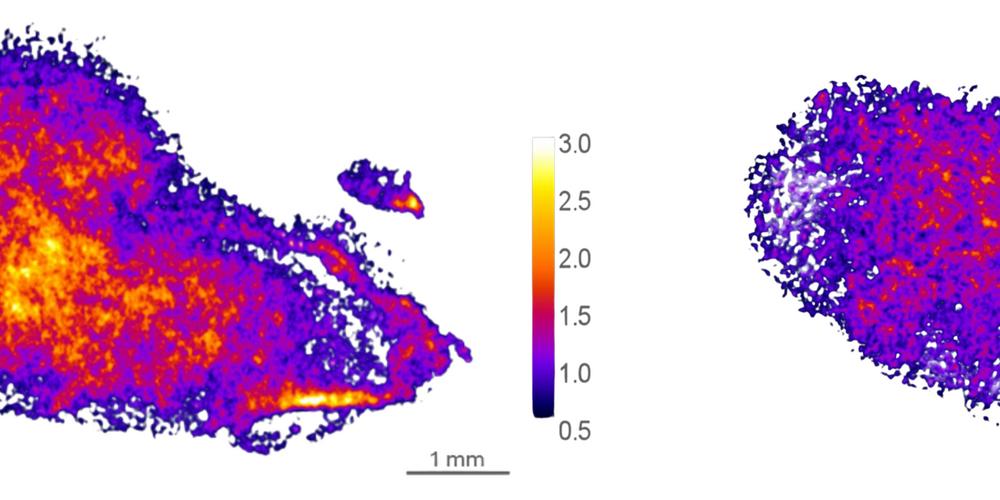
One of the most important findings was that the method achieved a more homogeneous distribution of radioactivity inside tumors.
“Achieving this is often difficult with conventional radioimmunotherapy, but a more homogeneous distribution of radioactivity may improve therapeutic efficacy, particularly in solid tumors.”
Learning through challenges
What has been the most rewarding and the most challenging part of your doctoral project?
“One of the most enjoyable and rewarding aspects has been the learning experience, as well as the opportunity to travel and meet people from different backgrounds and areas of expertise. These experiences have been both professionally and personally enriching,” says Chiara Timperanza, continuing:
“At the same time, the project has also been challenging. Dealing with frustration when experiments did not work as expected has been a significant part of the process. However, these difficult moments have helped me build resilience and develop a more persistent and problem-solving mindset.”
Text: Jakob Lundberg