
Antri Savvidou: Pyruvate Dehydrogenase Deficiency (PDCD), a rare disease with major variability
Antri Savvidou’s thesis focuses on pyruvate dehydrogenase deficiency (PDCD), a rare inherited metabolic disorder that affects the brain’s energy supply. Overall, the findings show that PDCD presents with many different levels of severity, with a broader and more varied clinical picture than previously recognized.

ANTRI SAVVIDOU
Dissertation defense: 12 June 2026 (click for details)
Doctoral thesis: Pyruvate dehydrogenase complex deficiency in Sweden: Clinical spectrum, genetics, neuroimaging findings and outcomes
Research area: Pediatrics
Sahlgrenska Academy, The Institute of Clinical Sciences
Pyruvate dehydrogenase complex deficiency * (PDCD) is a rare disorder affecting the body’s energy metabolism, particularly in the brain. The disease can manifest very differently between individuals, and current knowledge is largely based on smaller studies of individual cases rather than larger population-based studies.
“Knowledge about PDCD is still limited, and previous studies have often been small. We therefore wanted to conduct a national population-based study to gain a better and more accurate understanding of the disease’s symptoms, progression, and prognosis,” says Antri Savvidou, pediatric neurologist at the Pediatric Neurology Clinic at Queen Silvia Children’s Hospital and doctoral student at the Institute of Clinical Sciences.
The aim was to investigate how common PDCD is in Sweden, describe symptoms and disease progression, and study associations between genetic changes, clinical symptoms, and radiological findings. The research also aimed to calculate the proportion of de novo mutations in the PDHA1 gene, describe symptoms among female carriers, and map the prevalence of intellectual disability and adaptive functioning in people with the disease.
Better understanding the disease’s variability
The research identified a total of 54 individuals with primary PDCD in Sweden, corresponding to an estimated prevalence of approximately 2.43 per 100,000 live births. Survival to the age of 40 was 85 percent, and observed causes of death included congenital lactic acidosis, stroke, and infection.
“By collecting data from all identified individuals with the disease in Sweden, we were able to study symptoms, neuroradiological findings, development, and survival. The goal has been to better understand the variability of the disease and identify factors that influence severity and prognosis.”
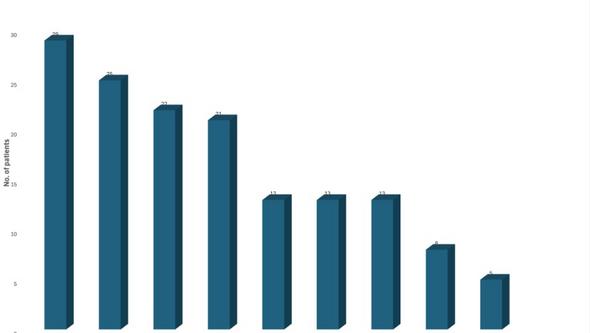
Occurrence of stroke-like symptoms
The researchers found that the disease has a greater variability than previously believed. Symptoms involving stroke-like episodes have almost never been described before in PDCD, nor have milder forms in female carriers of PDHA1 variants. Among individuals with variants in the PDHA1 gene, 86 percent had de novo mutations, meaning genetic changes that were not inherited from either parent.
“The most common findings on brain MRI were underdevelopment or complete absence of the corpus callosum, enlarged fluid-filled spaces in the brain, and changes in the brain’s deep gray matter.”
In individuals with later symptom onset, the main findings involved the parts of the brain known as the basal ganglia, particularly the globi pallidi. Stroke-like changes and white matter abnormalities were also identified in rare cases as part of the disease spectrum.
“Intellectual disability and difficulties in everyday functioning were common, although social abilities were often a relative strength. A ketogenic diet ** was associated with fewer epileptic seizures, fewer episodes of deterioration, and improvements in motor function and communication.”
The results may contribute to improved diagnostics and increased understanding of the disease.
What has been the most rewarding and challenging aspect of the PhD project?
“The most rewarding aspect has been contributing new knowledge about a very rare disease and collaborating nationally with patients from across Sweden. It has also been meaningful to know that the research findings may benefit patients and families. The most challenging part has been collecting data from many different sources and interpreting a disease with such large variation between patients.”
Text: Susanne Lj Westergren
* Pyruvate Dehydrogenase Deficiency:
The disease exists in varying degrees of severity. In most children, symptoms appear during the first months of life in the form of reduced muscle tone (hypotonia) and delayed development. Other common symptoms that develop somewhat later include impaired coordination (ataxia), increased muscle tone (spasticity), muscle weakness, and epilepsy. There are also milder forms of the disease that first appear in older children and adults.
(Source: Swedish National Board of Health and Welfare database on rare health conditions)
** A Ketogenic Diet:
A ketogenic diet consists of an extremely low intake of carbohydrates while being high in fat. The diet aims to place the body in ketosis, a state in which fat is used as the primary energy source instead of glucose.