
Unprecedented campaign to understand the impact of ocean currents on climate
Professor Sebastiaan Swart and his research team, Polar Gliders from the University of Gothenburg, are currently taking part in a massive research campaign off the coast of South Africa, which involves 160 people on two research vessels. This all-in-one approach, never before carried out on such a scale, are studying the interaction between ocean currents, the atmosphere, and marine ecosystems, in order to understand how they affect the climate.
Where are you right now, Prof. Swart?
“I’m on board the French research vessel Marion Dufrense in the Cape Basin, South Atlantic Ocean. It’s a unique area of the world’s oceans where the highest number of eddies – the ocean’s equivalent of storms – occur. These collide with one another, causing very strong currents and the exchange of material. The observations here provide us with insights into how the ocean mixes and exchanges energy, heat, carbon, and biological properties within the larger oceanic regions and with the atmosphere,” says Sebastiaan Swart, Professor of Oceanography at the Department of Marine Sciences, University of Gothenburg.
Why is a marine area south of Africa so important to study?
"Because the area is crucial to the Earth’s weather and climate. It’s precisely here that warm, salty water from the Indian Ocean meets the colder, fresher water from the Atlantic and the Southern Ocean in various strong eddies."
"Ultimately this contributes to the strength and variability of the larger-scale Atlantic Meridional Ocean Circulation (AMOC) and the Gulf Stream. Given all the attention the AMOC is receiving, we need these observations to get more certainty about AMOC and climate changes in the coming decades and centuries."
Why is this campaign so unique?
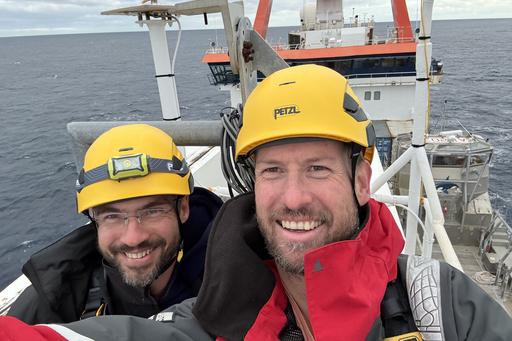
"Because it is so large-scale. A study of climate processes on this scale has never been carried out before. We have two research vessels carrying a total of 160 researchers, engineers, students, and many more crew and officers, all working in tandem to complete the biggest experiment I have ever been involved in, aimed at investigating some of the most difficult-to-measure processes in the climate system."
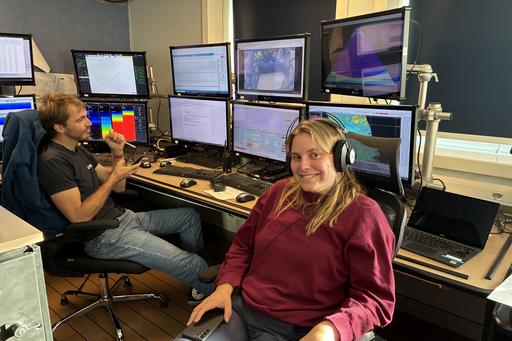
"What also makes the project unique is that, during the same campaign and at the same time, we are observing parts of the climate system that are usually studied separately. We are holistically sampling the entire ocean, from 5km deep to the surface and all the way to the top of the atmosphere 35 km high, in one experimental framework. This means that we are using a vast array of scientific equipment such as robotics gliders in the ocean to weather balloons to the top of the atmosphere, and everything in between."
"The project will make it possible to connect processes observed until now only in a fragmented way: how an eddy or a front, by bringing nutrients up to the surface, stimulates phytoplankton, alters carbon uptake, and ultimately attracts predators and marine mammals, while shaping the exchanges of heat and moisture with the atmosphere above it."
What is the University of Gothenburg's role in this campaign?
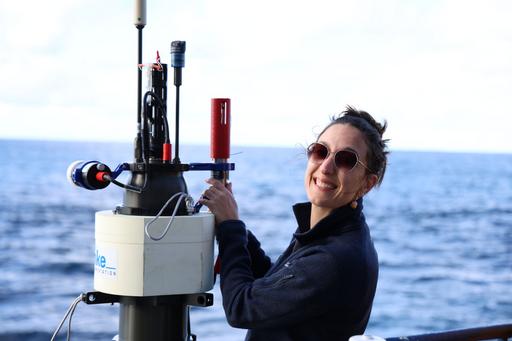
"The team Polar Gliders at the University of Gothenburg are responsible for the majority of the autonomous marine robots. We are contributing four underwater robots, two Wave Gliders, profiling floats, 200 surface drifters, and radiosonde balloons."
"We have now deployed many of these instruments and are now remotely piloting these robots around the ocean to sample different phenomena, such as eddies and interactions between the ocean and the atmosphere."
What results do you hope to achieve with this combined effort?
"The Whirls project focuses on the small eddies in the ocean and aims to understand the role they play in life on Earth. Because these eddies only occur for short periods and are difficult to observe, we still know far too little about them and their impact on the climate. That is why we are now undertaking this massive research initiative."
"For although the eddies are not particularly large – ranging from just a few kilometres to a few tens of kilometres – we know that they play a disproportionately large role in life on Earth: they control the exchange of heat and carbon dioxide with the atmosphere, the transport of nutrients from the depths to the surface, and the organisation of marine life."
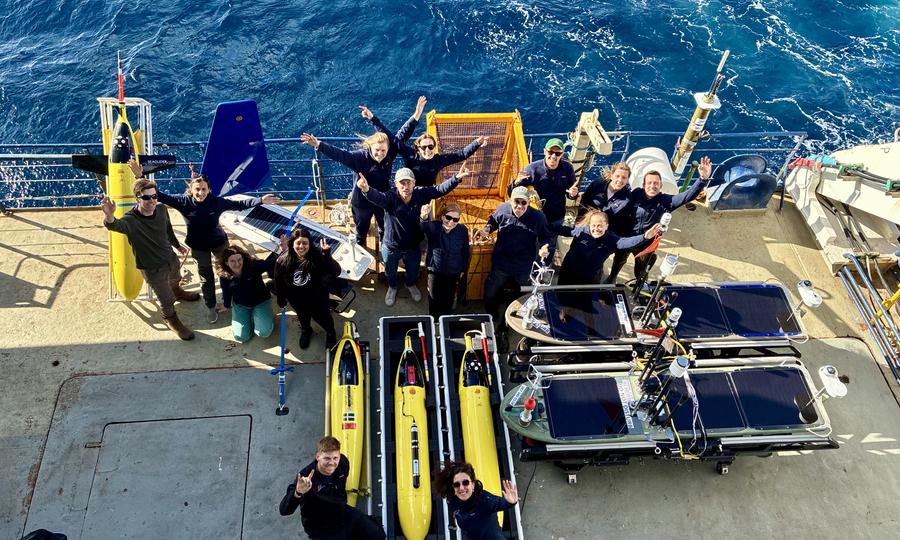
From 20 June to 29 July 2026, two research vessels – Marion Dufrense and S.A. Agulhas II – and a fleet of autonomous marine robots will be off the coast of South Africa in the area around the Agulhas Current.
The expedition forms the core of the European ERC Synergy project WHIRLS, which is studying the ocean, the atmosphere, and life in interaction for the first time.
The project focuses on the small-scale eddies in the Agulhas Current, which is one of the most powerful and energy-rich ocean currents on Earth.
Polar Gilders Team from the University of Gothenburg
Julia Noack, Marcel du Plessis, Lovisa Sunnarcrantz, Vincent Doriot, Kimi Rogers, Mariana Lage, Paula Damke, Johan Edholm, Neha Ramsarup (visiting researcher to GU), Solange Coadou, Sean Lavis, Elisa Carli, Sebastiaan Swart.
Read the blog


