
The same Arctic plant can respond very differently to warming
Warmer conditions can cause the same plant species to wither earlier in autumn in one location, but later in another. New research shows that local differences in temperature, snow cover and water availability make it harder to predict how Arctic vegetation will respond to climate change in a region that is warming around four times faster than the rest of the planet.
A warming climate inevitably affects when Arctic plants start growing in spring, when they flower and when they become dormant in autumn. But these changes do not follow a simple pattern. In her research, Geerte Fälthammar de Jong has investigated how Arctic plants respond to different microclimates – small areas where temperature, snow cover and water availability can differ considerably from the surrounding landscape.
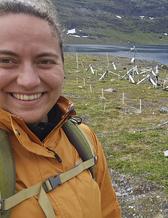
“One of the clearest findings is that the same plant species can respond differently to the same change depending on where they grow. In one location, warmer ground temperatures can cause plants to wither earlier in autumn, while in another they can cause them to wither later,” says Geerte Fälthammar de Jong.
Big differences over short distances
On steep slopes, snow can melt early and boulders can absorb and retain heat from the sun. Meanwhile, narrow north-facing valleys can be considerably colder than the surrounding landscape. The researchers studied these kinds ofmicroclimates in northern Sweden, Greenland and Svalbard.
Using time-lapse cameras, they followed the plants throughout the growing season, from the emergence of the first leaves and flowers to seed production and the changing colours of autumn.
“Microclimates help us understand why plants do not always respond to a warming climate in the way we might expect,” says Geerte Fälthammar de Jong.
Growth continues below ground
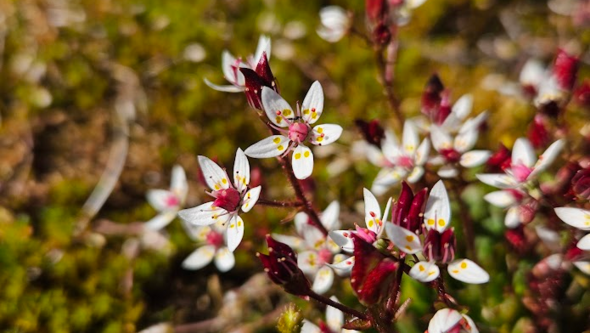
The researchers also investigated what happens below ground. Roots can continue growing for several months after the above-ground parts of a plant have stopped growing for the season. Root growth also appears to be less affected by differences in air temperature and microclimate. Instead, the plant species growing at a particular site seem to play a greater role in determining when and for how long roots continue to grow.
“This is a hidden system that we still know very little about. Yet roots play an important role in determining how much carbon can be stored in the soil, and therefore how Arctic ecosystems influence the climate,” says Geerte Fälthammar de Jong.
Cold refuges may be vulnerable
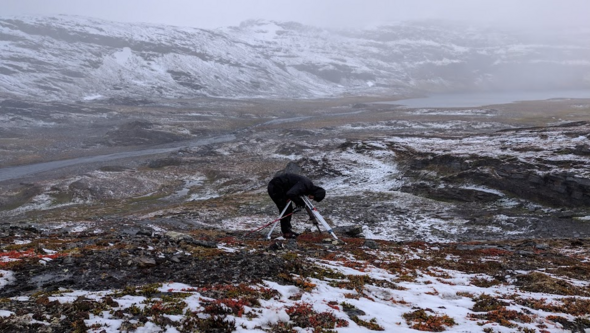
The researchers also investigated so-called microrefugia – small, cold pockets in the landscape where cold-adapted plants may be able to survive as the surrounding climate warms. These refuges do exist, but they are less common than expected and often depend on being close to water. This could make them vulnerable if changing patterns of snowmelt affect water availability.
The findings highlight why it is so difficult to predict how vegetation across the Arctic will change. Much of what we currently know is based on research conducted near settlements and at a relatively small number of established research stations, even though environmental conditions can vary dramatically over very short distances.
“All these pieces of the puzzle are important if we are to understand and predict how the Arctic is changing – changes that, in turn, have consequences for the global climate,” concludes Geerte Fälthammar de Jong.
Thesis: ”Timing is everything: how microclimate drives Arctic vegetation phenology”
Author: Geerte Fälthammar de Jong
Department: Institutionen för biologi och miljövetenskap, Göteborgs universitet

