
The Nobel Prize 2025 – According to Our Researchers
On 6 October the Nobel Week officially kicks off. Until then, there is a lot of speculation about the announcements. Therefore, we asked some researchers who they would like to see honoured in the memory of Alfred Nobel.
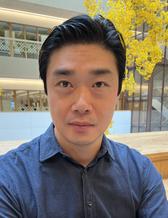
Nobel Prize in Physiology or Medicine
Ka-Wei Tang, Adjunct Senior Lecturer in Infectious Diseases
“In my field of research, tumour virology, there are two obvious candidates: Yuan Chang and Patrick Moore. Together, they have discovered two of the eight viruses we know causes cancer. One of their discoveries is a herpesvirus which causes Kaposi’s sarcoma, and the other is a polyomavirus which causes a rare type of skin cancer, Merkel cell carcinoma.
Yuan Chang and Patrick Moore studied patient groups with weakened immune systems, which put them at a higher risk of developing cancer. By using sequencing techniques, they were able to identify previously unknown viruses in tumours from these patients.”
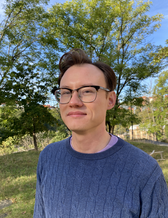
Nobel Prize in Physics
Tom Blackburn, Associate Senior Lecturer in Physics
“Personally, I have always wanted to see Yakir Aharonov or Michael Berry receive the Nobel Prize in Physics for the discoveries that bear their names, the Aharonov-Bohm effect and the Berry phase. Both have given us profound insights into the connection between quantum mechanics and topology.
As 2025 is the International Year of Quantum Science and Technology, it feels like the time is right. However, speaking of time, two other worthy recipients would be Hidetoshi Katori and Jun Ye for their development of the 'optical lattice clock'. This kind of atomic clock is so accurate that it would have lost less than a second if it had been running since the Big Bang, 13 billion years ago.”
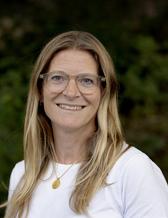
Nobel Prize in Chemistry
Gisela Brändén, Professor of Biochemistry
“It would be exciting if this year’s Nobel Prize recognized the understanding of how electron transfers occur in biology. Many crucial reactions in living cells depend on electrons being moved in a highly controlled way – to exactly the right place at exactly the right time. Electron transfer reactions drive both photosynthesis and cellular respiration. A strong candidate in this field is Harry B. Gray.
An important discovery within my own field of research, structural biology, was in fact recognized with the Nobel Prize in Chemistry last year. It is related to how we can predict the structure of different proteins using an AI-based model trained on experimental data. This is a fantastic tool as knowledge of the structure allows us to understand how a protein works and potentially design new medicines if the protein is involved in a specific disease.”
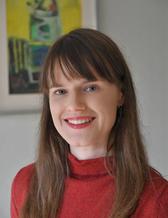
Nobel Prize in Literature
Alice Duhan, Lecturer in French
“Several French authors have been awarded in recent decades – Le Clézio, Modiano, Ernaux – so I think the chances of another French laureate this year are rather slim. But if it were to happen, I would hope for Marie NDiaye, who also visited this year’s Gothenburg Book Fair.
Marie NDiaye published her first book aged just seventeen and has since asserted herself as a central figure in both contemporary French fiction and drama. Ambiguity is her hallmark: her works navigate between realism and the fantastic, exploring themes such as class, family relations, and social exclusion with stylistic lucidity and psychological subtlety.”
Nobel Peace Prize
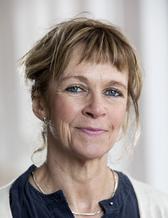
Helena Lindholm, Professor in Peace and Development Research
“Despite our turbulent geopolitical times, important and persistent peace efforts are taking place all over the world. There are many worthy recipients of the Nobel Peace Prize. Personally, I would like to see Francesca Albanese, the UN Special Rapporteur on the occupied Palestinian territories, honoured with the prize this year.
Francesca Albanese has, with courage and perseverance, highlighted the importance of international law and the responsibility of the international system. She has done so in relation to what many now judge to be a genocide in Gaza, as well as Israel’s policies in the West Bank. Above all, I hope that the Peace Prize is given to someone who distinctly advocates a defence of international law and human rights.”
The Sveriges Riksbank Prize in Economic Sciences in Memory of Alfred Nobel
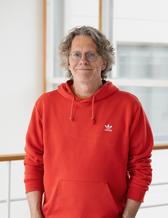
Olof Johansson Stenman, Professor of Economics
“In my opinion, Thomas Piketty and Emmanuel Saez should be honoured the Prize in Economic Sciences for their groundbreaking contributions to both empirical and theoretical analysis of income and wealth inequality. They have developed new methods and provided new data, which has improved the possibilities to make comparisons over time and between countries. They have also advanced the theory of optimal taxation,In other words how taxes can be collected in a way that is both fair and efficient,and provided practical guidance for policymakers.
Their international comparisons and open databases have made the debate more evidence-based and strengthened our understanding of how different tax systems can reduce inequality without hampering economic development.”
By: Henrietta Lundkvist