
Submarine takes scientist deep into the Pacific off the coast of Alaska
Rhian Waller, a coral researcher at the Department of Marine Sciences, has been on a research trip off Alaska since early June. One of her tasks is diving down to a depth of almost 1000 metres, in a small submarine, to study cold-water corals and their habitat in the depths of the ocean.
The expedition so far, what has it been like?
"The expedition has been really great so far. It's always fun to go to sea with an amazing and varied group of scientists and so far we have collected 357 samples of biology, rocks and water samples. The Alvin pilots and crew have been great to work with and the dives have all been really successful so far," says Rhian Waller, doctor and researcher at the University of Gothenburg.
Since the beginning of June, she has been the only participant from Sweden on a research trip with the American research vessel R/V Atlantis. The ship is carrying the research submarine Alvin, that can dive to a depth of 6500 metres.
The aim of the voyage is to find new sites for corals and other deep-sea organisms in the North Pacific Ocean, along the Aleutian Islands, which stretches from Alaska to the Kamchatka Peninsula.

On 20 June, Rhian entered the submarine, which holds a total of three people, and descended into the depths in the Amutka basin, to 950 meters below sea level.
What was it like?
"We had really strong currents that day, so the dive was very challenging, but we had a great pilot and managed to collect several species of coral along with water samples and some rocks for the geologists. It was a really interesting place we went to. The bottom was cobbles, smaller fist sized rocks, and larger boulders, but absolutely everything was covered in life. Small corals, sponges, shrimp, sea stars, lots of fish and even an octopus."
What is the feeling, to be so deep down in the ocean?
"It was really amazing being in Alvin again. It was 23 years this month since my very first dive in Alvin in the Galapagos, and it has been over 15 years since I last used this submersible for science. Much has changed, but much has stayed the same, including how excited I feel as we sit on the deck inside the sphere waiting for the ship to crane us over the side into the water and begin our dive. Time goes so fast inside the submersible, you wish it could last longer, but you are so busy collecting, logging data and looking out the small windows. Any day you can spend really being a part of the ecosystem you work on is a good day."

What will happen now on the remaning days of the trip?
"Today (Monday 23 June) sadly we have some high winds, so no diving today, but instead we will use a CTD to do something called "Tow-Yos" to look for hydrothermal vents and cold seeps, where gases are escaping from the seafloor. To do this we put the CTD in the water and drop it to close the seafloor and then tow it along a line. This sensor brings back data on what the water column looks like for temperature, salinity and other measurements. But to find hot water coming up from the seafloor colleagues will look for temperature raises. Once they find these then they do some more mapping with other sensors to fine tune the location to dive. This is something we planned to do overnight tonight, we just have now more time, so now they can map more of these areas to search for venting and seeps. We are now almost at our furthest west site, near Amchitka Island. We will do a few days here and then start to head back towards Unalaska island where we will get off and head back home. But we still have 9 more days at sea, so lots of time to get more dives in and see more amazing coral communities."
Text: Mikael Andersson
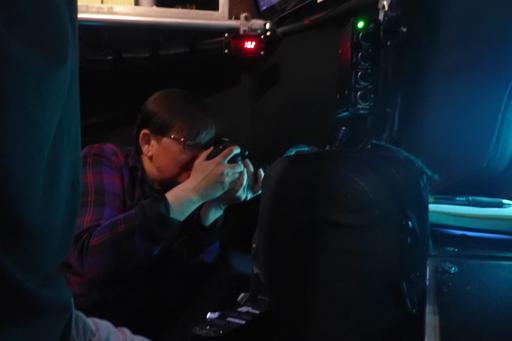
Alvin (DSV-2) is a manned American submersible for deep-sea research. It enables the collection of data and on-site observations down to 6,500 meters during dives lasting up to ten hours.
It is seven meters long, weighs 17 tons, and accommodates three people: two researchers and a pilot who operates the submersible.
The submersible was built in 1964 and has since undergone several upgrades, most recently in 2021, when it received, among other things, more space for those on board, improved imaging systems, and better sensors.