
Researchers investigate the effects of the upcoming trawling ban
From next summer, bottom trawling will be banned in the protected Gullmar Fjord. Starting this year, researchers from the University of Gothenburg are therefore collecting seabed samples at several locations throughout the area to investigate how the ban affects life on the seafloor.
“Most likely, we will see the return of species that are sensitive to trawling,” says Arne Nygren, marine biologist and leader of the sampling programme.
It is an early May morning, and the sun has just risen above the steep cliffs surrounding Gullmar Fjord, on the Swedish west coast. On board the University of Gothenburg’s research vessel, R/V Skagerak, the day’s sampling work has just begun.
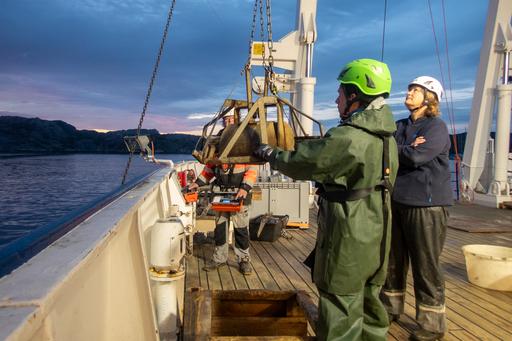
A small grab sampler, designed to collect around ten kilograms of seabed sediment, is being lowered into the depths to take one of the day’s first samples. Once on board, the sediment is sieved and the organisms found within it – including worms, snails and brittle stars – are collected for further analysis.
Investigating life on the seafloor
Taxonomist Arne Nygren of the University of Gothenburg has been involved in the annual environmental survey of benthic fauna in the Skagerrak and Kattegat since 2018. This year, however, he has been given a special assignment.
An additional 40 samples are to be collected in Gullmar Fjord as part of preparations for the ban on bottom trawling in protected areas, a measure approved by the Swedish Parliament last year.
In Gullmar Fjord, the ban will come into force in July 2027.
“Swedish University of Agricultural Sciences wants to be able to evaluate the effects of the ban, which is why we are collecting samples this year and next, before it takes effect,” he says. “The hope is then to continue the monitoring programme so that we can see how the benthic fauna develops over time.”
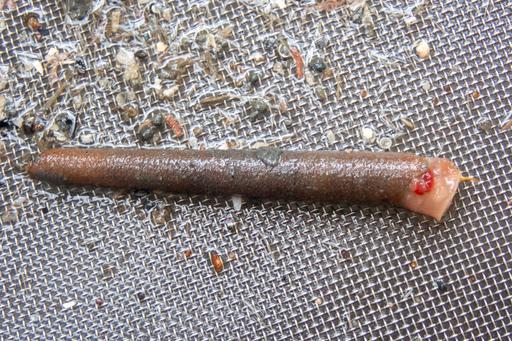
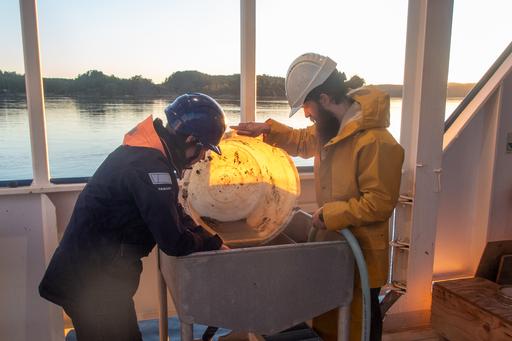
Around a dozen people are taking part in this year’s expedition, including researchers, technical staff and a student from the Department of Marine Sciences. The days are spent at sorting tables, where the sediment is washed through sieves and the organisms are carefully picked out and preserved.
“This is an environmental survey of the seabed,” says Arne Nygren. “It allows us to monitor marine life over time and see how species are affected by factors such as a warming sea.”
A record of 77,000 animals
Once the expedition is over, months of laboratory work await. A report summarising the findings from the 2026 survey is due to be published next spring.
“I will now go through all the material we have collected, sort it, and identify the species. We’ll see whether I can beat my record from 2022, when I identified 77,000 animals. But back then, we had a few more sampling sites,” says Arne Nygren.
How do you think the benthic fauna in Gullmar Fjord will be affected by the end of bottom trawling?
“Some species disappear entirely when trawling takes place, and even species living adjacent to trawled areas are affected by the sediment that is stirred up. So the most likely outcome is that species sensitive to trawling will return, such as sea pens.”
Text: Mikael Andersson
The survey forms part of the coordinated marine environmental monitoring programme for the Skagerrak and Kattegat. Each year, a large number of sites are sampled, some of which have been monitored since the 1970s.
Samples are collected using a Smith–McIntyre grab, which retrieves sediment from 0.1 square metres of seabed. To assess environmental status, researchers examine which species are present in the samples, how many individuals are found and how these measures change over time.
The results show that benthic fauna varies naturally, but that the long-term trend since the 1970s has been a general decline in species richness on the seabed.
The monitoring programme is carried out by the University of Gothenburg on behalf of the Swedish Agency for Marine and Water Management, the County Administrative Boards of Västra Götaland and Skåne, the Bohus Coast Water Conservation Association, and the Swedish University of Agricultural Sciences (SLU).
The follow-up of the bottom-trawling ban is funded by the Swedish Agency for Marine and Water Management through the project Monitoring Fisheries Regulations in Marine Protected Areas.