
Research contributing to sustainable and gender equal remote working
When remote working is highlighted as a solution to the skills shortage in northern Sweden, new questions arise about work environment, location and gender equality. A new research project will contribute knowledge and concrete tools to create more sustainable and fair working conditions.
Remote working has emerged as a solution for skills supply, not least in northern Sweden, where staff shortages are a major challenge for many employers. At the same time, this development poses new challenges for both employees and organisations.
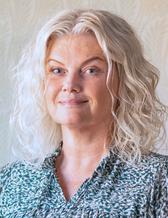
In a new research project Ulrika Jansson, phd in Work Science and analyst at the Swedish Secretariat for Gender Research at the University of Gothenburg, and Lena Grip, associate professor in Human Geography at Karlstad University, will study how remote working affects the organisational and social work environment from a gender and equality perspective.
'Many employers are struggling to solve the problem of skills supply, and remote working has become a way of dealing with this. At the same time, it presents new challenges. Remote working looks different depending on who is involved and how the work functions remotely compared to in the office. There is still a lack of research on this in a Swedish context', says Ulrika Jansson.
Remote working as a solution – and a challenge
Remote working has been around for a long time, but became commonplace during the pandemic. Now that many workplaces have found new hybrid forms, questions are being raised about how remote working can work in the long term without creating new inequalities.
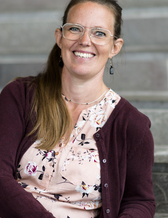
'Previous research shows that remote working affects gender equality in both working and private life. Gender-coded perceptions of efficiency, care responsibilities and the ideal worker influence how remote working and remote workers are perceived. This can affect who gets the opportunity to work remotely, but also the salary and career development of remote workers', says Lena Grip.
Model for a sustainable working environment
Starting in 2026, the researchers will analyse policy documents and interview managers, HR managers and trade union representatives to understand how remote working affects the organisational and social work environment. They will also develop a research-based model that can be used by employers in both the private and public sectors.
'The model will serve as a tool for employers. The aim is to help employers with the organisational work environment and contribute to greater gender equality', says Ulrika Jansson.
The project Distansarbetets roll i hållbar organisations- och arbetsmiljöutveckling will be carried out between 2026 and 2029. At the Swedish Secretariat for Gender Research, the project is carried out within the area of activity A fair and just working life.
(The role of remote working in sustainable organisational and work environment development)
Project period: 2026–2029
Participants: Lena Grip, associate professor in Human Geography, Karlstad University, Ulrika Jansson, phd in Work Science and analyst, Swedish Secretariat for Gender Research, University of Gothenburg
We collaborate with: Public and private organisations in northern Sweden
Funding body: Afa Insurance
Project objective: To examine the impact of remote working on the organisational and social working environment from a skills supply, equality and gender perspective, and to develop a research-based model to support sustainable working environment development.
